Arranging a Repair Estimate
Emma visits a repair shop to get an estimate for the damage and asks how long the work may take. Grace explains the estimate and what Emma should send to her insurer.
Dialogue10
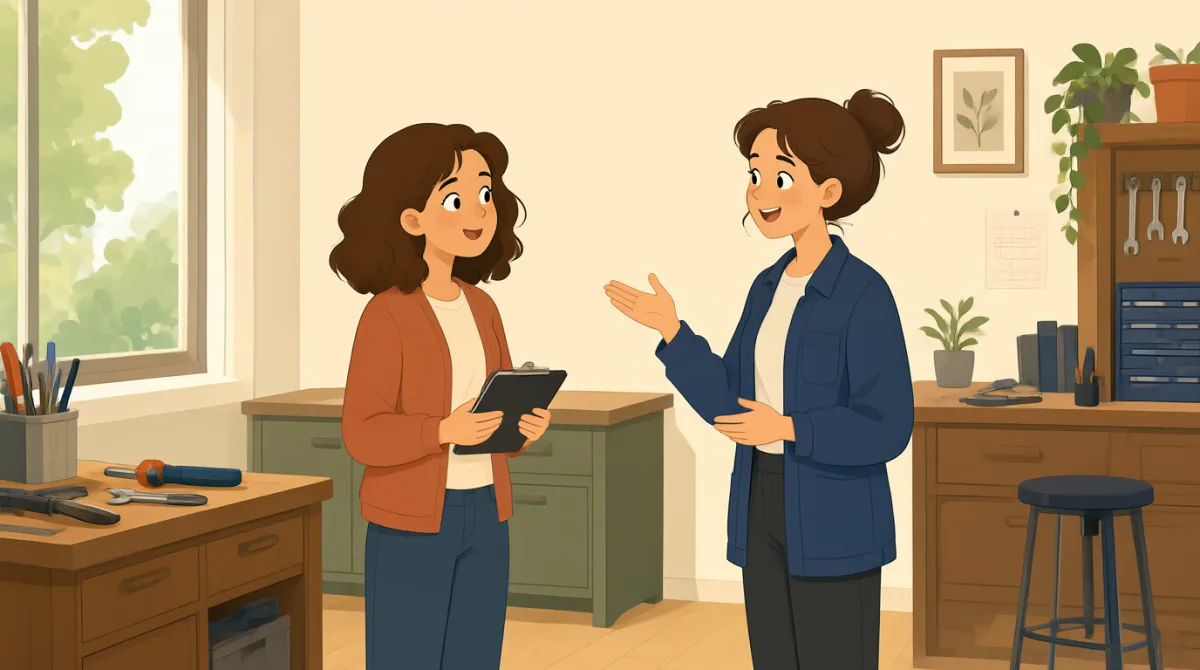

Hi, I’m here for an estimate. Another car bumped my rear bumper, and I’ve already reported the accident to my insurer.

I can take a look. Is the car safe to drive, and have you noticed any problems besides the visible damage?
It drives normally, but the bumper is cracked near the corner. I took a few photos at the scene.
Good thinking. I’ll check the bumper and the parts behind it. Sometimes there’s hidden damage that isn’t obvious at first.
How much do you think the repair will cost, and how long might it take? I need to update my insurance company.
The initial estimate is about eight hundred dollars. If we find hidden damage, the cost could go up, and repairs may take two or three days.
Could you send me the written estimate? Should I send that, along with the photos, to my insurance company?
Absolutely. I’ll email the estimate and photos of the damage. Your insurer may also ask for the claim number and accident details.
Great, I have the claim number in my notes. I’ll check with them before authorizing any extra work.
That’s a good plan. Once they approve the work, give us a call, and we’ll get your car on the schedule.
Vocabulary7
- estimate
An estimate is an approximate amount a repair may cost. Here, Emma asks the shop to assess the damage and provide a price.
- visible damage
Visible damage is damage you can see from the outside. You can use this phrase to describe what looks broken or marked.
- hidden damage
Hidden damage is damage that cannot be seen at first. It may be found when a repair shop checks inside or behind a damaged part.
- written estimate
A written estimate is a document showing the expected repair cost. You can ask for one to share with an insurer or compare with another quote.
- claim number
A claim number is a reference number your insurer gives you when you report an accident or other incident. You may need it when discussing your case with the repair shop.
- authorizing any extra work
This means giving permission for additional repairs beyond the original plan. You can use the phrase when you want to approve extra costs before work begins.
- get your car on the schedule
This means arrange a time for the repair shop to work on your car. It is a natural way to talk about booking a repair.
Key Sentences7
- 1
Is the car safe to drive, and have you noticed any problems besides the visible damage?
This is useful when checking whether a vehicle has problems beyond what can be seen. You can reuse “besides the visible damage” to ask about other issues.
- 2
Sometimes there’s hidden damage that isn’t obvious at first.
This explains why a first inspection may not reveal the full extent of the damage. Use “isn’t obvious at first” for something that is not easy to notice immediately.
- 3
How much do you think the repair will cost, and how long might it take?
This is a practical way to ask about both the expected price and time needed. You can replace “the repair” with another job or service.
- 4
If we find hidden damage, the cost could go up, and repairs may take two or three days.
This sentence explains how a problem could affect both the price and the timeline. The pattern “If we find…, the cost could…” is useful for discussing possible changes.
- 5
Could you send me the written estimate?
This is a polite way to request a document showing the expected cost. You can replace “the written estimate” with another document you need.
- 6
I’ll check with them before authorizing any extra work.
This shows that Emma will confirm with her insurer before approving additional repairs. You can use “before authorizing” to explain that you need approval first.
- 7
Once they approve the work, give us a call, and we’ll get your car on the schedule.
This gives clear next steps after the insurer approves the repairs. The phrase “get your car on the schedule” is useful when arranging a service appointment.