Exchanging Contact and Insurance Details
Emma and Jack share their names, phone numbers, and insurance details, and take notes about the cars and damage. They agree to contact each other if they discover anything else.
Dialogue9
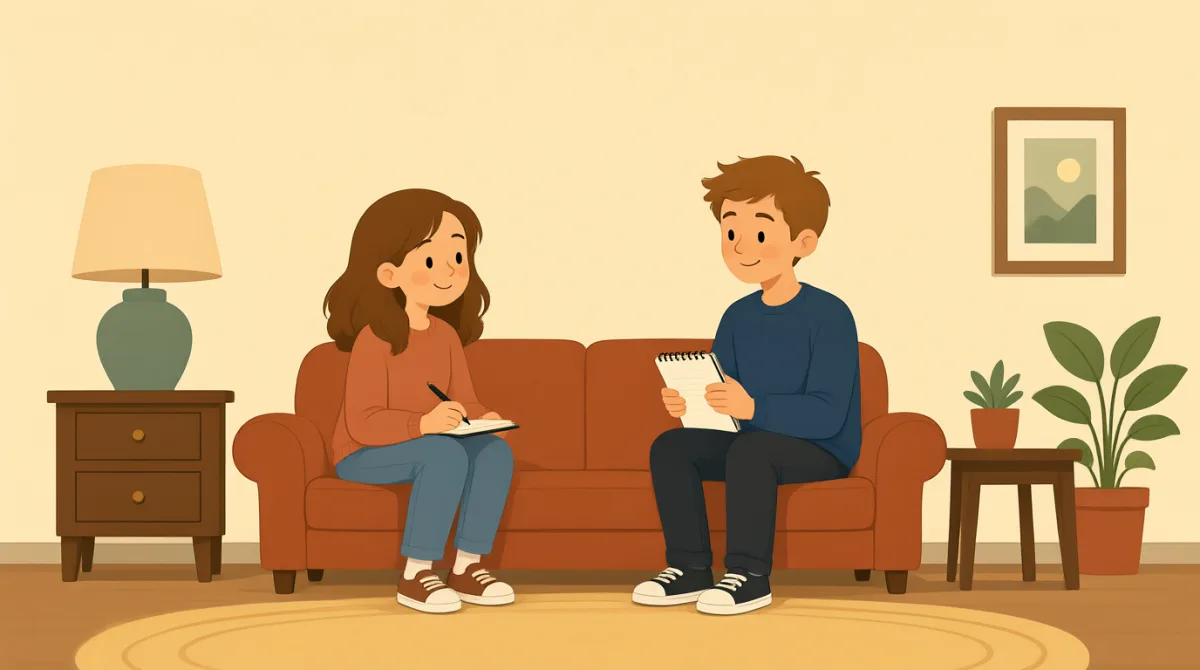

Thanks for pulling over. I’ve got my phone out. Let’s exchange contact and insurance details while we’re both here.

Sure. I’m Jack Miller. My number is 555-0148. I’ll read you my insurance company and policy number.
I’m Emma Carter, and my number is 555-0192. Go ahead—I’ll write everything down so we don’t mix it up.
My insurer is Northstar Auto, and the policy number is A-482-771. Could you read yours to me, please?
It’s Harbor Mutual, policy number H-630-295. I’ll also note your car’s a blue Honda sedan, right?
That’s right. Yours is the gray hatchback. I can see a small dent by your rear bumper; mine has a scratch.
I see it. I’ll take a couple of photos of both cars and the damage, just to keep a clear record.
Good idea. I’ll take some too. If either of us notices more damage later, let’s call or text each other.
Sounds good. I’ll call my insurance company today and let you know if they need anything else from you.
Vocabulary8
- pulling over
Stopping a vehicle at the side of the road. It is often used when a driver moves out of traffic.
- exchange contact and insurance details
To give each other information such as names, phone numbers, and insurance details. This is useful after an accident or for official records.
- write everything down
To record all the information in writing so you can remember it later.
- mix it up
To confuse one thing with another or put information in the wrong order. Here, Emma wants to avoid confusing their details.
- insurer
An insurance company that provides insurance coverage. It is a shorter, more formal word for insurance company.
- policy number
The special number used to identify an insurance policy. You may need to give it when making an insurance claim.
- keep a clear record
To save organized information that can be checked later. Photos and written notes can help keep a clear record of an accident.
- notices more damage later
Discovers or sees additional damage after some time has passed. This phrase is useful when talking about problems found after an event.
Key Sentences7
- 1
Let’s exchange contact and insurance details while we’re both here.
This is a polite way to suggest sharing important information immediately. You can replace “contact and insurance details” with other information you need to share.
- 2
I’ll write everything down so we don’t mix it up.
Use this sentence to explain that you are recording information to prevent mistakes. “So we don’t mix it up” gives the reason for your action.
- 3
My insurer is Northstar Auto, and the policy number is A-482-771.
This is a clear way to give an insurance company and policy number. Replace the company name and number with your own details.
- 4
I’ll also note your car’s a blue Honda sedan, right?
Use this sentence to check and record someone’s vehicle details. “Right?” invites the other person to confirm the information.
- 5
I’ll take a couple of photos of both cars and the damage, just to keep a clear record.
This explains why you are taking photos after an accident or other incident. You can use “just to keep a clear record” to give a practical reason for documenting something.
- 6
If either of us notices more damage later, let’s call or text each other.
This is a useful way to make a plan for a possible future problem. “If either of us” means if one person or the other person discovers something.
- 7
I’ll call my insurance company today and let you know if they need anything else from you.
Use this sentence to promise an action and explain how you will give an update. “Let you know if” is useful for talking about future information or requirements.