Comparing Costs With Your Partner
After visiting two daycares, Emma and Jack compare the fees and what each option includes. They weigh the cost against the location, schedule, and quality of care.
Dialogue8
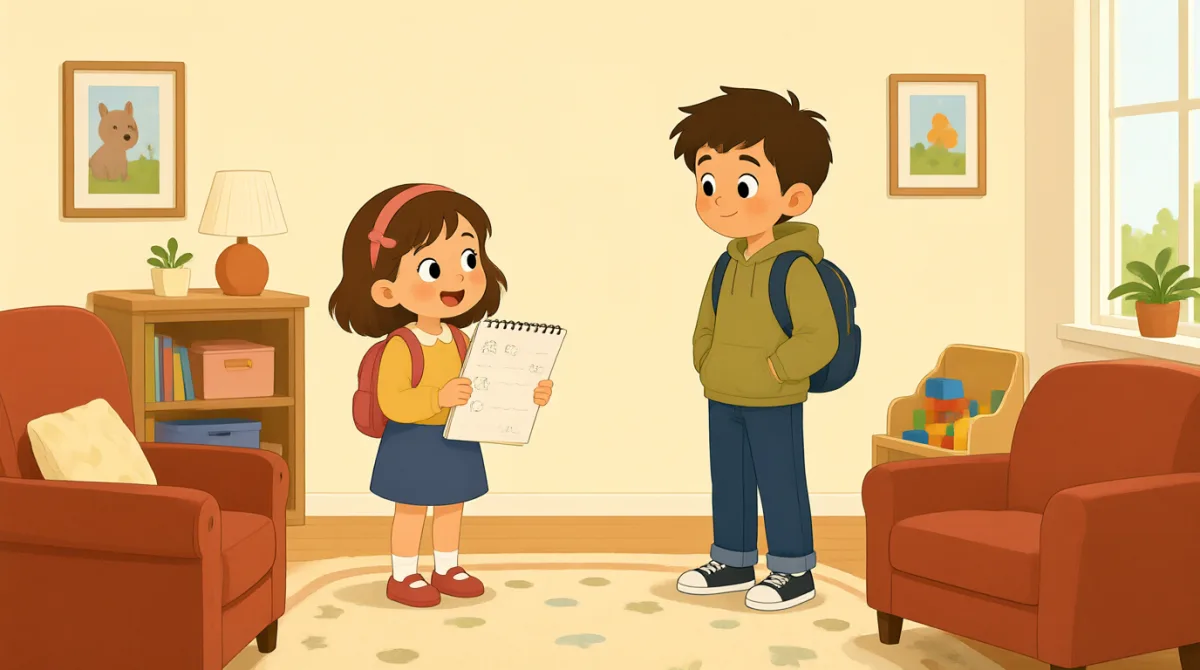

I looked over the notes from both daycares. The one near home costs more, but it offers longer hours.

Right, and breakfast and afternoon snacks are included there. The other place charges extra for meals.
That adds up quickly. But the cheaper daycare has a lower child-to-staff ratio, which could mean more attention.
True. It’s also a little farther away, so we’d spend more time driving every morning and evening.
The closer one is more convenient, especially on days when one of us has an early meeting.
Let’s compare the total monthly cost, including meals and the late-pickup fee, before we decide.
Good idea. If the difference isn’t too big, I’d rather pay a little more for the better schedule.
I agree, as long as we’re comfortable with the care and safety. Let’s check the details tonight.
Vocabulary8
- looked over
Read or checked something carefully. Here, Emma reviewed her notes about both daycares.
- adds up quickly
In this context, it means that extra costs can become a large amount when they are combined. Use it when small expenses build into a bigger total.
- child-to-staff ratio
The number of children compared with the number of staff members. A lower ratio may mean that each child gets more attention.
- charges extra
Asks for additional money beyond the basic price. You can use this phrase for meals, services, or other added costs.
- more convenient
Easier or more practical for a particular situation. Use it to compare options based on location, timing, or ease of use.
- compare the total monthly cost
Work out and consider the full amount each option costs per month. This is useful when different services include different fees.
- as long as
Means “provided that” or “on the condition that.” Use it to show that you agree if a certain requirement is met.
- the difference isn’t too big
A way to say that two prices are close enough for the more expensive option to be acceptable. You can reuse this when weighing cost against benefits.
Key Sentences8
- 1
The one near home costs more, but it offers longer hours.
This sentence compares two features while using “but” to show a contrast. Reuse the pattern “X costs more, but it offers…” when explaining the benefits of a pricier option.
- 2
The other place charges extra for meals.
This is a direct way to mention an additional fee. You can replace “meals” with another service or item that costs extra.
- 3
That adds up quickly.
This short sentence expresses concern that separate costs may become expensive. Use it when several small expenses combine into a larger total.
- 4
It’s also a little farther away, so we’d spend more time driving every morning and evening.
This sentence gives a reason and its result using “so.” Reuse this structure to explain how a location or choice affects your routine.
- 5
Let’s compare the total monthly cost, including meals and the late-pickup fee, before we decide.
This is a practical suggestion for making a decision based on all the costs. Use “Let’s compare…” to propose checking options together.
- 6
If the difference isn’t too big, I’d rather pay a little more for the better schedule.
This sentence states a preference and the condition behind it. Reuse “If…, I’d rather…” when explaining what you prefer depending on the circumstances.
- 7
I agree, as long as we’re comfortable with the care and safety.
This is a way to agree while naming an important condition. Use “I agree, as long as…” when your agreement depends on something.
- 8
Let’s check the details tonight.
This is a simple way to suggest reviewing information later. You can replace “the details” or “tonight” to fit your plans.