Making a List of Questions
Emma and Jack prepare questions before visiting nearby daycares. They decide to ask about staff experience, safety, daily routines, and fees.
Dialogue8
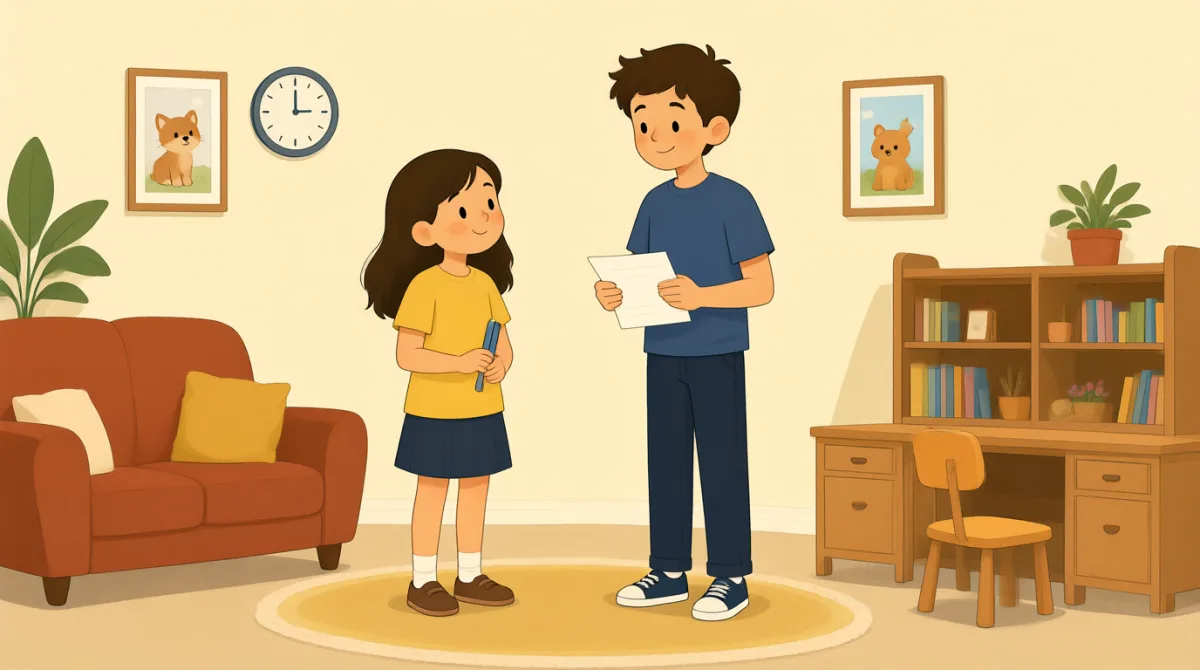

I found three daycares near us. Before we visit, let’s make a list of questions so we don’t forget anything.

Good idea. We should ask how much experience the staff have and whether they’re trained in first aid.
Definitely. And we should ask how many children each staff member looks after. I want to know they’ll get enough attention.
Let’s ask about safety, too—how they handle pick-ups, emergencies, and visitors. Those details really matter.
Right. I’d also like to know what a typical day looks like, including meals, naps, and outdoor play.
We should check the fees and ask what’s included. Some places charge extra for meals or early drop-off.
Good point. Let’s ask about their hours and whether they offer flexible drop-off. Our schedules can change.
I’ll write everything down on my phone. Then we can compare the answers after we visit each place.
Vocabulary8
- make a list of questions
To write down questions you want to ask. Here, Emma and Jack do this so they remember what to check at each daycare.
- trained in first aid
Having learned how to give basic medical help in an emergency. You can ask whether staff members are trained in first aid.
- looks after
Takes care of someone. Here, it describes how many children each staff member is responsible for.
- get enough attention
Receive enough care and notice from other people. You can use this phrase when talking about whether a child will be well cared for.
- handle pick-ups
Manage the process of children being collected. It is useful when asking about a daycare’s safety procedures.
- what a typical day looks like
What usually happens during a normal day. You can use this phrase to ask about someone’s routine or a service’s schedule.
- what’s included
What is covered as part of a price or service. You can ask this before paying for childcare or another service.
- flexible drop-off
A drop-off arrangement that can adjust to different schedules. Here, it means being able to bring a child in at different times.
Key Sentences8
- 1
Before we visit, let’s make a list of questions so we don’t forget anything.
This is a natural way to suggest preparing before a visit. Use “let’s make a list of questions” when planning an appointment, tour, or meeting.
- 2
We should ask how much experience the staff have and whether they’re trained in first aid.
This sentence combines two useful questions about staff qualifications. Reuse “We should ask…” to suggest information to check before making a decision.
- 3
And we should ask how many children each staff member looks after.
This is a clear way to ask about the number of people one staff member cares for. Replace “children” with another group, such as customers or students, to fit a different situation.
- 4
Those details really matter.
This short sentence emphasizes that some information is important. Use it after mentioning details that could affect a decision.
- 5
I’d also like to know what a typical day looks like, including meals, naps, and outdoor play.
This politely asks for a description of a normal routine. You can reuse “I’d also like to know…” to add another question.
- 6
We should check the fees and ask what’s included.
This is a useful way to make sure you understand the price and what it covers. Replace “fees” with “cost” or “price” when talking about other services.
- 7
Let’s ask about their hours and whether they offer flexible drop-off.
This sentence suggests checking opening times and whether arrival times can vary. Use “whether they offer…” to ask if a business provides a particular option.
- 8
Then we can compare the answers after we visit each place.
This explains how to make a decision after gathering information. Reuse “compare the answers” when evaluating several services or options.