Asking About House Rules and Parking
숙소 규칙과 주차에 대해 묻기
Emma checks with Jack about quiet hours, taking out the trash, and where she can park. Jack explains the rules and offers a practical tip about the narrow driveway.
에마는 잭에게 조용히 해야 하는 시간과 쓰레기 처리 방법, 주차 장소를 확인해요. 잭은 규칙을 설명하고 좁은 진입로를 이용하는 실용적인 팁도 알려 줘요.
대화8
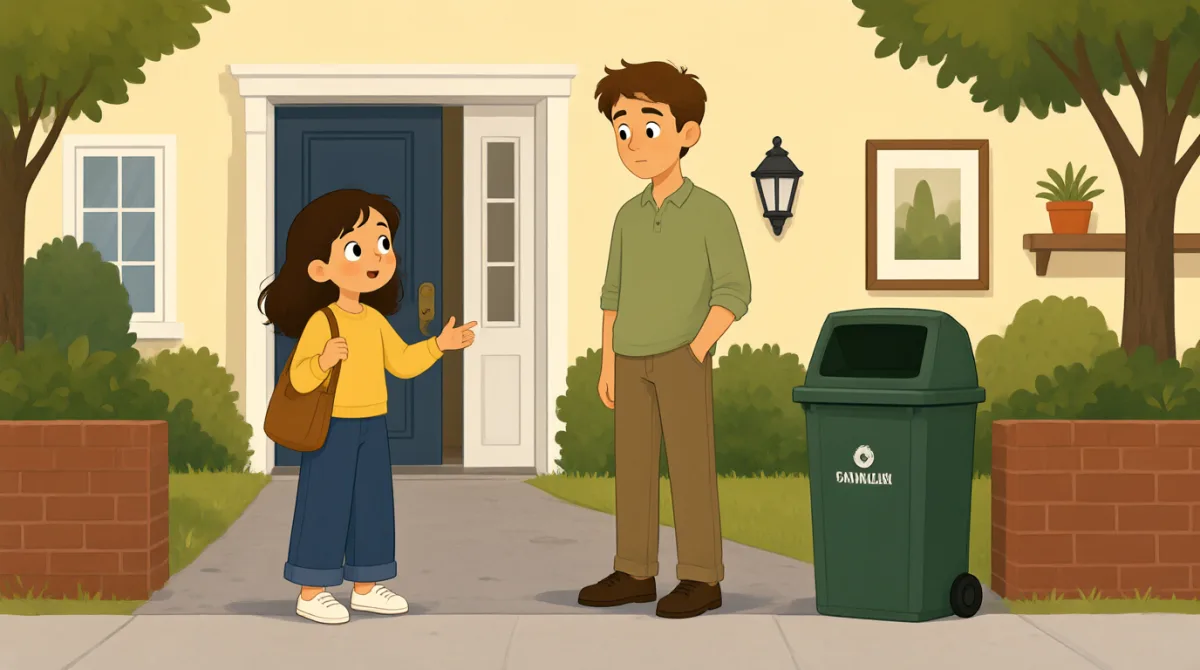

Jack, I wanted to check on a couple of house rules. Are there quiet hours in the evening?
잭, 숙소 규칙 몇 가지 확인하고 싶은데. 저녁에 조용히 해야 하는 시간이 있어?

Yes, please keep things quiet after ten. The neighbors are friendly, but sound carries pretty easily here.
응, 밤 10시 이후에는 조용히 해 줘. 이웃들은 친절하지만, 여기서는 소리가 꽤 잘 퍼져.
Of course. And what should I do with the trash? Should I put it outside before I leave?
그럴게. 그리고 쓰레기는 어떻게 하면 돼? 내가 떠나기 전에 밖에 내놓아야 해?
There are bins beside the shed. Please separate recycling, and take the bags out before checkout if they're full.
헛간 옆에 쓰레기통이 있어. 재활용품은 분리해 주고, 봉투가 가득 찼으면 체크아웃 전에 밖에 내놔 줘.
Got it. One more thing: where should I park? I noticed the driveway looks a little narrow.
알겠어. 하나만 더 물어볼게. 어디에 주차하면 돼? 진입로가 좀 좁아 보이더라.
You can park in the space by the fence. The driveway is tight, so it’s easier to back in slowly from the street.
울타리 옆 주차 공간에 세우면 돼. 진입로가 좁으니까 도로에서 천천히 후진해서 들어오면 더 편해.
Thanks for the heads-up. Is it okay if I leave my car there overnight?
미리 알려 줘서 고마워. 차를 거기에 밤새 세워 둬도 돼?
Absolutely. Just leave enough room for the gate to open, and you’ll be all set.
물론이지. 대문이 열릴 공간만 충분히 남겨 두면 문제없어.
어휘8
- quiet hours조용히 해야 하는 시간
Times when people are expected to keep noise down. Here, guests should be quiet after ten in the evening.
사람들이 소음을 줄여야 하는 시간대를 말해요. 여기서는 저녁 10시 이후에 투숙객들이 조용히 해야 해요.
- sound carries소리가 퍼지다
Sound travels easily from one place to another. You can use this phrase to explain why people nearby may hear noise.
소리가 한곳에서 다른 곳으로 잘 전달된다는 뜻이에요. 주변 사람들이 소음을 들을 수 있는 이유를 설명할 때 쓸 수 있어요.
- separate recycling재활용품을 분리하다
Sort recyclable items from other trash. This phrase is useful when asking or explaining how to dispose of waste.
재활용할 수 있는 물건을 다른 쓰레기와 나누어 분류하는 거예요. 쓰레기를 어떻게 버려야 하는지 묻거나 설명할 때 유용한 표현이에요.
- before checkout체크아웃 전에
Before you leave the rental at the end of your stay. Use it to describe a task that needs to be done before departing.
숙박이 끝나고 숙소를 떠나기 전을 뜻해요. 떠나기 전에 해야 하는 일을 말할 때 써요.
- heads-up미리 알려 줌
A helpful warning or piece of information given in advance. You can say “Thanks for the heads-up” when someone alerts you to something useful.
도움이 되는 경고나 정보를 미리 알려 주는 거예요. 누군가 유용한 내용을 알려 줬을 때 “Thanks for the heads-up”이라고 말할 수 있어요.
- back in후진해서 주차하다
To drive a vehicle into a parking space in reverse. It is often used when giving instructions about how to park.
차량을 후진시켜 주차 공간에 넣는다는 뜻이에요. 주차 방법을 안내할 때 자주 쓰여요.
- tight좁은
Narrow or difficult to move through, with little extra space. Here, it describes a driveway that may be hard to drive into.
여유 공간이 거의 없어 지나가거나 움직이기 어려운 상태를 말해요. 여기서는 운전해서 들어가기 어려울 수도 있는 진입로를 묘사해요.
- all set문제없이 준비가 끝난
Ready, finished, or arranged without any problems. It’s a casual way to reassure someone that everything is taken care of.
준비가 끝났거나 모든 일이 문제없이 잘 정리된 상태를 말해요. 모든 것이 괜찮다고 편하게 안심시킬 때 쓰는 표현이에요.
핵심 문장7
- 1
Are there quiet hours in the evening?
저녁에 조용히 해야 하는 시간이 있어?
Use this polite question to ask about rules for noise at a place you are visiting. You can replace “quiet hours” with another rule or restriction.
방문한 곳의 소음 규칙을 물을 때 쓰는 정중한 질문이에요. “quiet hours” 대신 다른 규칙이나 제한 사항을 넣어 물어볼 수 있어요.
- 2
And what should I do with the trash?
그리고 쓰레기는 어떻게 하면 돼?
This is a natural way to ask how to handle something during your stay. Replace “the trash” with another item or task, such as the towels or dishes.
머무는 동안 어떤 일을 어떻게 처리해야 하는지 물을 때 자연스럽게 쓰는 표현이에요. “the trash” 대신 수건이나 그릇처럼 다른 물건이나 할 일을 넣을 수 있어요.
- 3
Should I put it outside before I leave?
내가 떠나기 전에 밖에 내놓아야 해?
Use this question to check whether you need to do something before departing. Replace “put it outside” with the action you want to confirm.
떠나기 전에 어떤 일을 해야 하는지 확인할 때 쓰는 질문이에요. “put it outside” 대신 확인하고 싶은 행동을 넣어 보세요.
- 4
Please separate recycling, and take the bags out before checkout if they're full.
재활용품은 분리해 주고, 봉투가 가득 찼으면 체크아웃 전에 밖에 내놔 줘.
This sentence gives two practical instructions and includes a condition with “if.” You can use the same pattern to explain what someone should do and when.
실용적인 지시 두 가지와 “if”를 사용한 조건이 들어 있는 문장이에요. 같은 구조로 상대가 해야 할 일과 그 일을 해야 하는 조건을 설명할 수 있어요.
- 5
I noticed the driveway looks a little narrow.
진입로가 좀 좁아 보이더라.
Use “I noticed…” to introduce something you have observed before asking a follow-up question. “A little” softens the description and makes it sound less direct.
후속 질문을 하기 전에 관찰한 내용을 꺼낼 때 “I noticed…”라고 말해요. “A little”은 묘사를 부드럽게 해서 덜 단정적으로 들리게 해 줘요.
- 6
The driveway is tight, so it’s easier to back in slowly from the street.
진입로가 좁으니까 도로에서 천천히 후진해서 들어오면 더 편해.
This explains a problem and offers a practical solution using “so.” You can use this structure to give advice and a reason for it.
“so”를 사용해 문제를 설명하고 실용적인 해결책을 제안하는 문장이에요. 이유를 덧붙여 조언할 때 이 구조를 활용할 수 있어요.
- 7
Just leave enough room for the gate to open, and you’ll be all set.
대문이 열릴 공간만 충분히 남겨 두면 문제없어.
This gives a simple instruction followed by reassurance. Use “leave enough room for…” when someone needs to keep space clear for something.
간단한 지시를 한 뒤 안심시키는 표현이에요. 어떤 것이 공간을 차지할 수 있도록 자리를 비워 둬야 할 때 “leave enough room for…”를 써 보세요.