Asking About House Rules and Parking
询问住宿规定和停车安排
Emma checks with Jack about quiet hours, taking out the trash, and where she can park. Jack explains the rules and offers a practical tip about the narrow driveway.
Emma 向 Jack 询问安静时段、垃圾处理方式以及停车位置。Jack 说明相关规定,并提醒她留意狭窄的车道。
对话8
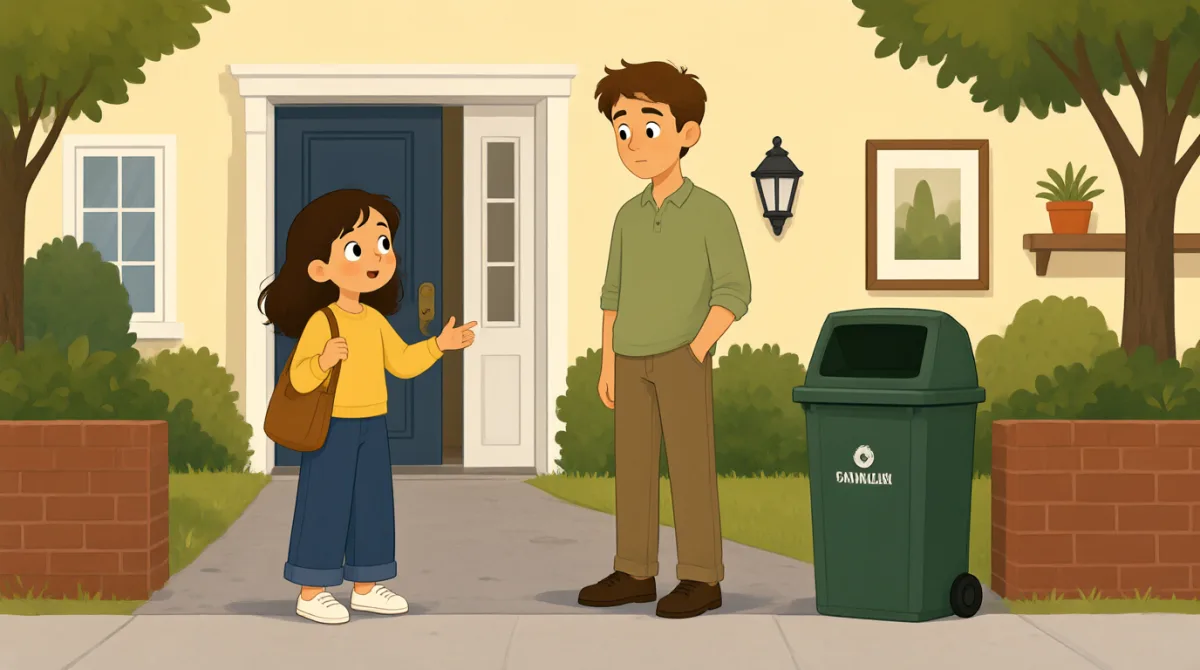

Jack, I wanted to check on a couple of house rules. Are there quiet hours in the evening?
Jack,我想确认几条住宿规定。晚上有安静时间的要求吗?

Yes, please keep things quiet after ten. The neighbors are friendly, but sound carries pretty easily here.
有的,晚上十点以后请尽量保持安静。邻居们都很友善,不过这里的声音很容易传出去。
Of course. And what should I do with the trash? Should I put it outside before I leave?
当然。那垃圾应该怎么处理?我离开前需要把它拿到外面吗?
There are bins beside the shed. Please separate recycling, and take the bags out before checkout if they're full.
棚子旁边有垃圾桶。请把可回收物分开,如果垃圾袋满了,退房前请拿出去。
Got it. One more thing: where should I park? I noticed the driveway looks a little narrow.
明白了。还有一件事:我应该把车停在哪里?我注意到车道好像有点窄。
You can park in the space by the fence. The driveway is tight, so it’s easier to back in slowly from the street.
你可以停在围栏旁边的车位。车道比较窄,所以从街上慢慢倒车进去会更方便。
Thanks for the heads-up. Is it okay if I leave my car there overnight?
谢谢你提前提醒我。我可以把车在那里停一整晚吗?
Absolutely. Just leave enough room for the gate to open, and you’ll be all set.
当然可以。只要留出足够的空间让大门打开,就没问题了。
词汇8
- quiet hours安静时段
Times when people are expected to keep noise down. Here, guests should be quiet after ten in the evening.
指人们应该尽量保持安静的时段。这里指晚上十点以后,住客应保持安静。
- sound carries声音容易传出去
Sound travels easily from one place to another. You can use this phrase to explain why people nearby may hear noise.
指声音很容易从一个地方传到另一个地方。你可以用这个短语解释为什么附近的人可能会听到噪声。
- separate recycling将可回收物分类
Sort recyclable items from other trash. This phrase is useful when asking or explaining how to dispose of waste.
把可回收物和其他垃圾分开。询问或说明如何处理垃圾时,这个短语很实用。
- before checkout退房前
Before you leave the rental at the end of your stay. Use it to describe a task that needs to be done before departing.
指住宿结束、离开租住处之前。可以用它来说明离开前需要完成的事情。
- heads-up提前提醒
A helpful warning or piece of information given in advance. You can say “Thanks for the heads-up” when someone alerts you to something useful.
指提前告知对方的一条有用信息或提醒。有人提醒了你一件有用的事时,可以说“Thanks for the heads-up”(谢谢你提前提醒我)。
- back in倒车驶入
To drive a vehicle into a parking space in reverse. It is often used when giving instructions about how to park.
指倒着把车开进停车位。给别人说明停车方式时经常会用到这个短语。
- tight狭窄的
Narrow or difficult to move through, with little extra space. Here, it describes a driveway that may be hard to drive into.
指空间窄、不容易通过,或没有多少余地。这里用来形容开车驶入时可能不太方便的车道。
- all set一切就妥当了
Ready, finished, or arranged without any problems. It’s a casual way to reassure someone that everything is taken care of.
指准备就绪、事情办完,或一切安排妥当。这是一种比较随意的说法,用来让对方放心,表示都安排好了。
重点句子7
- 1
Are there quiet hours in the evening?
晚上有安静时段吗?
Use this polite question to ask about rules for noise at a place you are visiting. You can replace “quiet hours” with another rule or restriction.
在去别人家或某个场所时,可以用这个礼貌的问句询问噪声方面的规定。你可以把“quiet hours”换成其他规定或限制。
- 2
And what should I do with the trash?
那垃圾应该怎么处理?
This is a natural way to ask how to handle something during your stay. Replace “the trash” with another item or task, such as the towels or dishes.
这是一种自然的问法,用来询问住宿期间该如何处理某件事。你可以把“the trash”换成其他物品或任务,比如毛巾或餐具。
- 3
Should I put it outside before I leave?
我离开前需要把它拿到外面吗?
Use this question to check whether you need to do something before departing. Replace “put it outside” with the action you want to confirm.
可以用这个问句确认离开前是否需要做某件事。你可以把“put it outside”换成你想确认的具体行动。
- 4
Please separate recycling, and take the bags out before checkout if they're full.
请把可回收物分开;如果垃圾袋满了,退房前请把它们拿出去。
This sentence gives two practical instructions and includes a condition with “if.” You can use the same pattern to explain what someone should do and when.
这个句子给出了两条实用指示,并用“if”表达条件。你可以用同样的句型说明别人应该做什么,以及在什么情况下要这么做。
- 5
I noticed the driveway looks a little narrow.
我注意到车道好像有点窄。
Use “I noticed…” to introduce something you have observed before asking a follow-up question. “A little” softens the description and makes it sound less direct.
可以用“I noticed…”引出你观察到的情况,然后再提出后续问题。“A little”能让描述语气更委婉,不那么直接。
- 6
The driveway is tight, so it’s easier to back in slowly from the street.
车道比较窄,所以从街上慢慢倒车进去会更方便。
This explains a problem and offers a practical solution using “so.” You can use this structure to give advice and a reason for it.
这个句子用“so”说明问题并给出实用的解决办法。你可以用这个结构提出建议,并说明理由。
- 7
Just leave enough room for the gate to open, and you’ll be all set.
只要留出足够的空间让大门打开,就没问题了。
This gives a simple instruction followed by reassurance. Use “leave enough room for…” when someone needs to keep space clear for something.
这个句子先给出一个简单的指示,再让对方放心。当需要为某物留出空位时,可以用“leave enough room for…”。