Getting the Key and a Tour
열쇠 전달과 숙소 안내
Jack meets Emma at the rental, hands over the key, and shows her around. Emma asks where to find a few useful things before settling in.
잭은 숙소에서 에마를 만나 열쇠를 건네고 이곳저곳을 안내해 줘요. 에마는 짐을 풀기 전에 필요한 물건 몇 가지가 어디 있는지 물어봐요.
대화9
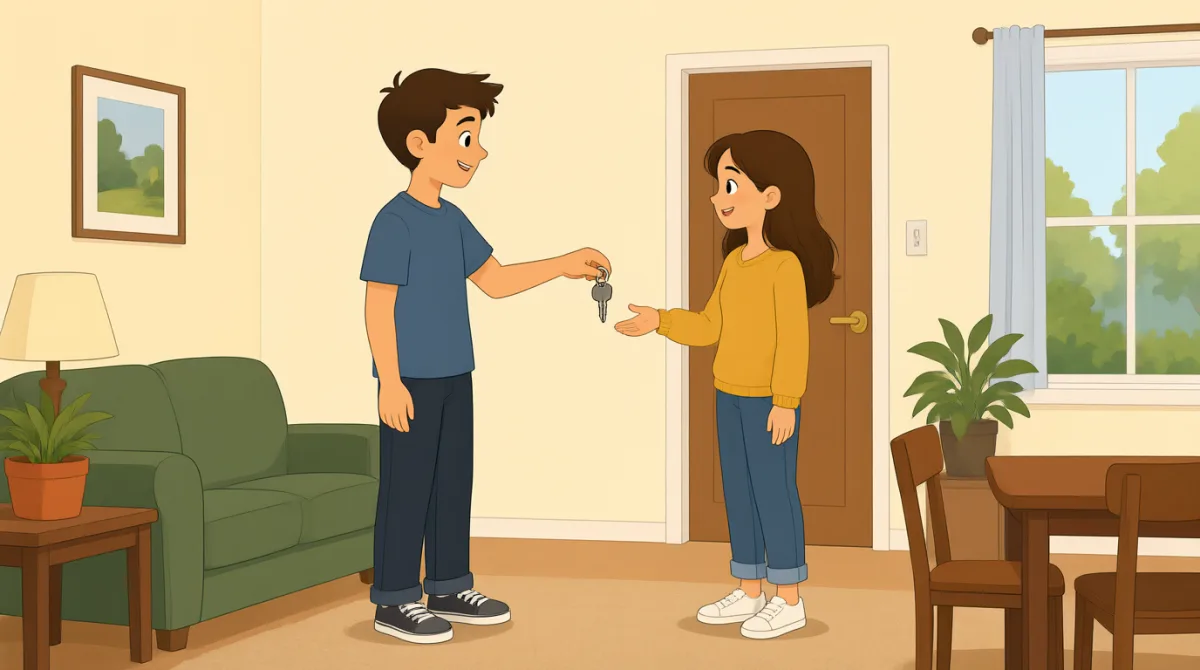

Hi, Emma! You made it. Here’s the key. Let me show you around before you get settled.
안녕, 에마! 잘 찾아왔네. 여기 열쇠야. 짐 풀기 전에 내가 좀 안내해 줄게.

Thanks! The place looks lovely. Where should I leave my shoes, and is it okay to open the windows?
고마워! 숙소가 정말 예쁘다. 신발은 어디에 두면 돼? 창문 열어도 괜찮아?
You can leave your shoes by the front door. And sure, open the windows—just remember to close them if it rains.
신발은 현관문 옆에 두면 돼. 창문은 열어도 괜찮아. 비가 오면 닫는 것만 잊지 마.
Got it. Could you show me where the towels are? I’d also like to find the extra blankets before tonight.
알겠어. 수건이 어디 있는지 알려줄래? 오늘 밤 전에 여분 담요도 찾아두고 싶어.
The towels are in the bathroom cabinet, and the extra blankets are in the bedroom closet on the top shelf.
수건은 욕실 수납장에 있고, 여분 담요는 침실 옷장 맨 위 선반에 있어.
Perfect. And how does the coffee maker work? I’m hoping to have a cup before I head out tomorrow.
좋아. 그런데 커피 머신은 어떻게 써? 내일 나가기 전에 커피 한 잔 마시고 싶어서.
Just add water here and a scoop of coffee in the filter. I’ve left a few packets on the counter to get you started.
여기에 물을 넣고 필터에 커피를 한 스푼 넣으면 돼. 시작할 때 쓰라고 조리대에 커피 몇 봉지 놔뒀어.
That’s really helpful, thanks. One last thing—where can I find a flashlight in case I need it at night?
정말 고마워, 도움이 많이 됐어. 마지막으로 하나만 더 물어볼게. 밤에 필요할 수도 있는데 손전등은 어디 있어?
There’s one in the kitchen drawer by the fridge. If anything else comes up, just message me and I’ll be happy to help.
냉장고 옆 주방 서랍에 하나 있어. 다른 일이 생기면 편하게 메시지 보내. 기꺼이 도와줄게.
어휘7
- You made it.잘 찾아왔네
This is a friendly way to say someone has arrived. You can use it to welcome a guest or friend.
누군가 도착했을 때 반갑게 맞이하며 하는 말이에요. 손님이나 친구를 환영할 때 쓸 수 있어요.
- show you around이곳저곳 안내해 주다
To show someone the different rooms or areas of a place. It is useful when welcoming someone to a home, hotel, or workplace.
장소의 여러 방이나 공간을 보여 주며 안내한다는 뜻이에요. 집이나 호텔, 직장에 누군가를 맞이할 때 유용한 표현이에요.
- get settled짐을 풀고 자리를 잡다
To unpack and become comfortable in a new place. You can use it when talking about arriving at a rental or moving into a new home.
짐을 풀고 새로운 장소에서 편안하게 지내기 시작한다는 뜻이에요. 숙소에 도착했거나 새집으로 이사했을 때 쓸 수 있어요.
- by the front door현관문 옆에
This means next to or near the main entrance. Use “by” to describe where something is located.
주된 출입구 바로 옆이나 가까이에 있다는 뜻이에요. “by”는 물건이 어디에 있는지 나타낼 때 쓸 수 있어요.
- get you started시작할 수 있도록 필요한 걸 챙겨 주다
This means to provide what someone needs at the beginning. You can use it when offering a small amount of help or supplies.
누군가가 처음 시작하는 데 필요한 것을 마련해 준다는 뜻이에요. 간단한 도움이나 물품을 제공할 때 쓸 수 있어요.
- in case I need it필요할 때를 대비해서
This means for a possible situation when something might be needed. Use “in case” to explain why you are preparing for something.
무언가가 필요할 수도 있는 상황에 대비한다는 뜻이에요. “in case”는 어떤 일에 대비하는 이유를 설명할 때 써요.
- comes up생기다
In this context, something that “comes up” is an unexpected question or problem. You can use this phrase when offering help if a need arises.
이 대화에서 “comes up”은 예상치 못한 질문이나 문제가 생긴다는 뜻이에요. 필요할 때 도와주겠다고 말할 때 쓸 수 있어요.
핵심 문장6
- 1
Let me show you around before you get settled.
짐 풀기 전에 내가 좀 안내해 줄게.
This is a welcoming way to offer someone a tour before they unpack or relax. You can reuse “Let me show you around” when introducing someone to a new place.
상대가 짐을 풀거나 편히 쉬기 전에 숙소를 둘러보게 해 주겠다는 친근한 표현이에요. 새로운 장소를 소개할 때 “Let me show you around”를 다시 활용해 보세요.
- 2
Where should I leave my shoes, and is it okay to open the windows?
신발은 어디에 두면 돼? 창문 열어도 괜찮아?
This politely asks about two practical house rules. You can replace “leave my shoes” or “open the windows” with other actions you want permission or guidance for.
집에서 지켜야 할 실용적인 규칙 두 가지를 공손하게 물어보는 말이에요. 허락이나 안내를 받고 싶은 다른 행동으로 “leave my shoes” 또는 “open the windows”를 바꿔 쓸 수 있어요.
- 3
Could you show me where the towels are?
수건이 어디 있는지 알려줄래?
This is a polite way to ask where something is. Reuse “Could you show me where the ___ is/are?” to ask about items in a home or other place.
물건이 어디 있는지 공손하게 묻는 표현이에요. 집이나 다른 장소에서 물건의 위치를 물을 때 “Could you show me where the ___ is/are?”를 활용해 보세요.
- 4
I’d also like to find the extra blankets before tonight.
오늘 밤 전에 여분 담요도 찾아두고 싶어.
This explains what you want to locate and when you will need it. You can use “I’d also like to find…” to add another request.
무엇을 어디서 찾고 싶은지, 그리고 언제 필요한지 설명하는 문장이에요. 다른 요청을 덧붙일 때 “I’d also like to find…”를 쓸 수 있어요.
- 5
I’m hoping to have a cup before I head out tomorrow.
내일 나가기 전에 커피 한 잔 마시고 싶어.
This naturally explains a plan using “I’m hoping to” and “head out,” which means leave. You can change the activity and time to describe your own plans.
“I’m hoping to”와 ‘떠나다’라는 뜻의 “head out”을 사용해 계획을 자연스럽게 설명하는 표현이에요. 자신의 계획을 말할 때 활동이나 시간을 바꿔 써 보세요.
- 6
If anything else comes up, just message me and I’ll be happy to help.
다른 일이 생기면 편하게 메시지 보내. 기꺼이 도와줄게.
This offers help in a friendly, reassuring way. You can reuse “If anything else comes up” when inviting someone to contact you with further questions.
친근하고 안심시키는 말투로 도움을 제안하는 문장이에요. 추가 질문이 있으면 연락해도 된다고 말할 때 “If anything else comes up”를 활용해 보세요.