Asking About House Rules and Parking
สอบถามกฎของที่พักและที่จอดรถ
Emma checks with Jack about quiet hours, taking out the trash, and where she can park. Jack explains the rules and offers a practical tip about the narrow driveway.
เอ็มมาถามแจ็กเรื่องช่วงเวลาที่ต้องงดใช้เสียง การนำขยะไปทิ้ง และที่จอดรถ แจ็กอธิบายกฎต่าง ๆ พร้อมแนะนำวิธีรับมือกับทางเข้าบ้านที่แคบ
บทสนทนา8
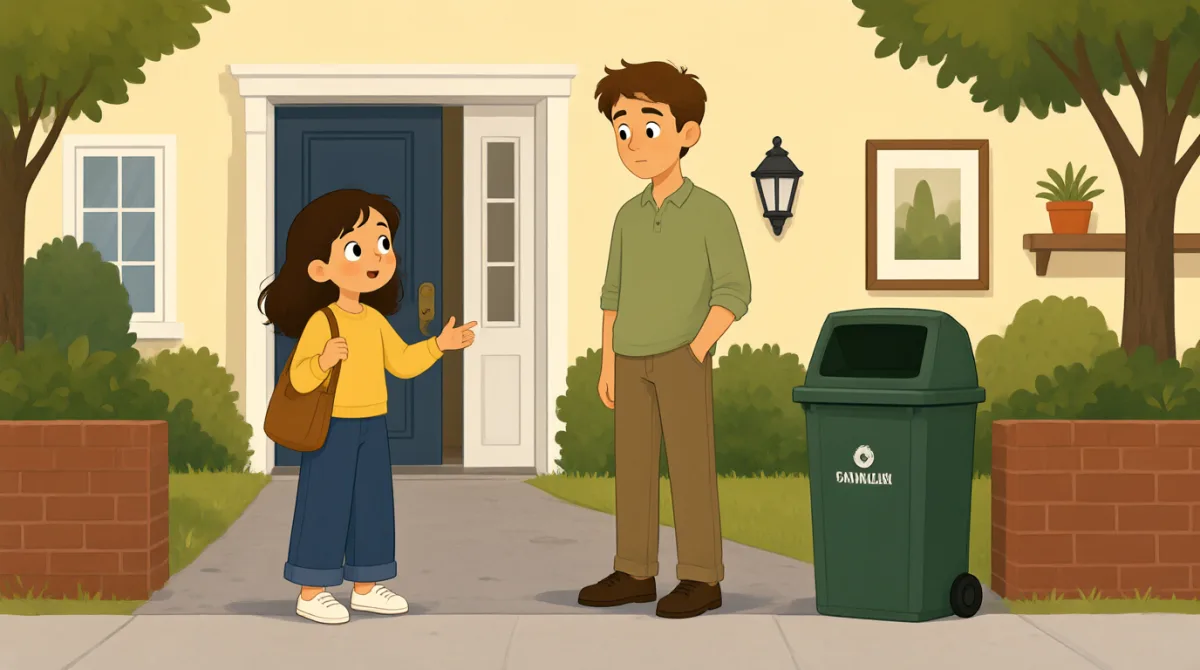

Jack, I wanted to check on a couple of house rules. Are there quiet hours in the evening?
แจ็ก ฉันอยากถามเรื่องกฎของที่พักสักสองสามข้อ ตอนกลางคืนมีช่วงเวลาที่ต้องงดใช้เสียงไหม

Yes, please keep things quiet after ten. The neighbors are friendly, but sound carries pretty easily here.
มี หลังสี่ทุ่มช่วยเงียบหน่อยนะ เพื่อนบ้านเป็นมิตรก็จริง แต่ที่นี่เสียงเดินทางได้ง่ายมาก
Of course. And what should I do with the trash? Should I put it outside before I leave?
ได้เลย แล้วขยะต้องจัดการยังไง ฉันควรเอาออกไปวางข้างนอกก่อนกลับไหม
There are bins beside the shed. Please separate recycling, and take the bags out before checkout if they're full.
มีถังขยะอยู่ข้างโรงเก็บของ ช่วยแยกขยะรีไซเคิลด้วยนะ แล้วถุงไหนเต็มก็เอาออกไปทิ้งก่อนเช็กเอาต์
Got it. One more thing: where should I park? I noticed the driveway looks a little narrow.
เข้าใจแล้ว อีกเรื่องนะ ฉันควรจอดรถตรงไหน ฉันเห็นว่าทางเข้าบ้านดูแคบนิดหน่อย
You can park in the space by the fence. The driveway is tight, so it’s easier to back in slowly from the street.
จอดตรงที่ว่างข้างรั้วได้เลย ทางเข้าค่อนข้างแคบ ถอยรถเข้ามาช้า ๆ จากถนนจะง่ายกว่า
Thanks for the heads-up. Is it okay if I leave my car there overnight?
ขอบคุณที่บอกนะ จอดรถทิ้งไว้ตรงนั้นข้ามคืนได้ไหม
Absolutely. Just leave enough room for the gate to open, and you’ll be all set.
ได้เลย แค่เว้นที่ให้ประตูรั้วเปิดได้ ก็เรียบร้อยแล้ว
คำศัพท์8
- quiet hoursช่วงเวลางดใช้เสียง
Times when people are expected to keep noise down. Here, guests should be quiet after ten in the evening.
ช่วงเวลาที่ทุกคนควรลดเสียงให้เบาลง ในที่นี้หมายถึงแขกควรเงียบหลังสี่ทุ่ม
- sound carriesเสียงเดินทางได้
Sound travels easily from one place to another. You can use this phrase to explain why people nearby may hear noise.
เสียงดังจากที่หนึ่งไปถึงอีกที่หนึ่งได้ง่าย ใช้สำนวนนี้เพื่ออธิบายว่าทำไมคนที่อยู่ใกล้ ๆ อาจได้ยินเสียงรบกวน
- separate recyclingแยกขยะรีไซเคิล
Sort recyclable items from other trash. This phrase is useful when asking or explaining how to dispose of waste.
แยกสิ่งของที่นำกลับมารีไซเคิลได้ออกจากขยะอื่น ๆ สำนวนนี้มีประโยชน์เวลาถามหรืออธิบายวิธีทิ้งขยะ
- before checkoutก่อนเช็กเอาต์
Before you leave the rental at the end of your stay. Use it to describe a task that needs to be done before departing.
ก่อนออกจากที่พักเมื่อสิ้นสุดการเข้าพัก ใช้พูดถึงสิ่งที่ต้องทำก่อนเดินทางกลับ
- heads-upคำเตือนล่วงหน้า
A helpful warning or piece of information given in advance. You can say “Thanks for the heads-up” when someone alerts you to something useful.
คำเตือนหรือข้อมูลที่เป็นประโยชน์ซึ่งบอกให้รู้ล่วงหน้า คุณพูดว่า “Thanks for the heads-up” ได้เมื่อมีคนแจ้งเรื่องที่เป็นประโยชน์ให้ทราบ
- back inถอยรถเข้าจอด
To drive a vehicle into a parking space in reverse. It is often used when giving instructions about how to park.
ขับรถถอยหลังเข้าไปในช่องจอด มักใช้เวลาแนะนำวิธีจอดรถ
- tightแคบ
Narrow or difficult to move through, with little extra space. Here, it describes a driveway that may be hard to drive into.
มีพื้นที่ไม่มากหรือผ่านได้ลำบาก ในที่นี้ใช้บรรยายทางเข้าบ้านที่อาจขับรถเข้าไปได้ยาก
- all setเรียบร้อยดี
Ready, finished, or arranged without any problems. It’s a casual way to reassure someone that everything is taken care of.
พร้อมแล้ว เสร็จแล้ว หรือจัดการทุกอย่างไว้เรียบร้อย เป็นคำพูดสบาย ๆ ที่ใช้บอกให้อีกฝ่ายสบายใจว่าทุกอย่างไม่มีปัญหา
ประโยคสำคัญ7
- 1
Are there quiet hours in the evening?
ตอนกลางคืนมีช่วงเวลาที่ต้องงดใช้เสียงไหม
Use this polite question to ask about rules for noise at a place you are visiting. You can replace “quiet hours” with another rule or restriction.
ใช้คำถามสุภาพนี้เพื่อถามเกี่ยวกับกฎเรื่องเสียงในสถานที่ที่คุณไปพัก คุณเปลี่ยน “quiet hours” เป็นกฎหรือข้อจำกัดอื่นได้
- 2
And what should I do with the trash?
แล้วขยะต้องจัดการยังไง
This is a natural way to ask how to handle something during your stay. Replace “the trash” with another item or task, such as the towels or dishes.
นี่เป็นวิธีถามที่ฟังเป็นธรรมชาติว่าระหว่างเข้าพักควรจัดการบางอย่างอย่างไร เปลี่ยน “the trash” เป็นสิ่งของหรืองานอื่นได้ เช่น ผ้าเช็ดตัวหรือจานชาม
- 3
Should I put it outside before I leave?
ฉันควรเอามันออกไปวางข้างนอกก่อนกลับไหม
Use this question to check whether you need to do something before departing. Replace “put it outside” with the action you want to confirm.
ใช้คำถามนี้เพื่อตรวจสอบว่าคุณต้องทำอะไรบางอย่างก่อนออกเดินทางหรือไม่ เปลี่ยน “put it outside” เป็นการกระทำที่คุณต้องการถามยืนยันได้
- 4
Please separate recycling, and take the bags out before checkout if they're full.
ช่วยแยกขยะรีไซเคิลด้วยนะ แล้วถุงไหนเต็มก็เอาออกไปทิ้งก่อนเช็กเอาต์
This sentence gives two practical instructions and includes a condition with “if.” You can use the same pattern to explain what someone should do and when.
ประโยคนี้ให้คำแนะนำที่ทำได้จริงสองข้อ และมีเงื่อนไขที่ใช้ “if” คุณใช้รูปแบบเดียวกันนี้เพื่ออธิบายว่าควรทำอะไรและเมื่อไรได้
- 5
I noticed the driveway looks a little narrow.
ฉันเห็นว่าทางเข้าบ้านดูแคบนิดหน่อย
Use “I noticed…” to introduce something you have observed before asking a follow-up question. “A little” softens the description and makes it sound less direct.
ใช้ “I noticed…” เพื่อเกริ่นถึงสิ่งที่คุณสังเกตเห็นก่อนถามคำถามต่อ “A little” ช่วยให้คำบรรยายฟังนุ่มนวลขึ้นและตรงน้อยลง
- 6
The driveway is tight, so it’s easier to back in slowly from the street.
ทางเข้าค่อนข้างแคบ ถอยรถเข้ามาช้า ๆ จากถนนจะง่ายกว่า
This explains a problem and offers a practical solution using “so.” You can use this structure to give advice and a reason for it.
ประโยคนี้อธิบายปัญหาและเสนอวิธีแก้ที่ทำได้จริงโดยใช้ “so” คุณใช้โครงสร้างนี้เพื่อให้คำแนะนำพร้อมบอกเหตุผลได้
- 7
Just leave enough room for the gate to open, and you’ll be all set.
แค่เว้นที่ให้ประตูรั้วเปิดได้ ก็เรียบร้อยแล้ว
This gives a simple instruction followed by reassurance. Use “leave enough room for…” when someone needs to keep space clear for something.
ประโยคนี้ให้คำแนะนำง่าย ๆ แล้วตามด้วยการยืนยันให้อีกฝ่ายสบายใจ ใช้ “leave enough room for…” เมื่อจำเป็นต้องเว้นพื้นที่ไว้ให้บางสิ่ง