Getting the Key and a Tour
चाबी लेना और घर का मुआयना
Jack meets Emma at the rental, hands over the key, and shows her around. Emma asks where to find a few useful things before settling in.
जैक किराये के घर पर एमा से मिलता है, उसे चाबी देता है और घर दिखाता है। रहने का सामान जमाने से पहले एमा पूछती है कि कुछ ज़रूरी चीज़ें कहाँ मिलेंगी।
संवाद9
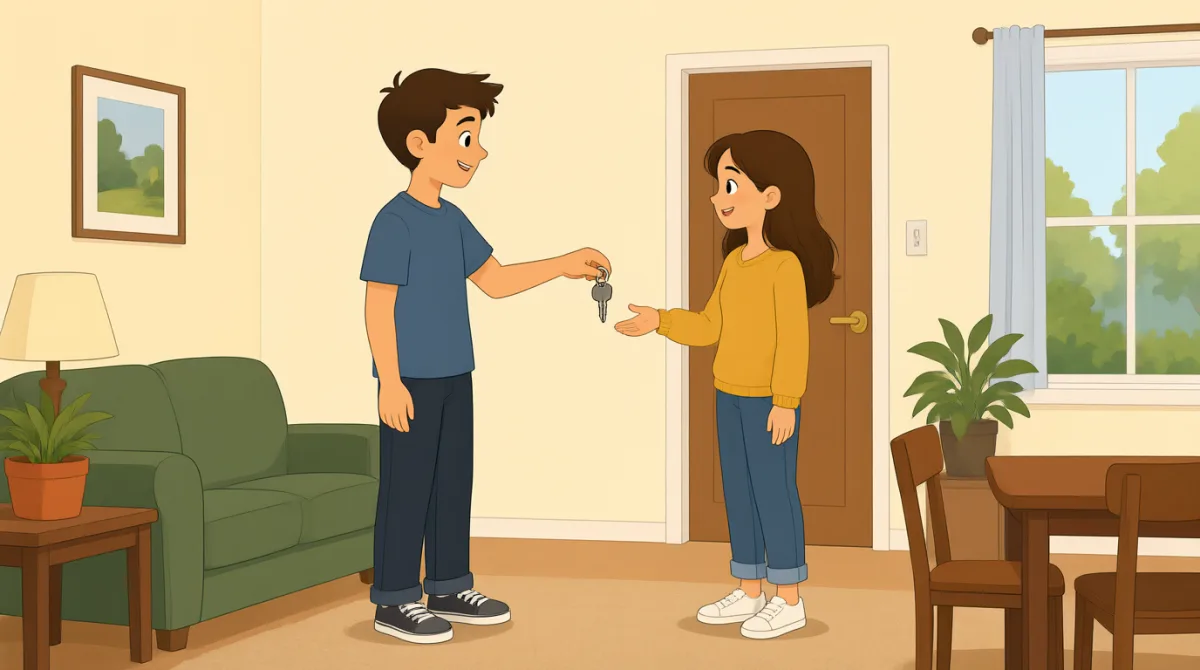

Hi, Emma! You made it. Here’s the key. Let me show you around before you get settled.
नमस्ते, एमा! आप पहुँच गईं। ये लीजिए चाबी। आपके सामान जमाने से पहले मैं आपको घर दिखा देता हूँ।

Thanks! The place looks lovely. Where should I leave my shoes, and is it okay to open the windows?
धन्यवाद! जगह बहुत प्यारी लग रही है। मुझे अपने जूते कहाँ रखने चाहिए, और क्या खिड़कियाँ खोलना ठीक है?
You can leave your shoes by the front door. And sure, open the windows—just remember to close them if it rains.
आप अपने जूते मुख्य दरवाज़े के पास रख सकती हैं। और हाँ, खिड़कियाँ खोल लीजिए—बस बारिश होने पर उन्हें बंद करना याद रखिएगा।
Got it. Could you show me where the towels are? I’d also like to find the extra blankets before tonight.
समझ गई। क्या आप मुझे दिखा सकते हैं कि तौलिये कहाँ हैं? आज रात से पहले मैं अतिरिक्त कंबल भी ढूँढ़ना चाहूँगी।
The towels are in the bathroom cabinet, and the extra blankets are in the bedroom closet on the top shelf.
तौलिये बाथरूम की अलमारी में हैं, और अतिरिक्त कंबल बेडरूम की अलमारी में सबसे ऊपर वाली शेल्फ़ पर हैं।
Perfect. And how does the coffee maker work? I’m hoping to have a cup before I head out tomorrow.
बहुत बढ़िया। और कॉफ़ी बनाने वाली मशीन कैसे चलती है? उम्मीद है कि कल बाहर जाने से पहले एक कप कॉफ़ी पी लूँगी।
Just add water here and a scoop of coffee in the filter. I’ve left a few packets on the counter to get you started.
यहाँ पानी डालिए और फ़िल्टर में एक चम्मच कॉफ़ी डालिए। शुरुआत के लिए मैंने काउंटर पर कॉफ़ी के कुछ पैकेट रखे हैं।
That’s really helpful, thanks. One last thing—where can I find a flashlight in case I need it at night?
यह बहुत मददगार है, धन्यवाद। बस एक आख़िरी बात—अगर रात में ज़रूरत पड़े तो मुझे टॉर्च कहाँ मिलेगी?
There’s one in the kitchen drawer by the fridge. If anything else comes up, just message me and I’ll be happy to help.
फ़्रिज के पास रसोई की दराज़ में एक टॉर्च है। अगर कोई और बात हो, तो बस मुझे संदेश भेज दीजिए। आपकी मदद करके मुझे खुशी होगी।
शब्दावली7
- You made it.आप पहुँच गए।
This is a friendly way to say someone has arrived. You can use it to welcome a guest or friend.
किसी के पहुँचने पर यह कहने का एक दोस्ताना तरीका है। किसी मेहमान या दोस्त का स्वागत करते समय आप इसका इस्तेमाल कर सकते हैं।
- show you aroundआपको जगह दिखाना
To show someone the different rooms or areas of a place. It is useful when welcoming someone to a home, hotel, or workplace.
किसी को किसी जगह के अलग-अलग कमरे या हिस्से दिखाना। किसी का घर, होटल या कार्यस्थल में स्वागत करते समय यह काम आता है।
- get settledजगह पर सामान जमाना
To unpack and become comfortable in a new place. You can use it when talking about arriving at a rental or moving into a new home.
नए स्थान पर सामान खोलकर व्यवस्थित करना और वहाँ सहज महसूस करने लगना। किराये की जगह पर पहुँचने या नए घर में रहने जाने के बारे में बात करते समय इसका इस्तेमाल कर सकते हैं।
- by the front doorमुख्य दरवाज़े के पास
This means next to or near the main entrance. Use “by” to describe where something is located.
इसका मतलब है मुख्य प्रवेश-द्वार के बगल में या उसके क़रीब। किसी चीज़ की जगह बताने के लिए “by” का इस्तेमाल करें।
- get you startedशुरुआत करने के लिए ज़रूरी चीज़ें देना
This means to provide what someone needs at the beginning. You can use it when offering a small amount of help or supplies.
इसका मतलब है किसी को शुरुआत में उसकी ज़रूरत की चीज़ें देना। थोड़ी-सी मदद या सामान देने की पेशकश करते समय आप इसका इस्तेमाल कर सकते हैं।
- in case I need itअगर मुझे इसकी ज़रूरत पड़े
This means for a possible situation when something might be needed. Use “in case” to explain why you are preparing for something.
इसका मतलब है किसी संभावित स्थिति के लिए, जिसमें किसी चीज़ की ज़रूरत पड़ सकती है। किसी चीज़ की तैयारी करने की वजह बताने के लिए “in case” का इस्तेमाल करें।
- comes upहो जाए / सामने आए
In this context, something that “comes up” is an unexpected question or problem. You can use this phrase when offering help if a need arises.
इस संदर्भ में, “comes up” का मतलब है कोई अप्रत्याशित सवाल या समस्या सामने आना। ज़रूरत पड़ने पर मदद की पेशकश करते समय आप इस वाक्यांश का इस्तेमाल कर सकते हैं।
मुख्य वाक्य6
- 1
Let me show you around before you get settled.
आपके सामान जमाने से पहले मैं आपको घर दिखा देता हूँ।
This is a welcoming way to offer someone a tour before they unpack or relax. You can reuse “Let me show you around” when introducing someone to a new place.
सामान खोलने या आराम करने से पहले किसी को जगह दिखाने की यह एक स्वागतपूर्ण पेशकश है। किसी को नई जगह से परिचित कराते समय आप “Let me show you around” का फिर से इस्तेमाल कर सकते हैं।
- 2
Where should I leave my shoes, and is it okay to open the windows?
मुझे अपने जूते कहाँ रखने चाहिए, और क्या खिड़कियाँ खोलना ठीक है?
This politely asks about two practical house rules. You can replace “leave my shoes” or “open the windows” with other actions you want permission or guidance for.
यह घर के दो रोज़मर्रा के नियमों के बारे में विनम्रता से पूछता है। जिन कामों के लिए आपको अनुमति या निर्देश चाहिए, उनके मुताबिक “leave my shoes” या “open the windows” की जगह दूसरे काम रख सकते हैं।
- 3
Could you show me where the towels are?
क्या आप मुझे दिखा सकते हैं कि तौलिये कहाँ हैं?
This is a polite way to ask where something is. Reuse “Could you show me where the ___ is/are?” to ask about items in a home or other place.
किसी चीज़ की जगह पूछने का यह एक विनम्र तरीका है। घर या किसी दूसरी जगह पर चीज़ों के बारे में पूछने के लिए “Could you show me where the ___ is/are?” का फिर से इस्तेमाल करें।
- 4
I’d also like to find the extra blankets before tonight.
मैं आज रात से पहले अतिरिक्त कंबल भी ढूँढ़ना चाहूँगी।
This explains what you want to locate and when you will need it. You can use “I’d also like to find…” to add another request.
इससे आप बताते हैं कि आप क्या ढूँढ़ना चाहते हैं और आपको उसकी ज़रूरत कब होगी। एक और चीज़ माँगने के लिए “I’d also like to find…” का इस्तेमाल कर सकते हैं।
- 5
I’m hoping to have a cup before I head out tomorrow.
उम्मीद है कि कल बाहर जाने से पहले एक कप कॉफ़ी पी लूँगी।
This naturally explains a plan using “I’m hoping to” and “head out,” which means leave. You can change the activity and time to describe your own plans.
यह “I’m hoping to” और “head out” (बाहर निकलना) का इस्तेमाल करके अपनी योजना को स्वाभाविक ढंग से बताता है। अपनी योजनाओं के बारे में बताने के लिए काम और समय बदल सकते हैं।
- 6
If anything else comes up, just message me and I’ll be happy to help.
अगर कोई और बात हो, तो बस मुझे संदेश भेज दीजिए। आपकी मदद करके मुझे खुशी होगी।
This offers help in a friendly, reassuring way. You can reuse “If anything else comes up” when inviting someone to contact you with further questions.
यह दोस्ताना और भरोसा दिलाने वाले ढंग से मदद की पेशकश करता है। किसी को और सवालों के लिए आपसे संपर्क करने का न्योता देते समय “If anything else comes up” का फिर से इस्तेमाल कर सकते हैं।