Getting the Key and a Tour
领取钥匙并参观民宿
Jack meets Emma at the rental, hands over the key, and shows her around. Emma asks where to find a few useful things before settling in.
Jack 在民宿迎接 Emma,交给她钥匙并带她参观。安顿下来前,Emma 询问了一些日用品放在哪里。
对话9
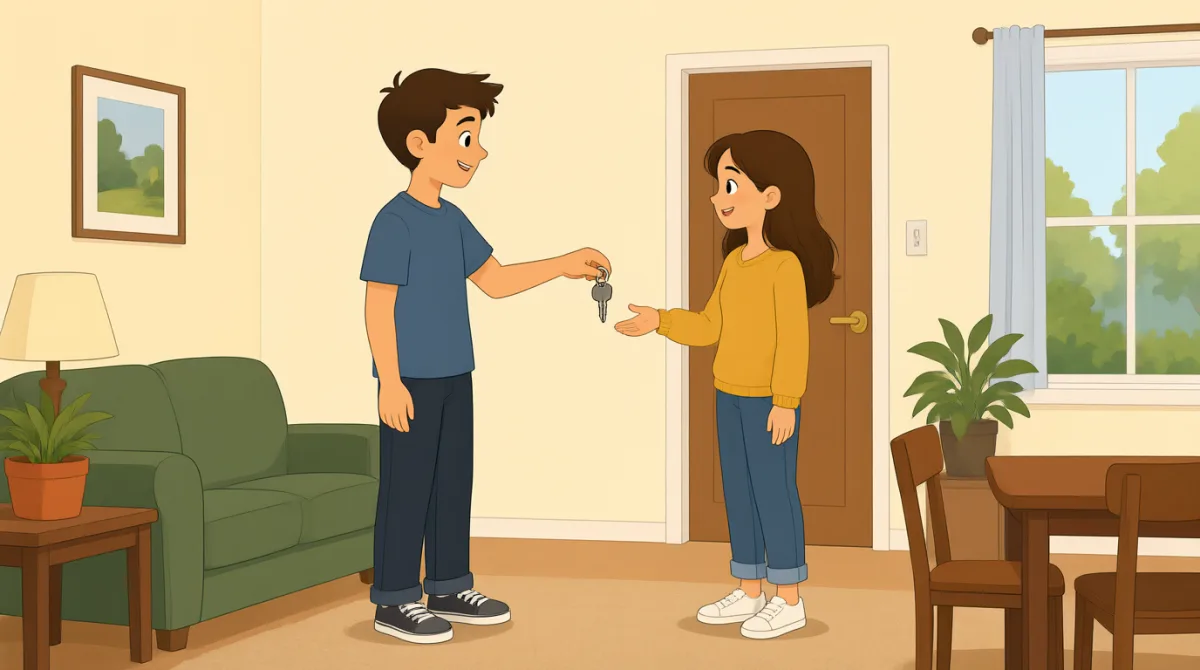

Hi, Emma! You made it. Here’s the key. Let me show you around before you get settled.
嗨,Emma!你到了。这是钥匙。我先带你四处看看,然后你再安顿下来。

Thanks! The place looks lovely. Where should I leave my shoes, and is it okay to open the windows?
谢谢!这里看起来真不错。我应该把鞋放在哪里?开窗可以吗?
You can leave your shoes by the front door. And sure, open the windows—just remember to close them if it rains.
你可以把鞋放在前门旁边。当然可以开窗——不过如果下雨,记得把窗户关上。
Got it. Could you show me where the towels are? I’d also like to find the extra blankets before tonight.
知道了。你能告诉我毛巾放在哪里吗?我也想在今晚之前找到备用毯子。
The towels are in the bathroom cabinet, and the extra blankets are in the bedroom closet on the top shelf.
毛巾在浴室的柜子里,备用毯子在卧室衣柜最上面的架子上。
Perfect. And how does the coffee maker work? I’m hoping to have a cup before I head out tomorrow.
太好了。咖啡机怎么用?我希望明天出门前能喝上一杯。
Just add water here and a scoop of coffee in the filter. I’ve left a few packets on the counter to get you started.
只要从这里加水,再往滤网里放一勺咖啡粉就行。我在台面上放了几包,方便你先用。
That’s really helpful, thanks. One last thing—where can I find a flashlight in case I need it at night?
这真是帮大忙了,谢谢。还有最后一件事——如果晚上需要手电筒,我可以去哪里找?
There’s one in the kitchen drawer by the fridge. If anything else comes up, just message me and I’ll be happy to help.
冰箱旁边的厨房抽屉里有一支。如果还有什么需要,给我发消息就行,我很乐意帮忙。
词汇7
- You made it.你到了
This is a friendly way to say someone has arrived. You can use it to welcome a guest or friend.
这是一种友好的说法,用来表示某人已经到了。你可以用它来欢迎客人或朋友。
- show you around带你四处看看
To show someone the different rooms or areas of a place. It is useful when welcoming someone to a home, hotel, or workplace.
指带某人参观一个地方的不同房间或区域。欢迎某人来到家里、酒店或工作场所时,这个短语很有用。
- get settled安顿下来
To unpack and become comfortable in a new place. You can use it when talking about arriving at a rental or moving into a new home.
指在新地方收拾好行李并适应下来。谈到入住民宿或搬进新家时,可以使用这个短语。
- by the front door在前门旁边
This means next to or near the main entrance. Use “by” to describe where something is located.
意思是在主要入口旁边或附近。用“by”来描述某物所在的位置。
- get you started让你先用起来
This means to provide what someone needs at the beginning. You can use it when offering a small amount of help or supplies.
意思是在开始时提供某人所需要的东西。提供少量帮助或物资时,可以使用这个短语。
- in case I need it以备我需要
This means for a possible situation when something might be needed. Use “in case” to explain why you are preparing for something.
意思是为某种可能需要某物的情况做准备。用“in case”来说明你为什么要提前准备。
- comes up出现
In this context, something that “comes up” is an unexpected question or problem. You can use this phrase when offering help if a need arises.
在这个语境中,某件事“comes up”是指出现了意料之外的问题或疑问。如果有人有需要,可以用这个短语表示愿意提供帮助。
重点句子6
- 1
Let me show you around before you get settled.
在你安顿下来之前,我先带你四处看看。
This is a welcoming way to offer someone a tour before they unpack or relax. You can reuse “Let me show you around” when introducing someone to a new place.
这是在对方收拾行李或放松下来之前,友好地提出带对方参观的说法。带别人了解一个新地方时,可以重复使用“Let me show you around”。
- 2
Where should I leave my shoes, and is it okay to open the windows?
我应该把鞋放在哪里?开窗可以吗?
This politely asks about two practical house rules. You can replace “leave my shoes” or “open the windows” with other actions you want permission or guidance for.
这是礼貌地询问两条实用的房屋规定。你可以把“leave my shoes”或“open the windows”替换成其他想要获得许可或指导的行为。
- 3
Could you show me where the towels are?
你能带我看看毛巾放在哪里吗?
This is a polite way to ask where something is. Reuse “Could you show me where the ___ is/are?” to ask about items in a home or other place.
这是礼貌地询问某物在哪里。询问家里或其他地方的物品时,可以套用“Could you show me where the ___ is/are?”。
- 4
I’d also like to find the extra blankets before tonight.
我还想在今晚之前找到备用毯子。
This explains what you want to locate and when you will need it. You can use “I’d also like to find…” to add another request.
这句话说明了你想找什么,以及什么时候需要它。想再提出一个请求时,可以使用“I’d also like to find…”。
- 5
I’m hoping to have a cup before I head out tomorrow.
我希望明天出门前能喝上一杯。
This naturally explains a plan using “I’m hoping to” and “head out,” which means leave. You can change the activity and time to describe your own plans.
这句话自然地用“I’m hoping to”和“head out”来说明计划,其中“head out”的意思是离开。你可以替换活动和时间,来描述自己的计划。
- 6
If anything else comes up, just message me and I’ll be happy to help.
如果还有什么问题,给我发消息就行,我很乐意帮忙。
This offers help in a friendly, reassuring way. You can reuse “If anything else comes up” when inviting someone to contact you with further questions.
这是一种友好而令人安心的提供帮助的方式。邀请别人有其他问题时联系你,可以套用“If anything else comes up”。