Getting the Key and a Tour
รับกุญแจและพาชมที่พัก
Jack meets Emma at the rental, hands over the key, and shows her around. Emma asks where to find a few useful things before settling in.
แจ็กพบเอมมาที่ที่พัก ส่งกุญแจให้เธอและพาเดินชมรอบ ๆ เอมมาถามว่าของใช้ที่จำเป็นอยู่ตรงไหนบ้างก่อนจะจัดข้าวของให้เข้าที่
บทสนทนา9
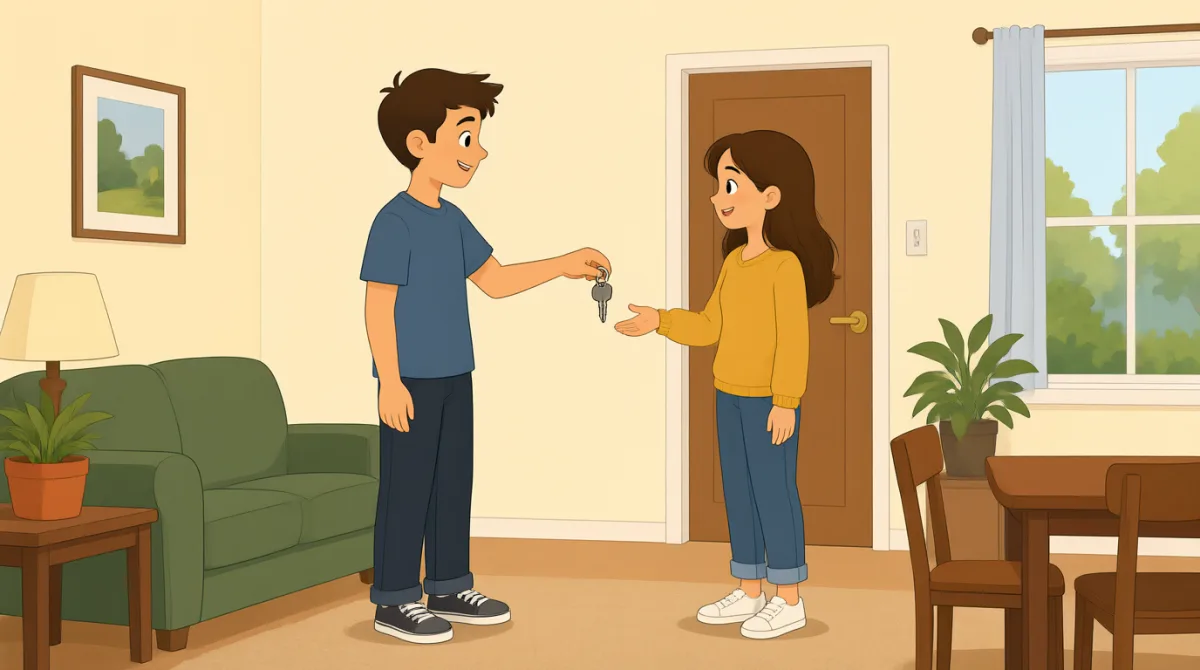

Hi, Emma! You made it. Here’s the key. Let me show you around before you get settled.
หวัดดี เอมมา! มาถึงแล้วนะ นี่กุญแจ เดี๋ยวฉันพาเดินชมรอบ ๆ ก่อนเธอจัดข้าวของให้เข้าที่

Thanks! The place looks lovely. Where should I leave my shoes, and is it okay to open the windows?
ขอบคุณนะ! ที่นี่น่ารักมาก ฉันควรวางรองเท้าไว้ตรงไหน แล้วเปิดหน้าต่างได้ไหม
You can leave your shoes by the front door. And sure, open the windows—just remember to close them if it rains.
วางรองเท้าไว้ข้างประตูหน้าบ้านได้เลย แล้วก็เปิดหน้าต่างได้ตามสบาย แต่อย่าลืมปิดถ้าฝนตกนะ
Got it. Could you show me where the towels are? I’d also like to find the extra blankets before tonight.
เข้าใจแล้ว ช่วยบอกหน่อยได้ไหมว่าผ้าเช็ดตัวอยู่ตรงไหน ฉันอยากหาผ้าห่มสำรองไว้ก่อนคืนนี้ด้วย
The towels are in the bathroom cabinet, and the extra blankets are in the bedroom closet on the top shelf.
ผ้าเช็ดตัวอยู่ในตู้ห้องน้ำ ส่วนผ้าห่มสำรองอยู่ในตู้เสื้อผ้าห้องนอน บนชั้นบนสุด
Perfect. And how does the coffee maker work? I’m hoping to have a cup before I head out tomorrow.
เยี่ยมเลย แล้วเครื่องชงกาแฟใช้ยังไงเหรอ พรุ่งนี้ฉันอยากดื่มสักแก้วก่อนออกไปข้างนอก
Just add water here and a scoop of coffee in the filter. I’ve left a few packets on the counter to get you started.
เติมน้ำตรงนี้ แล้วใส่กาแฟหนึ่งช้อนลงในตัวกรอง ฉันวางกาแฟซองไว้บนเคาน์เตอร์ให้สองสามซอง เผื่อเธอเริ่มใช้ก่อน
That’s really helpful, thanks. One last thing—where can I find a flashlight in case I need it at night?
ช่วยได้มากเลย ขอบคุณนะ อีกเรื่องสุดท้าย—ฉันจะหาไฟฉายได้ที่ไหน เผื่อต้องใช้ตอนกลางคืน
There’s one in the kitchen drawer by the fridge. If anything else comes up, just message me and I’ll be happy to help.
มีอันหนึ่งอยู่ในลิ้นชักครัวข้างตู้เย็น ถ้ามีอะไรต้องการอีกก็ส่งข้อความมาหาฉันได้เลย ฉันยินดีช่วย
คำศัพท์7
- You made it.มาถึงแล้ว
This is a friendly way to say someone has arrived. You can use it to welcome a guest or friend.
เป็นคำพูดเป็นกันเองที่ใช้บอกว่าใครบางคนมาถึงแล้ว ใช้ต้อนรับแขกหรือเพื่อนได้
- show you aroundพาเดินชมรอบ ๆ
To show someone the different rooms or areas of a place. It is useful when welcoming someone to a home, hotel, or workplace.
พาใครสักคนชมส่วนต่าง ๆ หรือห้องต่าง ๆ ของสถานที่แห่งหนึ่ง เป็นสำนวนที่ใช้ได้เมื่อต้อนรับคนที่บ้าน โรงแรม หรือที่ทำงาน
- get settledจัดข้าวของให้เข้าที่
To unpack and become comfortable in a new place. You can use it when talking about arriving at a rental or moving into a new home.
แกะของและเริ่มรู้สึกคุ้นเคยสบายใจในสถานที่ใหม่ ใช้พูดถึงการมาถึงที่พักหรือย้ายเข้าบ้านใหม่ได้
- by the front doorข้างประตูหน้าบ้าน
This means next to or near the main entrance. Use “by” to describe where something is located.
หมายถึงข้าง ๆ หรือใกล้ทางเข้าหลัก ใช้ “by” เพื่อบอกว่าสิ่งของตั้งอยู่ตรงไหน
- get you startedเตรียมไว้ให้เริ่มต้น
This means to provide what someone needs at the beginning. You can use it when offering a small amount of help or supplies.
หมายถึงจัดหาสิ่งที่อีกคนต้องใช้ในช่วงแรก ใช้ได้เมื่อเสนอความช่วยเหลือหรือของใช้จำนวนเล็กน้อย
- in case I need itเผื่อฉันต้องใช้
This means for a possible situation when something might be needed. Use “in case” to explain why you are preparing for something.
หมายถึงเตรียมไว้สำหรับสถานการณ์ที่อาจจำเป็นต้องใช้ ใช้ “in case” เพื่ออธิบายเหตุผลที่เตรียมตัวไว้
- comes upเกิดขึ้น
In this context, something that “comes up” is an unexpected question or problem. You can use this phrase when offering help if a need arises.
ในบริบทนี้ สิ่งที่ “comes up” คือคำถามหรือปัญหาที่เกิดขึ้นโดยไม่คาดคิด ใช้สำนวนนี้เมื่อเสนอตัวช่วยหากอีกฝ่ายมีเรื่องต้องการความช่วยเหลือ
ประโยคสำคัญ6
- 1
Let me show you around before you get settled.
เดี๋ยวฉันพาเดินชมรอบ ๆ ก่อนเธอจัดข้าวของให้เข้าที่
This is a welcoming way to offer someone a tour before they unpack or relax. You can reuse “Let me show you around” when introducing someone to a new place.
เป็นวิธีเสนอตัวพาชมสถานที่อย่างเป็นกันเองและต้อนรับ ก่อนที่อีกฝ่ายจะแกะของหรือพักผ่อน คุณนำ “Let me show you around” ไปใช้ซ้ำได้เมื่อต้องการพาใครชมสถานที่ใหม่
- 2
Where should I leave my shoes, and is it okay to open the windows?
ฉันควรวางรองเท้าไว้ตรงไหน แล้วเปิดหน้าต่างได้ไหม
This politely asks about two practical house rules. You can replace “leave my shoes” or “open the windows” with other actions you want permission or guidance for.
ประโยคนี้ใช้ถามกฎหรือข้อปฏิบัติในบ้านสองเรื่องอย่างสุภาพ คุณเปลี่ยน “leave my shoes” หรือ “open the windows” เป็นการกระทำอื่นที่อยากขออนุญาตหรือถามวิธีปฏิบัติก็ได้
- 3
Could you show me where the towels are?
ช่วยบอกหน่อยได้ไหมว่าผ้าเช็ดตัวอยู่ตรงไหน
This is a polite way to ask where something is. Reuse “Could you show me where the ___ is/are?” to ask about items in a home or other place.
เป็นวิธีถามอย่างสุภาพว่าสิ่งของอยู่ที่ไหน นำ “Could you show me where the ___ is/are?” ไปใช้ถามหาสิ่งของในบ้านหรือสถานที่อื่นได้
- 4
I’d also like to find the extra blankets before tonight.
ฉันอยากหาผ้าห่มสำรองไว้ก่อนคืนนี้ด้วย
This explains what you want to locate and when you will need it. You can use “I’d also like to find…” to add another request.
ประโยคนี้บอกว่าคุณอยากหาอะไรและต้องการใช้เมื่อไร ใช้ “I’d also like to find…” เพื่อเพิ่มคำขออีกอย่างได้
- 5
I’m hoping to have a cup before I head out tomorrow.
ฉันอยากดื่มสักแก้วก่อนออกไปข้างนอกพรุ่งนี้
This naturally explains a plan using “I’m hoping to” and “head out,” which means leave. You can change the activity and time to describe your own plans.
ประโยคนี้บอกแผนอย่างเป็นธรรมชาติโดยใช้ “I’m hoping to” และ “head out” ซึ่งหมายถึงออกไปข้างนอก คุณเปลี่ยนกิจกรรมและเวลาเพื่อเล่าแผนของตัวเองได้
- 6
If anything else comes up, just message me and I’ll be happy to help.
ถ้ามีอะไรต้องการอีกก็ส่งข้อความมาหาฉันได้เลย ฉันยินดีช่วย
This offers help in a friendly, reassuring way. You can reuse “If anything else comes up” when inviting someone to contact you with further questions.
ประโยคนี้เสนอตัวช่วยอย่างเป็นกันเองและทำให้อีกฝ่ายอุ่นใจ คุณใช้ “If anything else comes up” ซ้ำได้เมื่อต้องการบอกให้อีกฝ่ายติดต่อมาถ้ามีคำถามเพิ่มเติม