Getting the Key and a Tour
Odbiór klucza i oprowadzenie po domu
Jack meets Emma at the rental, hands over the key, and shows her around. Emma asks where to find a few useful things before settling in.
Jack spotyka się z Emmą w wynajętym domu, wręcza jej klucz i oprowadza ją po nim. Zanim Emma się rozgości, pyta, gdzie znaleźć kilka przydatnych rzeczy.
Dialog9
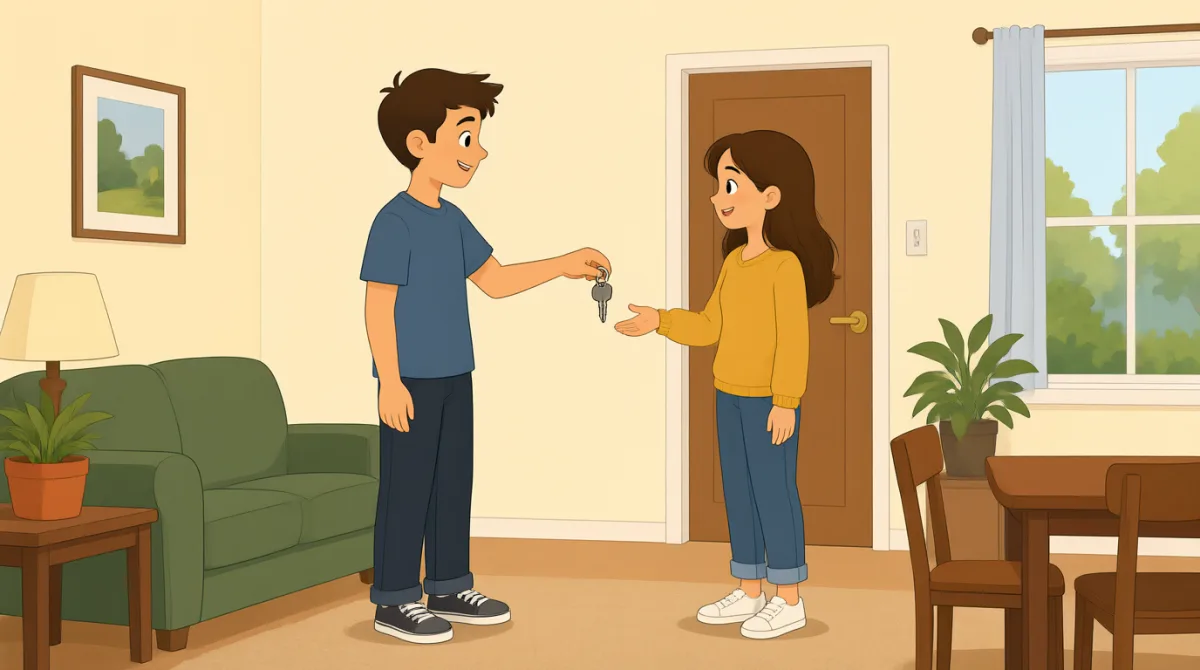

Hi, Emma! You made it. Here’s the key. Let me show you around before you get settled.
Cześć, Emma! Udało ci się dotrzeć. Proszę, oto klucz. Zanim się rozgościsz, oprowadzę cię.

Thanks! The place looks lovely. Where should I leave my shoes, and is it okay to open the windows?
Dzięki! Miejsce wygląda uroczo. Gdzie mam zostawić buty? I czy mogę otworzyć okna?
You can leave your shoes by the front door. And sure, open the windows—just remember to close them if it rains.
Możesz zostawić buty przy drzwiach wejściowych. Jasne, otwieraj okna — tylko pamiętaj, żeby je zamknąć, jeśli będzie padać.
Got it. Could you show me where the towels are? I’d also like to find the extra blankets before tonight.
Jasne. Pokażesz mi, gdzie są ręczniki? Chciałabym też znaleźć dodatkowe koce, zanim zapadnie wieczór.
The towels are in the bathroom cabinet, and the extra blankets are in the bedroom closet on the top shelf.
Ręczniki są w szafce w łazience, a dodatkowe koce w szafie w sypialni, na górnej półce.
Perfect. And how does the coffee maker work? I’m hoping to have a cup before I head out tomorrow.
Świetnie. A jak działa ekspres do kawy? Mam nadzieję, że zdążę wypić kawę, zanim jutro wyjdę.
Just add water here and a scoop of coffee in the filter. I’ve left a few packets on the counter to get you started.
Po prostu wlej tu wodę, a do filtra wsyp miarkę kawy. Zostawiłem kilka saszetek na blacie, żebyś miała na początek.
That’s really helpful, thanks. One last thing—where can I find a flashlight in case I need it at night?
Bardzo mi pomogłeś, dzięki. Jeszcze jedno — gdzie znajdę latarkę, na wypadek gdybym potrzebowała jej w nocy?
There’s one in the kitchen drawer by the fridge. If anything else comes up, just message me and I’ll be happy to help.
Jedna jest w szufladzie w kuchni, obok lodówki. Jeśli pojawi się coś jeszcze, po prostu do mnie napisz, a chętnie pomogę.
Słownictwo7
- You made it.Udało ci się dotrzeć.
This is a friendly way to say someone has arrived. You can use it to welcome a guest or friend.
To przyjazny sposób, by powiedzieć, że ktoś dotarł na miejsce. Możesz tak powitać gościa lub znajomego.
- show you aroundoprowadzić kogoś
To show someone the different rooms or areas of a place. It is useful when welcoming someone to a home, hotel, or workplace.
Pokazać komuś różne pokoje lub części jakiegoś miejsca. Przydaje się, gdy witasz kogoś w domu, hotelu albo miejscu pracy.
- get settledrozgościć się
To unpack and become comfortable in a new place. You can use it when talking about arriving at a rental or moving into a new home.
Rozpakować się i poczuć swobodnie w nowym miejscu. Możesz użyć tego wyrażenia, mówiąc o przyjeździe do wynajętego lokum lub przeprowadzce do nowego domu.
- by the front doorprzy drzwiach wejściowych
This means next to or near the main entrance. Use “by” to describe where something is located.
Oznacza obok głównego wejścia lub w jego pobliżu. Użyj „by”, by opisać, gdzie coś się znajduje.
- get you startedna początek
This means to provide what someone needs at the beginning. You can use it when offering a small amount of help or supplies.
Oznacza zapewnić komuś to, czego potrzebuje na początku. Możesz użyć tego wyrażenia, oferując niewielką pomoc lub zapasy.
- in case I need itna wypadek, gdybym tego potrzebował
This means for a possible situation when something might be needed. Use “in case” to explain why you are preparing for something.
Oznacza przygotowanie się na sytuację, w której coś może się przydać. Użyj „in case”, by wyjaśnić, dlaczego się na coś przygotowujesz.
- comes uppojawi się
In this context, something that “comes up” is an unexpected question or problem. You can use this phrase when offering help if a need arises.
W tym kontekście coś, co „comes up”, to nieoczekiwane pytanie lub problem. Możesz użyć tego wyrażenia, oferując pomoc, gdyby coś się wydarzyło.
Kluczowe zdania6
- 1
Let me show you around before you get settled.
Zanim się rozgościsz, oprowadzę cię.
This is a welcoming way to offer someone a tour before they unpack or relax. You can reuse “Let me show you around” when introducing someone to a new place.
To serdeczna propozycja oprowadzenia kogoś, zanim się rozpakowuje lub odpocznie. Możesz ponownie użyć „Let me show you around”, gdy pokazujesz komuś nowe miejsce.
- 2
Where should I leave my shoes, and is it okay to open the windows?
Gdzie mam zostawić buty? I czy mogę otworzyć okna?
This politely asks about two practical house rules. You can replace “leave my shoes” or “open the windows” with other actions you want permission or guidance for.
To uprzejme pytanie o dwie praktyczne zasady panujące w domu. Zamiast „leave my shoes” lub „open the windows” możesz wstawić inne czynności, w sprawie których chcesz uzyskać pozwolenie lub wskazówki.
- 3
Could you show me where the towels are?
Pokażesz mi, gdzie są ręczniki?
This is a polite way to ask where something is. Reuse “Could you show me where the ___ is/are?” to ask about items in a home or other place.
To uprzejmy sposób, by zapytać, gdzie coś się znajduje. Możesz użyć wzoru „Could you show me where the ___ is/are?”, pytając o rzeczy w domu lub innym miejscu.
- 4
I’d also like to find the extra blankets before tonight.
Chciałabym też znaleźć dodatkowe koce, zanim zapadnie wieczór.
This explains what you want to locate and when you will need it. You can use “I’d also like to find…” to add another request.
To informacja o tym, czego chcesz poszukać i kiedy będzie ci to potrzebne. Możesz użyć „I’d also like to find…”, by dodać kolejną prośbę.
- 5
I’m hoping to have a cup before I head out tomorrow.
Mam nadzieję, że zdążę wypić kawę, zanim jutro wyjdę.
This naturally explains a plan using “I’m hoping to” and “head out,” which means leave. You can change the activity and time to describe your own plans.
To naturalny sposób, by opowiedzieć o planach, używając „I’m hoping to” i „head out”, czyli „wychodzić”. Możesz zmienić czynność i czas, by opisać własne plany.
- 6
If anything else comes up, just message me and I’ll be happy to help.
Jeśli pojawi się coś jeszcze, po prostu do mnie napisz, a chętnie pomogę.
This offers help in a friendly, reassuring way. You can reuse “If anything else comes up” when inviting someone to contact you with further questions.
To przyjazna i uspokajająca oferta pomocy. Możesz użyć „If anything else comes up”, zachęcając kogoś, by skontaktował się z tobą w razie kolejnych pytań.