Explaining Symptoms to the Doctor
의사에게 증상 설명하기
At the clinic, Emma describes her symptoms and when they started, while Dr. Grace asks questions and recommends treatment. Emma checks whether the medicine will affect her planned activities.
진료소에서 에마가 증상과 증상이 시작된 시점을 설명하고, 그레이스 의사는 질문을 한 뒤 치료법을 권합니다. 에마는 약이 예정된 활동에 영향을 줄지 확인합니다.
대화10
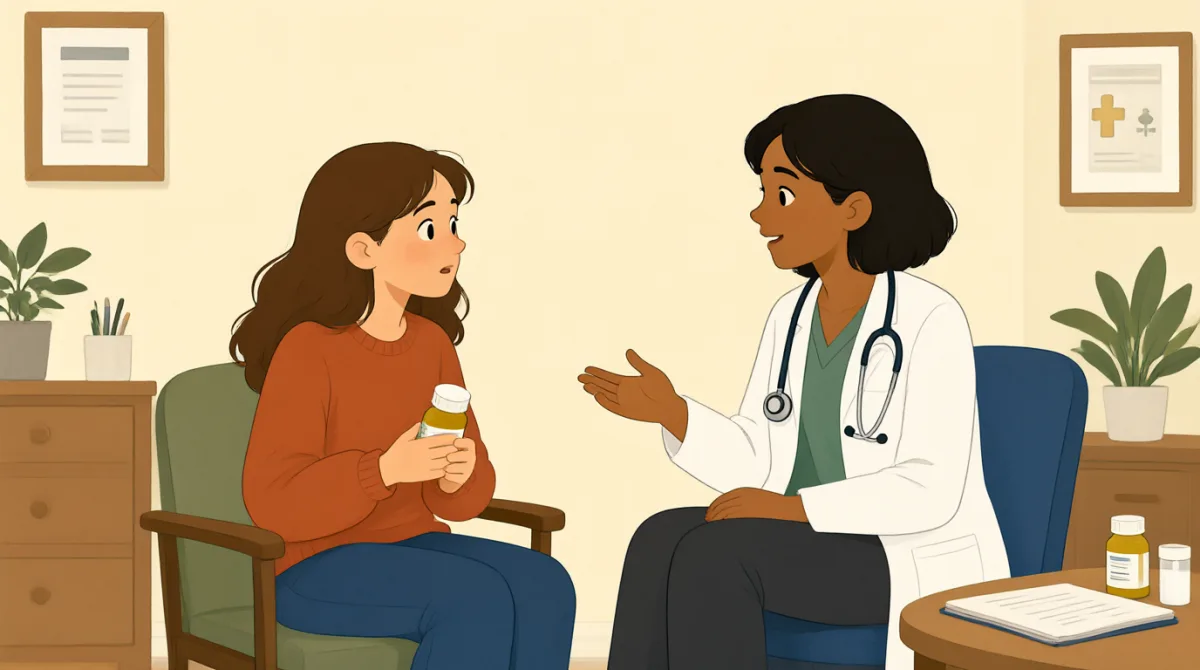

Hi, Dr. Wilson. I’ve had a fever and stomach pain since yesterday evening, and I feel worse this morning.
안녕하세요, 윌슨 선생님. 어제 저녁부터 열이 나고 배가 아팠는데, 오늘 아침에는 더 심해졌어요.

I’m sorry to hear that. Have you had any nausea, vomiting, or diarrhea since the pain started?
그랬군요. 통증이 시작된 뒤로 메스껍거나 토하거나 설사한 적이 있나요?
I felt nauseous last night, but I haven’t thrown up. I’ve had diarrhea twice, and the pain comes and goes.
어젯밤에 메스꺼웠지만 토하진 않았어요. 설사는 두 번 했고, 배 아픈 건 괜찮아졌다가 다시 아파요.
Where exactly does it hurt? And have you been able to drink water and keep it down?
정확히 어디가 아프세요? 물을 마시면 토하지 않고 괜찮으세요?
It’s mostly around my stomach, not on one side. I can drink water, but I don’t have much appetite.
주로 배 쪽이 아프고, 한쪽만 아픈 건 아니에요. 물은 마실 수 있지만 식욕이 별로 없어요.
Okay. Your temperature is a little high, but your symptoms may be from a stomach infection. I’ll examine you first.
알겠습니다. 열이 조금 높긴 하지만, 위장 감염 때문에 이런 증상이 생겼을 수 있어요. 먼저 진찰해 볼게요.
That makes sense. I was worried it might be something serious. Do you think I’ll need any tests?
그렇군요. 심각한 병일까 봐 걱정했어요. 검사도 받아야 할까요?
For now, rest and drink plenty of fluids. I’ll give you medicine for the fever and nausea. Take it as directed.
우선 쉬시고 수분을 충분히 섭취하세요. 열과 메스꺼움에 먹는 약을 드릴게요. 복용법에 따라 드세요.
Thanks. Will the medicine make me sleepy? We planned to visit a museum this afternoon, but I can skip it.
감사합니다. 약을 먹으면 졸릴까요? 오늘 오후에 박물관에 가려고 했는데, 안 가도 괜찮아요.
It might make you a little drowsy, so take it easy today. If the pain gets worse or you can’t keep fluids down, come back.
조금 졸릴 수 있으니 오늘은 무리하지 마세요. 통증이 심해지거나 물을 마셔도 토하게 되면 다시 오세요.
어휘7
- since yesterday evening어제 저녁부터
This tells someone when a symptom began and suggests it has continued until now.
증상이 언제 시작됐는지 말할 때 쓰는 표현이에요. 증상이 그때 시작되어 지금까지 계속되고 있다는 뜻도 담고 있어요.
- thrown up토하다
This is an informal way to say “vomited.” You can say whether you have or haven’t thrown up.
“토하다”를 편하게 말하는 표현이에요. 토했는지 안 했는지 말할 때 쓸 수 있어요.
- comes and goes괜찮아졌다가 다시 나타나다
This means something happens for a while, stops, and then returns. It is useful for describing pain that is not constant.
어떤 일이 한동안 일어나다가 멈춘 뒤 다시 생긴다는 뜻이에요. 통증이 계속 이어지지 않을 때 설명하기 좋아요.
- keep it down토하지 않고 넘기다
This means to drink or eat something without vomiting it. A doctor may ask if you can keep water or medicine down.
음식이나 음료를 마시거나 먹은 뒤 토하지 않는다는 뜻이에요. 의사는 물이나 약을 먹어도 토하지 않는지 물어볼 수 있어요.
- plenty of fluids수분을 충분히 섭취하다
This means a large enough amount of drinks, especially water. It is a common recommendation when you are sick.
물을 비롯한 음료를 충분한 양만큼 마신다는 뜻이에요. 아플 때 흔히 듣는 권고예요.
- take it easy무리하지 않다
This means to rest and avoid doing too much. You can use it when advising someone to have a quiet day.
쉬면서 너무 많은 일을 하지 않는다는 뜻이에요. 조용히 쉬어야 한다고 권할 때 쓸 수 있어요.
- a little drowsy조금 졸린
This means slightly sleepy. It can describe a possible effect of medicine.
약간 졸리다는 뜻이에요. 약을 먹었을 때 생길 수 있는 영향을 설명할 때 쓸 수 있어요.
핵심 문장7
- 1
I’ve had a fever and stomach pain since yesterday evening, and I feel worse this morning.
어제 저녁부터 열이 나고 배가 아팠는데, 오늘 아침에는 더 심해졌어요.
This is a useful way to explain your symptoms and when they started. You can replace the symptoms and time with your own details.
증상과 증상이 시작된 시점을 설명할 때 유용한 문장이에요. 증상과 시간 부분을 자신의 상황에 맞게 바꿔 말할 수 있어요.
- 2
I’ve had diarrhea twice, and the pain comes and goes.
설사는 두 번 했고, 배 아픈 건 괜찮아졌다가 다시 아파요.
This gives the doctor specific information about how often a symptom happened and what the pain is like. Use “comes and goes” for symptoms that are not constant.
증상이 몇 번 있었는지와 통증이 어떤지 의사에게 구체적으로 알려주는 문장이에요. 증상이 계속 이어지지 않을 때는 “comes and goes”라고 표현해요.
- 3
I can drink water, but I don’t have much appetite.
물은 마실 수 있지만 식욕이 별로 없어요.
This describes what you can manage and what is difficult for you. You can use “I can…, but I don’t…” to explain two contrasting details.
할 수 있는 것과 하기 어려운 것을 함께 설명하는 표현이에요. 서로 대비되는 두 가지를 말할 때 “I can…, but I don’t…”를 활용할 수 있어요.
- 4
I was worried it might be something serious.
심각한 병일까 봐 걱정했어요.
This is a natural way to tell a doctor what you have been concerned about. “I was worried it might be…” can introduce a possible problem.
의사에게 무엇이 걱정됐는지 자연스럽게 말하는 표현이에요. “I was worried it might be…” 뒤에 걱정했던 문제를 이어서 말할 수 있어요.
- 5
Do you think I’ll need any tests?
검사도 받아야 할까요?
This is a polite way to ask a healthcare professional what may happen next. You can replace “tests” with another expected step or treatment.
의료진에게 다음에 어떤 일이 있을지 정중하게 묻는 표현이에요. “tests”를 예상되는 다른 절차나 치료로 바꿔 말할 수도 있어요.
- 6
Will the medicine make me sleepy?
약을 먹으면 졸릴까요?
This asks about a possible side effect of medicine. You can replace “sleepy” with another effect you want to ask about.
약의 부작용이 있을 수 있는지 묻는 표현이에요. 궁금한 다른 영향이 있다면 “sleepy”를 바꿔 말할 수 있어요.
- 7
If the pain gets worse or you can’t keep fluids down, come back.
통증이 심해지거나 물을 마셔도 토하게 되면 다시 오세요.
This gives clear conditions for when someone should return for medical help. Use “If…” to describe a situation that requires action.
언제 다시 진료를 받으러 와야 하는지 조건을 분명하게 알려주는 문장이에요. 조치가 필요한 상황을 말할 때 “If…”로 시작할 수 있어요.