Favorite Childhood Food
어린 시절 가장 좋아했던 음식
Mia asks Emma and Leo what food they loved as children. They talk about family meals and treats they still remember.
미아가 에마와 레오에게 어릴 때 어떤 음식을 좋아했는지 물어봐. 둘은 가족과 함께 먹던 식사와 아직도 기억나는 간식에 대해 이야기해.
대화9
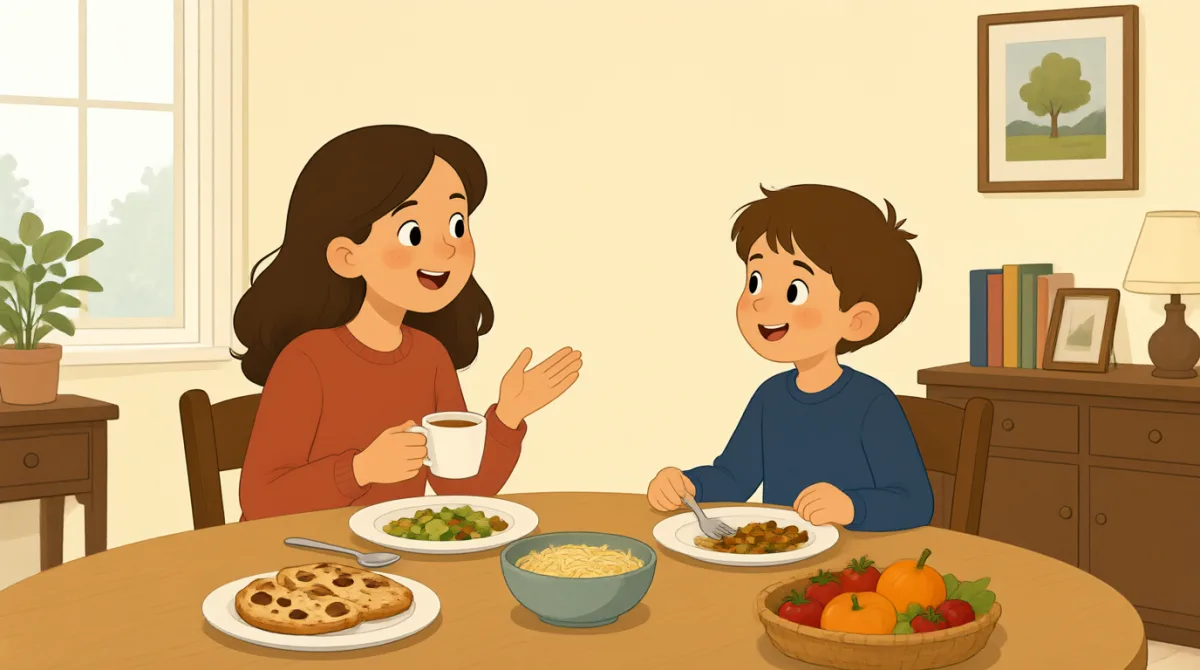

What food did you love as a child, Emma?
에마, 어릴 때 어떤 음식 좋아했어?

I loved my mother's tomato soup and grilled cheese sandwiches.
난 엄마가 해 주신 토마토 수프랑 구운 치즈 샌드위치를 좋아했어.

I always asked for my grandmother's noodles when I visited her.
할머니 댁에 갈 때마다 할머니가 해 주시는 국수를 늘 먹고 싶다고 했어.
That sounds good! Did you eat them for lunch or dinner?
맛있겠다! 점심으로 먹었어, 저녁으로 먹었어?
Usually dinner. She made a big pot, and we all ate together.
보통 저녁으로 먹었어. 할머니가 큰 냄비에 한가득 끓여 주셔서 다 같이 먹었지.
My family had soup on cold days. I still remember its smell.
우리 가족은 추운 날에 수프를 먹었어. 그 냄새가 아직도 기억나.
Did you have a favorite treat, too?
좋아하는 간식도 있었어?
Yes! My dad bought me strawberry ice cream after school sometimes.
응! 아빠가 가끔 방과 후에 딸기 아이스크림을 사 주셨어.
Those little treats made childhood special, didn't they?
그런 소소한 간식들이 어린 시절을 특별하게 만들어 줬지, 그렇지?
어휘7
- as a child어릴 때
This means when someone was young. Use it to talk about things you liked or did in the past.
누군가 어렸을 때를 뜻해요. 과거에 좋아했던 것이나 했던 일을 말할 때 써요.
- grilled cheese sandwiches구운 치즈 샌드위치
These are sandwiches with melted cheese, often cooked in a pan. Emma remembers eating them with tomato soup.
치즈를 녹여 넣고 팬에 굽는 샌드위치예요. 에마는 토마토 수프와 함께 먹었던 걸 기억하고 있어요.
- asked for달라고 했다
This means requested or wanted something. You can say, “I asked for my favorite dessert.”
무언가를 요청하거나 원했다는 뜻이에요. “I asked for my favorite dessert.”(내가 제일 좋아하는 디저트를 달라고 했어.)처럼 말할 수 있어요.
- visited her그녀를 찾아갔다
This means went to see her. Use “visited” to talk about going to someone’s home or another place.
그녀를 만나러 갔다는 뜻이에요. 누군가의 집이나 다른 장소에 찾아간 일을 말할 때 “visited”를 써요.
- a big pot큰 냄비
A pot is a deep cooking container, and “a big pot” means a large one. You can use this phrase when talking about cooking food for many people.
“pot”은 깊은 조리용 냄비이고, “a big pot”은 큰 냄비를 뜻해요. 여러 사람을 위해 음식을 요리할 때 쓸 수 있는 표현이에요.
- ate together함께 먹었다
This means shared a meal with other people. You can use it to describe a family meal.
다른 사람들과 함께 식사했다는 뜻이에요. 가족이 함께한 식사를 묘사할 때 쓸 수 있어요.
- after school방과 후에
This means when school has finished for the day. Use it to talk about activities or treats that happen then.
그날 수업이 끝난 뒤를 뜻해요. 그 시간에 하는 활동이나 먹는 간식을 말할 때 써요.
핵심 문장8
- 1
What food did you love as a child, Emma?
에마, 어릴 때 어떤 음식 좋아했어?
This is a friendly way to ask about someone’s childhood favorites. You can replace “food” with another topic, such as “What game did you love as a child?”
누군가가 어릴 때 좋아했던 것을 친근하게 물어보는 표현이에요. “food” 대신 “What game did you love as a child?”처럼 다른 주제를 넣을 수도 있어요.
- 2
I loved my mother's tomato soup and grilled cheese sandwiches.
난 엄마가 해 주신 토마토 수프랑 구운 치즈 샌드위치를 좋아했어.
This sentence describes favorite foods from the past. Use “I loved” to talk about something you enjoyed when you were younger.
과거에 좋아했던 음식을 말하는 문장이에요. 어렸을 때 즐겨 먹거나 좋아했던 것을 말할 때 “I loved”를 써요.
- 3
I always asked for my grandmother's noodles when I visited her.
할머니 댁에 갈 때마다 할머니가 해 주시는 국수를 늘 먹고 싶다고 했어.
This sentence connects a repeated request with a past visit. You can use “I always asked for...” to describe something you often wanted.
반복해서 무언가를 부탁했던 일과 과거에 방문했던 때를 연결하는 문장이에요. 자주 원했던 것을 설명할 때 “I always asked for...”를 쓸 수 있어요.
- 4
Did you eat them for lunch or dinner?
점심으로 먹었어, 저녁으로 먹었어?
This is a simple way to ask when someone ate a food. Use “Did you eat it for lunch or dinner?” when asking about one food.
누군가 어떤 음식을 언제 먹었는지 간단히 물어보는 표현이에요. 음식 하나에 대해 물을 때는 “Did you eat it for lunch or dinner?”라고 할 수 있어요.
- 5
She made a big pot, and we all ate together.
할머니가 큰 냄비에 한가득 끓여 주셔서 다 같이 먹었지.
This sentence describes preparing food and sharing a meal. You can use “we all ate together” when talking about a group meal.
음식을 준비하고 함께 식사하는 모습을 묘사하는 문장이에요. 여러 사람이 함께 먹은 식사를 말할 때 “we all ate together”를 쓸 수 있어요.
- 6
My family had soup on cold days.
우리 가족은 추운 날에 수프를 먹었어.
This sentence explains when a family usually ate a certain food. Use “on [kind of] days” to talk about a regular routine, such as “on rainy days.”
가족이 어떤 음식을 주로 언제 먹었는지 설명하는 문장이에요. “on [kind of] days”는 “on rainy days”(비 오는 날에)처럼 정기적으로 하는 일을 말할 때 쓸 수 있어요.
- 7
My dad bought me strawberry ice cream after school sometimes.
아빠가 가끔 방과 후에 딸기 아이스크림을 사 주셨어.
This sentence tells what someone bought and when. You can reuse “bought me [something] after school” to talk about a treat or gift.
누군가 무엇을 사 줬는지, 그리고 언제 사 줬는지를 말하는 문장이에요. 간식이나 선물에 관해 이야기할 때 “bought me [something] after school”을 활용할 수 있어요.
- 8
Those little treats made childhood special, didn't they?
그런 소소한 간식들이 어린 시절을 특별하게 만들어 줬지, 그렇지?
This is a warm way to share a thought and invite someone to agree. You can use “..., didn't they?” after a positive statement.
따뜻하게 생각을 나누면서 상대방의 동의를 구하는 표현이에요. 긍정적인 말을 한 뒤에 “..., didn't they?”를 붙여 쓸 수 있어요.