Games We Played
우리가 했던 놀이
Leo joins Emma and Mia to talk about the games they played as children. They compare their favorite outdoor games.
레오가 에마와 미아와 함께 어릴 때 했던 놀이에 대해 이야기해요. 셋은 좋아했던 야외 놀이를 비교해요.
대화9
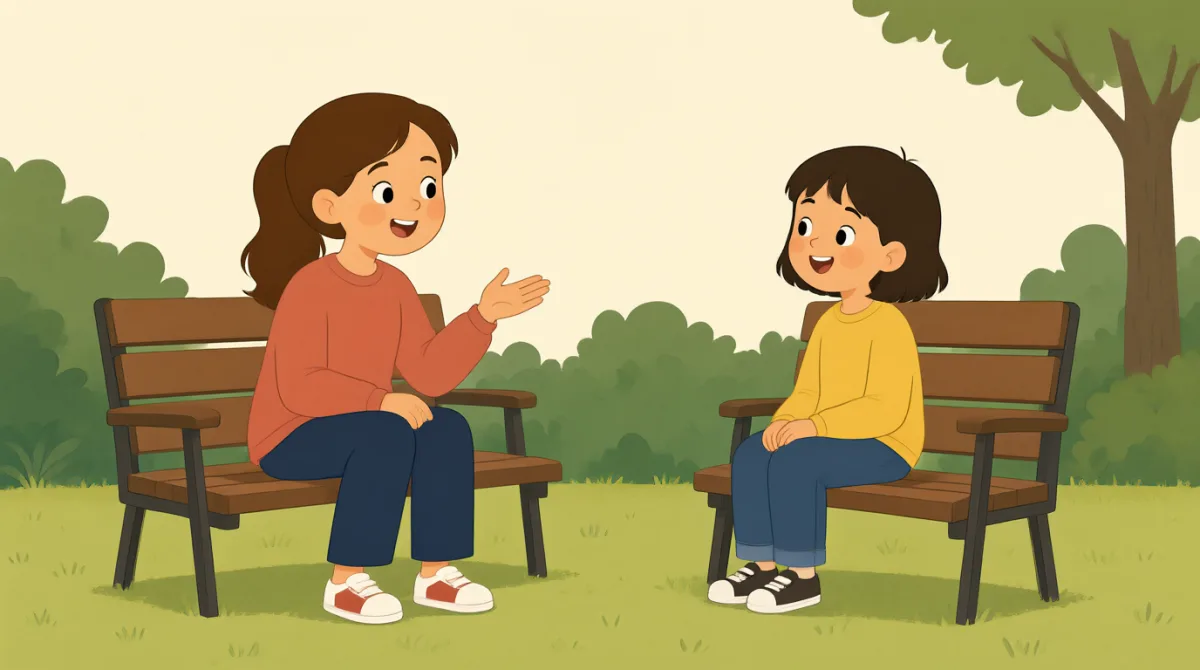

Leo, what games did you play outside when you were a kid?
레오, 어릴 때 밖에서 무슨 놀이 했어?

I played soccer with my neighbors almost every afternoon.
난 거의 매일 오후마다 이웃 애들이랑 축구했어.

That sounds fun. Did you play in a park or on your street?
재밌었겠다. 공원에서 했어, 아니면 길에서 했어?
We played in a small park near my home. The grass was great.
우리 집 근처에 작은 공원이 있었어. 잔디가 정말 좋았지.
I loved playing tag with my friends. We ran all over the playground.
난 친구들이랑 술래잡기하는 걸 좋아했어. 놀이터 여기저기를 뛰어다녔지.
I played hide-and-seek with my cousins. I was good at hiding.
난 사촌들이랑 숨바꼭질했어. 숨는 걸 잘했지.
Did they find you quickly, Mia?
애들이 널 금방 찾았어, 미아?
Not usually! I hid behind a big tree and stayed very quiet.
보통은 아니었어! 큰 나무 뒤에 숨어서 아주 조용히 있었거든.
We had so much fun. I miss those simple games.
정말 재밌었는데. 그런 단순한 놀이들이 그리워.
어휘7
- when you were a kid어릴 때
This means during the time when you were a child. Use it to ask about someone's childhood.
어린 시절을 뜻하는 표현이에요. 누군가의 어린 시절에 대해 물어볼 때 써요.
- almost every afternoon거의 매일 오후
This means on most afternoons, but not all of them. Use it to describe how often you did something.
매일 오후는 아니지만 대부분의 오후를 뜻해요. 어떤 일을 얼마나 자주 했는지 말할 때 써요.
- neighbors이웃
Neighbors are people who live near you. You can use this word when talking about people in your area.
가까운 곳에 사는 사람들이에요. 주변에 사는 사람들에 대해 이야기할 때 쓸 수 있어요.
- all over the playground놀이터 여기저기를
This means in many different parts of the playground. Use it to describe people moving around a large area.
놀이터의 여러 곳에서라는 뜻이에요. 넓은 공간을 돌아다니는 모습을 묘사할 때 써요.
- hide-and-seek숨바꼭질
Hide-and-seek is a game where one person looks for others who are hiding. You can use this word to name the game.
한 사람이 숨어 있는 사람들을 찾는 놀이예요. 이 놀이의 이름을 말할 때 써요.
- stayed very quiet아주 조용히 있었다
This means continued to make very little noise. Use it to describe staying silent for some time.
한동안 소리를 거의 내지 않고 있었다는 뜻이에요. 잠시 동안 조용히 있는 모습을 묘사할 때 써요.
- I miss those simple games.그런 단순한 놀이들이 그리워.
This means you feel sad or nostalgic because you do not play those games now. Use “I miss…” to talk about something from the past that you wish you had again.
지금은 그런 놀이를 하지 않아 아쉽거나 향수를 느낀다는 뜻이에요. “I miss…”는 과거의 어떤 것을 다시 누리고 싶을 때 써요.
핵심 문장8
- 1
Leo, what games did you play outside when you were a kid?
레오, 어릴 때 밖에서 무슨 놀이 했어?
This is a friendly way to ask about someone's childhood. You can change “what games” to ask what activities someone did.
누군가의 어린 시절에 대해 친근하게 물어보는 표현이에요. 어떤 활동을 했는지 물으려면 “what games”를 다른 말로 바꿔 쓸 수 있어요.
- 2
I played soccer with my neighbors almost every afternoon.
난 거의 매일 오후마다 이웃 애들이랑 축구했어.
This sentence describes a regular activity in the past. Use “I played…” with a game or sport and a time phrase to talk about childhood routines.
과거에 규칙적으로 하던 일을 설명하는 문장이에요. 어린 시절의 습관을 말할 때 놀이·운동과 시간 표현을 넣어 “I played…”라고 할 수 있어요.
- 3
Did you play in a park or on your street?
공원에서 했어, 아니면 길에서 했어?
This is a simple question about where someone did an activity. Use “Did you play in… or on…?” to ask someone to choose between two places.
어떤 활동을 어디에서 했는지 간단히 묻는 질문이에요. 두 장소 중 하나를 고르게 물을 때 “Did you play in… or on…?”이라고 해요.
- 4
We played in a small park near my home.
우리 집 근처에 작은 공원에서 했어.
This sentence tells where an activity happened. You can replace “played” and “a small park” with another activity and place.
어떤 활동이 어디에서 이루어졌는지 말하는 문장이에요. 다른 활동이나 장소를 말하려면 “played”와 “a small park”를 바꿔 쓸 수 있어요.
- 5
I loved playing tag with my friends.
난 친구들이랑 술래잡기하는 걸 좋아했어.
Use “I loved playing…” to talk about an activity you enjoyed in the past. Replace “tag” with another game or activity.
과거에 즐겼던 활동을 말할 때 “I loved playing…”을 써요. “tag”를 다른 놀이 또는 활동으로 바꿔 쓸 수 있어요.
- 6
I played hide-and-seek with my cousins.
난 사촌들이랑 숨바꼭질했어.
This sentence says what game you played and who you played it with. Use “I played [game] with [people]” to talk about past activities.
무슨 놀이를 누구와 했는지 말하는 문장이에요. 과거에 한 활동을 이야기할 때 “I played [game] with [people]” 형식을 써요.
- 7
I hid behind a big tree and stayed very quiet.
큰 나무 뒤에 숨어서 아주 조용히 있었어.
This sentence describes two actions in the past. Use “and” to connect actions that happened as part of the same story.
과거에 한 두 가지 행동을 설명하는 문장이에요. 한 이야기의 일부로 일어난 행동들을 이어 말할 때 “and”를 써요.
- 8
I miss those simple games.
그런 단순한 놀이들이 그리워.
This is a short way to say you feel nostalgic about something from the past. You can replace “those simple games” with another thing you miss.
과거의 어떤 것이 그립다는 마음을 짧게 표현하는 말이에요. 그리운 다른 것을 말하려면 “those simple games”를 바꿔 쓸 수 있어요.