Your First School
내 첫 학교
Emma asks Mia about her first school, her teachers, and how she got to class. Mia shares a few memories from her school days.
에마가 미아에게 처음 다닌 학교와 선생님들, 학교에 어떻게 갔는지 물어봐. 미아는 학창 시절의 추억을 몇 가지 들려줘.
대화8
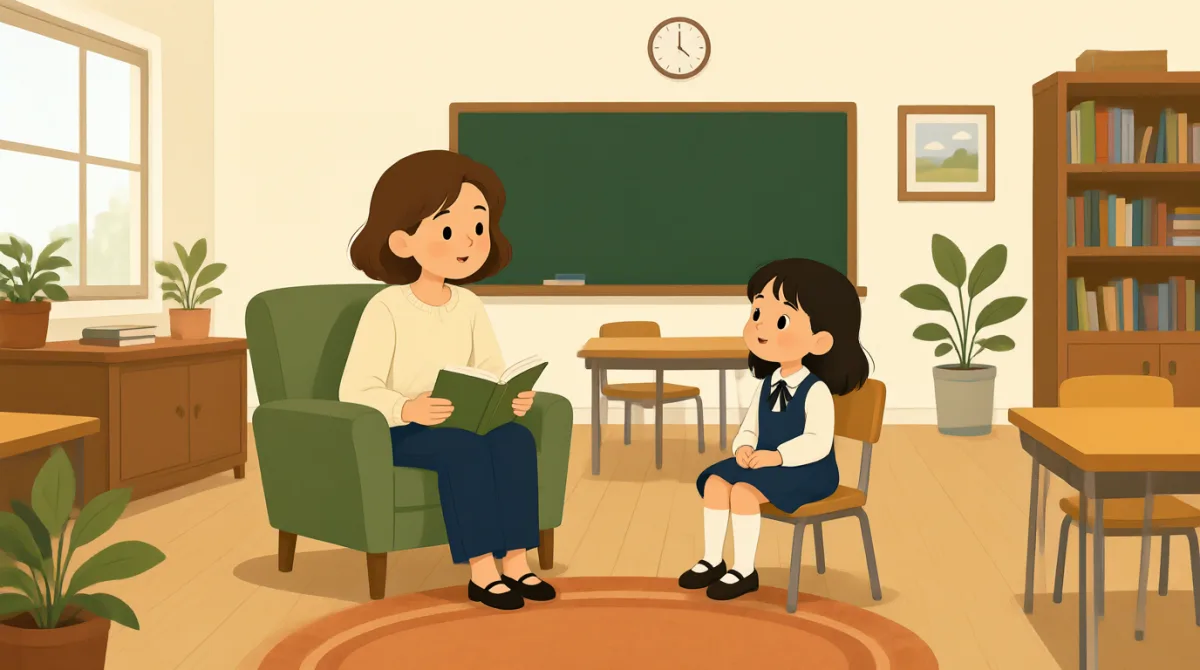

Mia, what was your first school like? Was it near your home?
미아, 처음 다닌 학교는 어땠어? 집에서 가까웠어?

It was a small school in my town. I walked there with my mother.
우리 동네에 있는 작은 학교였어. 엄마랑 걸어서 갔어.
Did you like your teachers? What did they teach you?
선생님들은 좋았어? 뭘 가르쳐 주셨어?
Yes, they were kind. My favorite teacher taught us reading and art.
응, 친절하셨어. 내가 제일 좋아했던 선생님은 우리한테 읽기랑 미술을 가르쳐 주셨어.
What time did school start? Did you eat lunch there?
학교는 몇 시에 시작했어? 거기서 점심 먹었어?
It started at eight. I ate lunch with my friends in the classroom.
8시에 시작했어. 교실에서 친구들이랑 점심을 먹었어.
What did you do after class? Did you walk home together?
수업 끝나고 뭐 했어? 같이 걸어서 집에 갔어?
We walked home together and talked about our day. I remember it fondly.
같이 걸어서 집에 가면서 그날 있었던 일을 얘기했어. 그때가 좋은 추억으로 남아 있어.
어휘8
- first school처음 다닌 학교
This means the first school you attended as a child. Use it to ask about someone's early school experience.
어렸을 때 처음 다닌 학교를 뜻해요. 누군가의 어린 시절 학교 경험을 물어볼 때 써요.
- near your home집에서 가까운
This means close to the place where you live. Use it to ask how far away a school or other place was.
사는 곳과 가까운 거리를 뜻해요. 학교나 다른 장소가 얼마나 멀었는지 물어볼 때 써요.
- walked there걸어서 갔다
This means went to that place on foot. Use it to describe how you traveled somewhere in the past.
그곳까지 걸어갔다는 뜻이에요. 과거에 어디론가 어떻게 이동했는지 말할 때 써요.
- favorite teacher가장 좋아하는 선생님
This means the teacher you liked best. Use it to talk about a teacher you remember fondly.
가장 좋아했던 선생님을 뜻해요. 좋은 기억으로 남아 있는 선생님에 대해 이야기할 때 써요.
- started at eight8시에 시작했다
This means school began at eight o'clock. Use this pattern to say when an event or activity began.
학교가 8시에 시작했다는 뜻이에요. 어떤 행사나 활동이 언제 시작했는지 말할 때 이 표현을 활용해요.
- ate lunch점심을 먹었다
This means had a midday meal. Use it to talk about what you ate and when.
낮에 식사했다는 뜻이에요. 무엇을 언제 먹었는지 이야기할 때 써요.
- after class수업이 끝난 뒤
This means after a lesson or the school day ended. Use it to ask or talk about what happened next.
수업이나 학교 일과가 끝난 뒤를 뜻해요. 그다음에 무슨 일이 있었는지 묻거나 말할 때 써요.
- walked home together같이 걸어서 집에 갔다
This means went home on foot with other people. Use it to describe how you traveled home with someone.
다른 사람과 함께 걸어서 집에 갔다는 뜻이에요. 누군가와 어떻게 집에 갔는지 말할 때 써요.
핵심 문장8
- 1
What was your first school like?
처음 다닌 학교는 어땠어?
This is a friendly way to ask someone about their early school experience. You can reuse “What was your first ___ like?” to ask about another place or experience.
상대방의 어린 시절 학교 경험을 친근하게 물어보는 표현이에요. “What was your first ___ like?”에서 빈칸에 다른 장소나 경험을 넣어 물어볼 수도 있어요.
- 2
Was it near your home?
집에서 가까웠어?
This asks whether a place was close to someone's home. You can replace “it” with a school, shop, or other place.
어떤 장소가 누군가의 집에서 가까웠는지 묻는 표현이에요. “it” 대신 학교나 가게처럼 다른 장소를 넣을 수 있어요.
- 3
I walked there with my mother.
엄마랑 걸어서 갔어.
This tells how someone traveled to a place in the past and who went with them. Change “walked” or “my mother” to describe your own experience.
과거에 어떤 장소까지 어떻게 갔는지, 그리고 누구와 함께 갔는지 말하는 문장이에요. “walked”나 “my mother”를 바꾸면 자신의 경험을 설명할 수 있어요.
- 4
My favorite teacher taught us reading and art.
내가 제일 좋아했던 선생님은 우리한테 읽기랑 미술을 가르쳐 주셨어.
This describes a teacher someone liked best and the subjects the teacher taught. You can change the teacher or subjects to share a school memory.
가장 좋아했던 선생님과 그 선생님이 가르친 과목을 설명하는 문장이에요. 선생님이나 과목을 바꿔서 학교 추억을 이야기해 보세요.
- 5
It started at eight.
8시에 시작했어.
This is a simple way to say when something began. Use it to talk about school, work, or an event in the past.
무언가가 언제 시작했는지 간단하게 말하는 표현이에요. 과거의 학교, 직장, 행사에 관해 이야기할 때 써요.
- 6
I ate lunch with my friends in the classroom.
교실에서 친구들이랑 점심을 먹었어.
This sentence says what someone did, who they were with, and where they ate. You can change the meal, people, or place to describe your routine.
무엇을 했는지, 누구와 함께했는지, 어디서 먹었는지를 말하는 문장이에요. 식사나 사람, 장소를 바꿔 자신의 일상을 설명할 수 있어요.
- 7
We walked home together and talked about our day.
우리는 같이 걸어서 집에 가면서 그날 있었던 일을 얘기했어.
This describes two things people did after school. Use “We [past action] and [past action]” to tell someone about a shared experience.
방과 후에 사람들이 한 두 가지 일을 설명하는 문장이에요. 함께한 경험을 이야기할 때 “We [과거형 동작] and [과거형 동작]” 형태를 써 보세요.
- 8
I remember it fondly.
그때가 좋은 추억으로 남아 있어.
This means you remember something with warm, happy feelings. Use it when talking about a positive memory from the past.
어떤 일을 따뜻하고 행복한 마음으로 기억한다는 뜻이에요. 과거의 좋은 추억을 이야기할 때 써요.