The Room Is Too Noisy
객실이 너무 시끄러워요
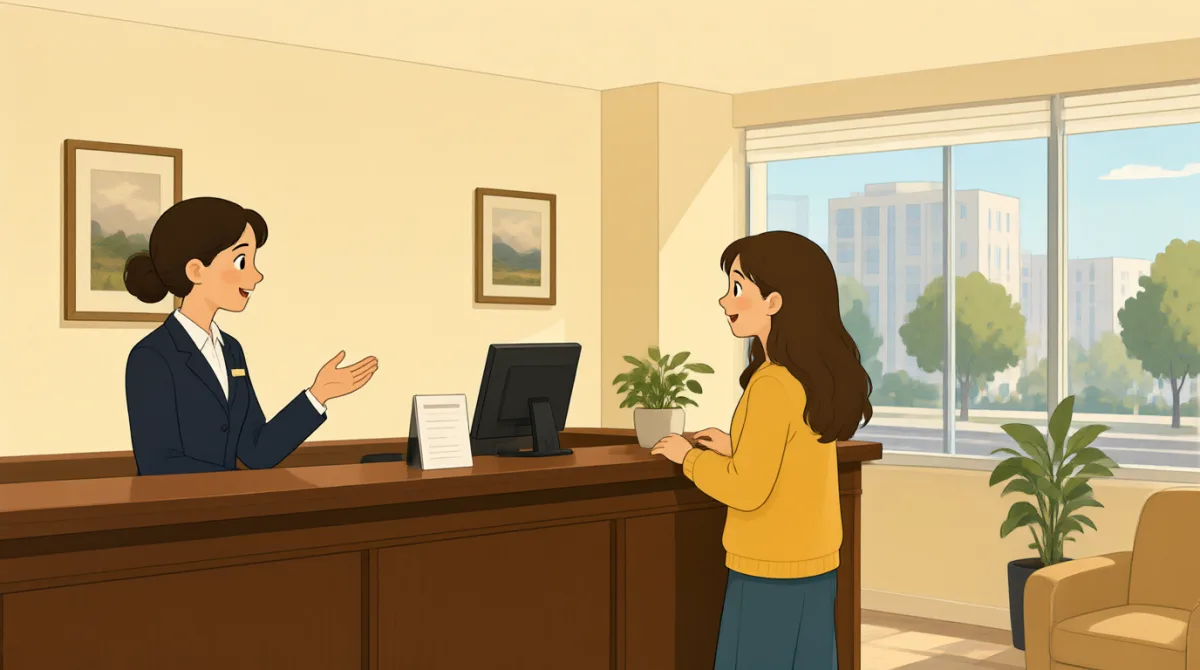
Emma tells the hotel receptionist that loud noise from outside kept her awake. The receptionist listens and asks a few questions.
에마는 호텔 직원에게 밖에서 들려오는 큰 소음 때문에 잠을 설쳤다고 말합니다. 직원은 이야기를 듣고 몇 가지 질문을 합니다.
대화8

Good morning. I didn’t sleep well because my room was very noisy last night.
안녕하세요. 어젯밤에 방이 너무 시끄러워서 잠을 잘 못 잤어요.

I’m sorry to hear that. What kind of noise did you hear?
그러셨다니 죄송합니다. 어떤 소리가 들렸나요?
There was loud traffic outside my window. It kept me awake for hours.
창밖에서 차들이 크게 지나가는 소리가 났어요. 몇 시간 동안 잠을 못 잤어요.
I understand. What time did the noise start?
그렇군요. 소음은 몇 시쯤 시작됐나요?
It started around midnight and went on until early morning.
자정쯤 시작해서 이른 아침까지 계속됐어요.
Was your window closed? Sometimes that helps keep the noise out.
창문은 닫혀 있었나요? 가끔 창문을 닫으면 소음이 덜 들어오거든요.
Yes, it was closed, but I could still hear everything clearly.
네, 닫혀 있었는데도 모든 소리가 또렷하게 들렸어요.
I’m sorry about that. I’ll check your room details and see what I can do.
불편을 드려 죄송합니다. 객실 정보를 확인하고 어떻게 도와드릴 수 있을지 알아보겠습니다.
어휘7
- sleep well잠을 잘 자다
To sleep peacefully and feel rested. You can say, “I didn’t sleep well” when noise or another problem kept you awake.
편안하게 자고 개운한 기분으로 일어나는 것을 뜻해요. 소음이나 다른 문제 때문에 잠을 설쳤다면 “I didn’t sleep well”이라고 말할 수 있어요.
- noisy시끄러운
Making a lot of sound. Here, it describes a hotel room where loud traffic could be heard.
소리가 많이 나는 것을 뜻해요. 여기서는 차들이 크게 지나가는 소리가 들리는 호텔 객실을 묘사해요.
- kept me awake잠을 못 자게 했다
Stopped me from sleeping. Use “kept me awake” to explain that something made it hard to fall asleep or stay asleep.
잠들지 못하게 하거나 잠을 깨운다는 뜻이에요. 어떤 일 때문에 잠들기 어렵거나 계속 잠을 자지 못했다고 설명할 때 “kept me awake”라고 해요.
- went on계속되다
Continued for a period of time. You can say, “The noise went on until morning” to explain how long it lasted.
일정 시간 동안 이어진다는 뜻이에요. 얼마나 오래 지속됐는지 설명할 때 “The noise went on until morning”이라고 말할 수 있어요.
- closed닫힌
Shut, not open. Here, it describes the window, even though the noise could still be heard.
열려 있지 않은 상태를 뜻해요. 여기서는 소리가 여전히 들렸지만 창문이 닫혀 있었다고 설명해요.
- keep the noise out소음이 들어오지 못하게 하다
Stop noise from coming inside. You can use “keep [something] out” to talk about blocking something from entering.
소리가 실내로 들어오지 못하게 한다는 뜻이에요. 무언가가 들어오는 것을 막는다고 할 때 “keep [something] out”을 쓸 수 있어요.
- check your room details객실 정보를 확인하다
Look at information about your room. A hotel worker might check these details before offering help or a room change.
객실에 관한 정보를 살펴본다는 뜻이에요. 호텔 직원은 도움을 드리거나 객실을 바꿔 드리기 전에 이런 정보를 확인할 수 있어요.
핵심 문장8
- 1
I didn’t sleep well because my room was very noisy last night.
어젯밤에 방이 너무 시끄러워서 잠을 잘 못 잤어요.
This is a clear way to explain a problem and its cause. You can reuse “I didn’t sleep well because…” to describe why you feel tired.
문제와 그 원인을 분명하게 설명하는 표현이에요. 피곤한 이유를 말할 때 “I didn’t sleep well because…”를 활용해 보세요.
- 2
What kind of noise did you hear?
어떤 소리가 들렸나요?
This question asks someone to describe a sound or problem. You can replace “noise” with another issue, such as “What kind of smell did you notice?”
상대방에게 어떤 소리나 문제가 있었는지 설명해 달라고 묻는 표현이에요. “noise” 대신 다른 문제를 넣어서 “What kind of smell did you notice?”처럼 말할 수도 있어요.
- 3
It kept me awake for hours.
몇 시간 동안 잠을 못 잤어요.
This explains that something stopped you from sleeping for a long time. Replace “It” with a specific problem, such as “The music kept me awake for hours.”
어떤 일 때문에 오랫동안 잠을 자지 못했다고 설명하는 표현이에요. “It” 대신 구체적인 문제를 넣어 “The music kept me awake for hours.”라고 할 수 있어요.
- 4
What time did the noise start?
소음은 몇 시에 시작됐나요?
This is a simple way to ask when a problem began. You can replace “the noise” with another event, such as “What time did the leak start?”
문제가 언제 시작됐는지 간단히 묻는 표현이에요. “the noise” 대신 다른 일을 넣어 “What time did the leak start?”라고 물을 수 있어요.
- 5
It started around midnight and went on until early morning.
자정쯤 시작해서 이른 아침까지 계속됐어요.
This sentence describes when something began and how long it continued. Use “started around…” and “went on until…” to give a time range.
무언가가 언제 시작됐고 얼마나 이어졌는지 설명하는 문장이에요. 시간대를 말할 때 “started around…”와 “went on until…”을 활용해 보세요.
- 6
Was your window closed?
창문은 닫혀 있었나요?
This is a yes-or-no question about whether a window was shut. You can use the same pattern to ask, “Was your door locked?”
창문이 닫혀 있었는지 묻는 예·아니요 질문이에요. 같은 패턴으로 “Was your door locked?”라고 물을 수도 있어요.
- 7
Sometimes that helps keep the noise out.
가끔 창문을 닫으면 소음이 덜 들어와요.
This explains that something can sometimes prevent noise from coming in. Replace “that” with an action, such as “Closing the door sometimes helps keep the noise out.”
어떤 방법이 때때로 소음이 들어오는 것을 막아 줄 수 있다고 설명하는 표현이에요. “that” 대신 행동을 넣어 “Closing the door sometimes helps keep the noise out.”이라고 할 수 있어요.
- 8
I’ll check your room details and see what I can do.
객실 정보를 확인하고 어떻게 도와드릴 수 있을지 알아보겠습니다.
This is a polite way to say you will look into a problem and try to help. You can reuse “I’ll check… and see what I can do” when responding to a request.
문제를 확인하고 도와드리겠다고 정중하게 말하는 표현이에요. 요청에 답할 때 “I’ll check… and see what I can do”를 활용해 보세요.