The Room Is Too Noisy
الغرفة صاخبة جدًا
Emma tells the hotel receptionist that loud noise from outside kept her awake. The receptionist listens and asks a few questions.
تخبر إيما موظفة الاستقبال في الفندق أن الضوضاء العالية في الخارج أبقتها مستيقظة. تنصت موظفة الاستقبال وتطرح عليها بعض الأسئلة.
حوار8
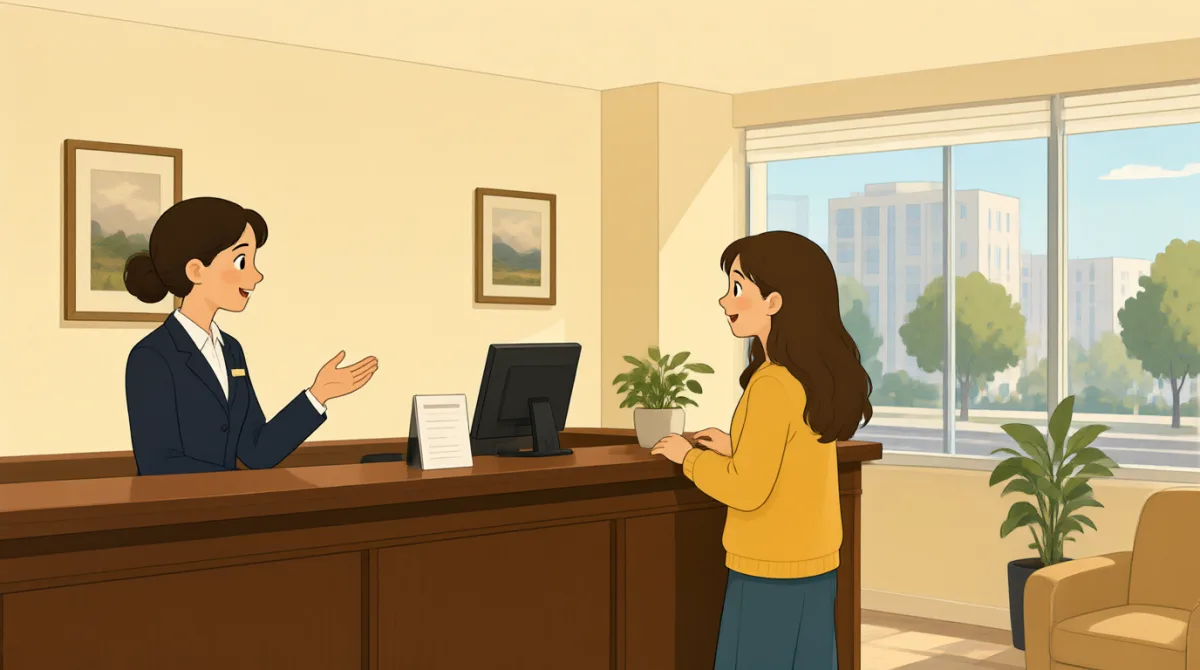

Good morning. I didn’t sleep well because my room was very noisy last night.
صباح الخير. لم أنم جيدًا لأن غرفتي كانت صاخبة جدًا الليلة الماضية.

I’m sorry to hear that. What kind of noise did you hear?
يؤسفني سماع ذلك. ما نوع الضوضاء التي سمعتها؟
There was loud traffic outside my window. It kept me awake for hours.
كانت هناك حركة مرور صاخبة خارج نافذتي. أبقتني مستيقظة لساعات.
I understand. What time did the noise start?
أتفهم ذلك. متى بدأت الضوضاء؟
It started around midnight and went on until early morning.
بدأت قرابة منتصف الليل واستمرت حتى الصباح الباكر.
Was your window closed? Sometimes that helps keep the noise out.
هل كانت نافذتك مغلقة؟ يساعد ذلك أحيانًا على منع دخول الضوضاء.
Yes, it was closed, but I could still hear everything clearly.
نعم، كانت مغلقة، لكنني كنت لا أزال أسمع كل شيء بوضوح.
I’m sorry about that. I’ll check your room details and see what I can do.
أعتذر عن ذلك. سأتحقق من تفاصيل غرفتك وأرى ما يمكنني فعله.
المفردات7
- sleep wellينم جيدًا
To sleep peacefully and feel rested. You can say, “I didn’t sleep well” when noise or another problem kept you awake.
أن تنام بهدوء وتستيقظ شاعرًا بالراحة. يمكنك أن تقول “I didn’t sleep well” (لم أنم جيدًا) عندما تمنعك الضوضاء أو مشكلة أخرى من النوم.
- noisyصاخب
Making a lot of sound. Here, it describes a hotel room where loud traffic could be heard.
يُصدر الكثير من الأصوات. تصف هذه الكلمة هنا غرفة فندق يُسمع فيها ضجيج حركة المرور.
- kept me awakeأبقاني مستيقظًا
Stopped me from sleeping. Use “kept me awake” to explain that something made it hard to fall asleep or stay asleep.
منعني من النوم. استخدم “kept me awake” لتوضيح أن شيئًا ما جعل النوم أو مواصلته صعبًا.
- went onاستمرّ
Continued for a period of time. You can say, “The noise went on until morning” to explain how long it lasted.
واصل مدة من الزمن. يمكنك أن تقول “The noise went on until morning” (استمرت الضوضاء حتى الصباح) لتوضيح المدة التي استغرقها الأمر.
- closedمغلق
Shut, not open. Here, it describes the window, even though the noise could still be heard.
موصد، وليس مفتوحًا. تصف هذه الكلمة هنا النافذة، مع أن الضوضاء ظلّت مسموعة.
- keep the noise outيمنع دخول الضوضاء
Stop noise from coming inside. You can use “keep [something] out” to talk about blocking something from entering.
يمنع الضوضاء من الدخول إلى المكان. يمكنك استخدام “keep [something] out” للحديث عن منع شيء ما من الدخول.
- check your room detailsيتحقق من تفاصيل غرفتك
Look at information about your room. A hotel worker might check these details before offering help or a room change.
ينظر في المعلومات المتعلقة بغرفتك. قد تتحقق موظفة الفندق من هذه التفاصيل قبل أن تعرض عليك المساعدة أو تبديل الغرفة.
الجمل الأساسية8
- 1
I didn’t sleep well because my room was very noisy last night.
لم أنم جيدًا لأن غرفتي كانت صاخبة جدًا الليلة الماضية.
This is a clear way to explain a problem and its cause. You can reuse “I didn’t sleep well because…” to describe why you feel tired.
هذه طريقة واضحة لشرح مشكلة وسببها. يمكنك إعادة استخدام “I didn’t sleep well because…” (لم أنم جيدًا لأن...) لتوضيح سبب شعورك بالتعب.
- 2
What kind of noise did you hear?
ما نوع الضوضاء التي سمعتها؟
This question asks someone to describe a sound or problem. You can replace “noise” with another issue, such as “What kind of smell did you notice?”
يسأل هذا السؤال شخصًا عن وصف صوت أو مشكلة. يمكنك استبدال “noise” بكلمة تدل على مشكلة أخرى، مثل “What kind of smell did you notice?” (ما نوع الرائحة التي لاحظتها؟).
- 3
It kept me awake for hours.
أبقاني مستيقظًا لساعات.
This explains that something stopped you from sleeping for a long time. Replace “It” with a specific problem, such as “The music kept me awake for hours.”
يوضح هذا أن شيئًا ما منعك من النوم مدة طويلة. استبدل “It” بمشكلة محددة، مثل “The music kept me awake for hours.” (أبقاني صوت الموسيقى مستيقظًا لساعات).
- 4
What time did the noise start?
متى بدأت الضوضاء؟
This is a simple way to ask when a problem began. You can replace “the noise” with another event, such as “What time did the leak start?”
هذه طريقة بسيطة للسؤال عن وقت بدء المشكلة. يمكنك استبدال “the noise” بحدث آخر، مثل “What time did the leak start?” (متى بدأ التسرب؟).
- 5
It started around midnight and went on until early morning.
بدأت قرابة منتصف الليل واستمرت حتى الصباح الباكر.
This sentence describes when something began and how long it continued. Use “started around…” and “went on until…” to give a time range.
تصف هذه الجملة وقت بدء شيء ما والمدة التي استمر فيها. استخدم “started around…” و“went on until…” لتحديد الفترة الزمنية.
- 6
Was your window closed?
هل كانت نافذتك مغلقة؟
This is a yes-or-no question about whether a window was shut. You can use the same pattern to ask, “Was your door locked?”
هذا سؤال إجابته نعم أو لا، ويسأل عما إذا كانت النافذة موصدة. يمكنك استخدام النمط نفسه للسؤال: “Was your door locked?” (هل كان بابك مقفلًا؟).
- 7
Sometimes that helps keep the noise out.
يساعد ذلك أحيانًا على منع دخول الضوضاء.
This explains that something can sometimes prevent noise from coming in. Replace “that” with an action, such as “Closing the door sometimes helps keep the noise out.”
توضح هذه الجملة أن شيئًا ما قد يمنع الضوضاء من الدخول أحيانًا. استبدل “that” بفعل، مثل “Closing the door sometimes helps keep the noise out.” (يساعد إغلاق الباب أحيانًا على منع دخول الضوضاء).
- 8
I’ll check your room details and see what I can do.
سأتحقق من تفاصيل غرفتك وأرى ما يمكنني فعله.
This is a polite way to say you will look into a problem and try to help. You can reuse “I’ll check… and see what I can do” when responding to a request.
هذه طريقة مهذبة للقول إنك ستبحث في المشكلة وتحاول المساعدة. يمكنك إعادة استخدام “I’ll check… and see what I can do” عند الرد على طلب.