The Room Is Too Noisy
部屋がうるさすぎます
Emma tells the hotel receptionist that loud noise from outside kept her awake. The receptionist listens and asks a few questions.
エマはホテルの受付係に、外の大きな音で眠れなかったと伝えます。受付係は話を聞き、いくつか質問します。
会話8
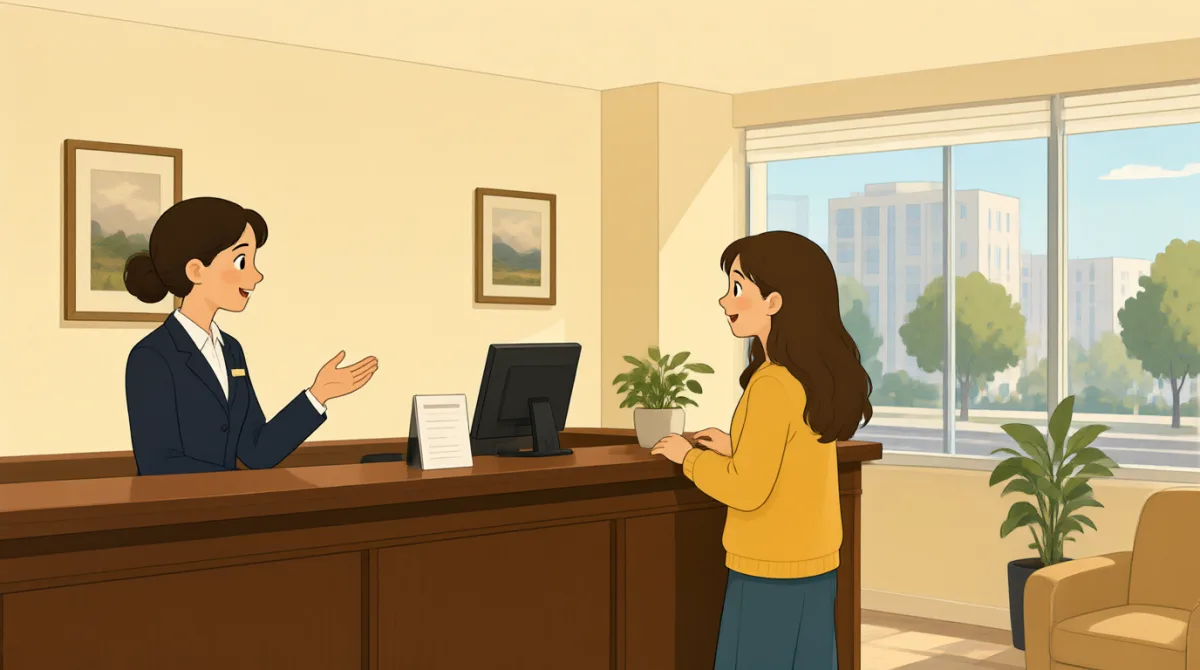

Good morning. I didn’t sleep well because my room was very noisy last night.
おはようございます。昨夜は部屋がとてもうるさくて、よく眠れませんでした。

I’m sorry to hear that. What kind of noise did you hear?
それは申し訳ございません。どのような音が聞こえましたか?
There was loud traffic outside my window. It kept me awake for hours.
窓の外を走る車の音が大きくて、何時間も眠れませんでした。
I understand. What time did the noise start?
それは大変でしたね。何時ごろから音がしましたか?
It started around midnight and went on until early morning.
真夜中ごろに始まって、早朝まで続きました。
Was your window closed? Sometimes that helps keep the noise out.
窓は閉まっていましたか?閉めておくと、音が入ってこないこともあります。
Yes, it was closed, but I could still hear everything clearly.
はい、閉まっていましたが、それでも音がはっきり聞こえました。
I’m sorry about that. I’ll check your room details and see what I can do.
それは申し訳ございません。お部屋の情報を確認して、できることがないか調べます。
語彙7
- sleep wellよく眠る
To sleep peacefully and feel rested. You can say, “I didn’t sleep well” when noise or another problem kept you awake.
ぐっすり眠って、休めたと感じることです。騒音などで眠れなかったときは、“I didn’t sleep well”(よく眠れませんでした)と言えます。
- noisyうるさい
Making a lot of sound. Here, it describes a hotel room where loud traffic could be heard.
大きな音がすることです。ここでは、外を走る車の音が聞こえるホテルの部屋について説明しています。
- kept me awake私を眠れなくさせた
Stopped me from sleeping. Use “kept me awake” to explain that something made it hard to fall asleep or stay asleep.
眠るのを妨げた、という意味です。“kept me awake”を使うと、何かのせいで寝つけなかったり、眠り続けられなかったりしたことを説明できます。
- went on続いた
Continued for a period of time. You can say, “The noise went on until morning” to explain how long it lasted.
ある程度の時間、続いたという意味です。どのくらい続いたかを説明するときは、“The noise went on until morning”(騒音は朝まで続きました)のように言えます。
- closed閉まっている
Shut, not open. Here, it describes the window, even though the noise could still be heard.
開いておらず、閉じている状態です。ここでは、音が聞こえていたにもかかわらず、窓が閉まっていたことを表しています。
- keep the noise out音が入ってこないようにする
Stop noise from coming inside. You can use “keep [something] out” to talk about blocking something from entering.
音が中に入るのを防ぐことです。“keep [something] out”は、何かが中に入らないようにすることを表します。
- check your room details部屋の情報を確認する
Look at information about your room. A hotel worker might check these details before offering help or a room change.
部屋に関する情報を調べることです。ホテルのスタッフは、手助けや部屋の変更を提案する前に、こうした情報を確認することがあります。
重要な文8
- 1
I didn’t sleep well because my room was very noisy last night.
昨夜は部屋がとてもうるさくて、よく眠れませんでした。
This is a clear way to explain a problem and its cause. You can reuse “I didn’t sleep well because…” to describe why you feel tired.
問題とその原因をはっきり伝える表現です。“I didn’t sleep well because…”(…のせいでよく眠れませんでした)は、疲れている理由を説明するときにも使えます。
- 2
What kind of noise did you hear?
どのような音が聞こえましたか?
This question asks someone to describe a sound or problem. You can replace “noise” with another issue, such as “What kind of smell did you notice?”
音や問題について、どんなものだったかを尋ねる質問です。“noise”を別の問題に置き換えて、“What kind of smell did you notice?”(どんなにおいに気づきましたか?)のようにも言えます。
- 3
It kept me awake for hours.
何時間も眠れませんでした。
This explains that something stopped you from sleeping for a long time. Replace “It” with a specific problem, such as “The music kept me awake for hours.”
何かのせいで長い間眠れなかったことを伝える表現です。“It”を具体的な問題に置き換えて、“The music kept me awake for hours.”(音楽のせいで何時間も眠れませんでした)のように言えます。
- 4
What time did the noise start?
何時ごろから音がしましたか?
This is a simple way to ask when a problem began. You can replace “the noise” with another event, such as “What time did the leak start?”
問題がいつ始まったかを尋ねる簡単な表現です。“the noise”を別の出来事に置き換えて、“What time did the leak start?”(水漏れは何時ごろ始まりましたか?)のように言えます。
- 5
It started around midnight and went on until early morning.
真夜中ごろに始まって、早朝まで続きました。
This sentence describes when something began and how long it continued. Use “started around…” and “went on until…” to give a time range.
何かがいつ始まり、どれくらい続いたかを説明する文です。“started around…”と“went on until…”を使って、時間の範囲を伝えられます。
- 6
Was your window closed?
窓は閉まっていましたか?
This is a yes-or-no question about whether a window was shut. You can use the same pattern to ask, “Was your door locked?”
窓が閉まっていたかどうかを尋ねる、はい・いいえで答えられる質問です。同じ形で、“Was your door locked?”(ドアに鍵はかかっていましたか?)とも尋ねられます。
- 7
Sometimes that helps keep the noise out.
そうすると、音が入ってこないこともあります。
This explains that something can sometimes prevent noise from coming in. Replace “that” with an action, such as “Closing the door sometimes helps keep the noise out.”
何かによって、音が入ってくるのを防げることがあると説明する表現です。“that”を行動に置き換えて、“Closing the door sometimes helps keep the noise out.”(ドアを閉めると、音が入ってこないこともあります)のように言えます。
- 8
I’ll check your room details and see what I can do.
お部屋の情報を確認して、できることがないか調べます。
This is a polite way to say you will look into a problem and try to help. You can reuse “I’ll check… and see what I can do” when responding to a request.
問題を調べて、できる限り手助けすると伝える丁寧な表現です。依頼に応えるときは、“I’ll check… and see what I can do”を使って、確認して対応を考えることを伝えられます。