Meeting Your Dorm Roommate
अपने छात्रावास के रूममेट से मिलना
Emma meets Leo in their dorm room and they talk about where they’re from, what they’re studying, and how to share the space. They find a few things they have in common and make plans to explore campus together.
एमा छात्रावास के अपने कमरे में लियो से मिलती है। वे बात करते हैं कि वे कहाँ से हैं, क्या पढ़ रहे हैं और कमरे को कैसे साझा करेंगे। उन्हें पता चलता है कि उनकी कुछ रुचियाँ मिलती-जुलती हैं और वे साथ में कैंपस घूमने का प्लान बनाते हैं।
संवाद9
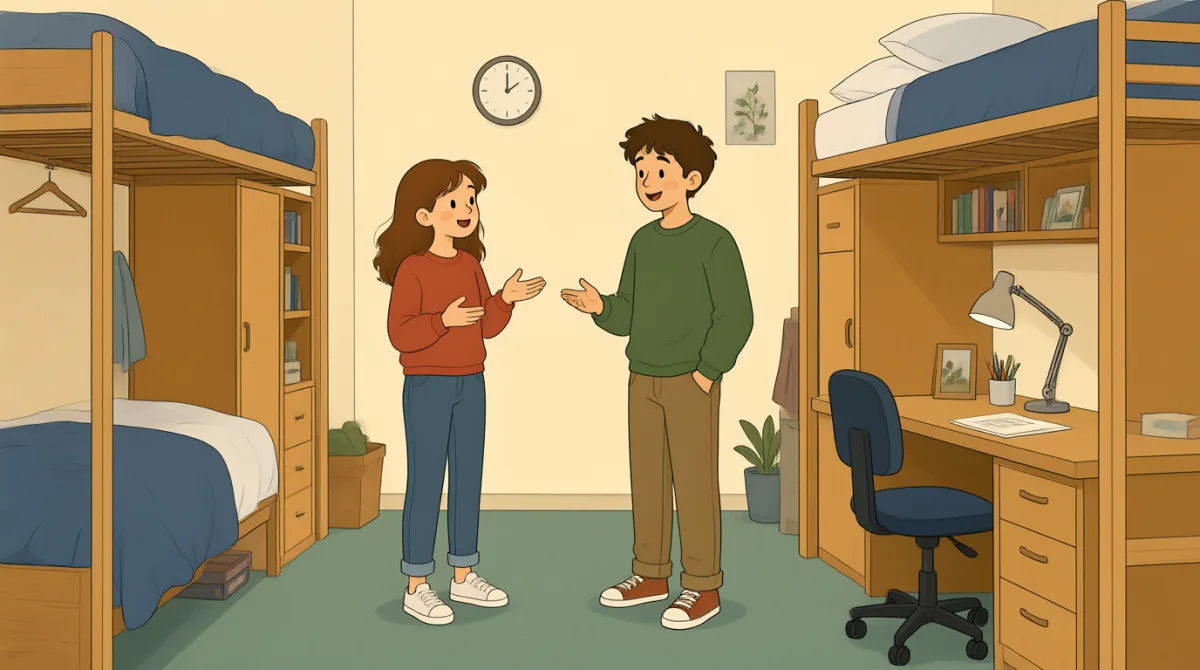

Hey, you must be Leo. I’m Emma—your new roommate. I just got here, and I’m still figuring out where everything goes.
अरे, तुम ही लियो होगे। मैं एमा हूँ—तुम्हारी नई रूममेट। मैं अभी-अभी आई हूँ और अभी समझने की कोशिश कर रही हूँ कि हर चीज़ कहाँ रखनी है।

That’s me! Welcome in. I’m from California, and I’m studying environmental science. What brought you here?
हाँ, मैं ही हूँ! स्वागत है। मैं कैलिफ़ोर्निया से हूँ और पर्यावरण विज्ञान पढ़ रहा हूँ। तुम यहाँ क्यों आईं?
I’m from Canada, and I’m studying business. I wanted to experience life somewhere new, though I’m a little nervous about being so far from home.
मैं कनाडा से हूँ और बिज़नेस पढ़ रही हूँ। मैं किसी नई जगह की ज़िंदगी का अनुभव करना चाहती थी, हालाँकि घर से इतनी दूर होने को लेकर थोड़ी घबराई हुई हूँ।
I get that. Moving in was a lot to take in, but everyone I’ve met has been friendly. We’ll get the hang of things pretty quickly.
समझ सकता हूँ। यहाँ आकर सामान जमाना थोड़ा भारी लग रहा था, लेकिन अब तक जिन लोगों से मिला हूँ, वे सब मिलनसार रहे हैं। हम जल्दी ही सब कुछ समझ जाएँगे।
I hope so! How should we share the room? I’m happy to keep my side tidy, and I’d rather check before borrowing anything.
उम्मीद है! हमें कमरा कैसे बाँटना चाहिए? मैं अपनी तरफ़ साफ़-सुथरी रखूँगी, और कुछ भी उधार लेने से पहले पूछना पसंद करूँगी।
That sounds fair. Let’s each use one desk and one closet, and we can agree on quiet hours when we need to study or sleep.
ठीक लगता है। चलो, हम में से हर कोई एक डेस्क और एक अलमारी इस्तेमाल करे, और पढ़ाई या सोने के समय के लिए शांति के घंटे तय कर लें।
Deal. I also like hiking and trying new food, so maybe we have a few things in common already.
पक्का। मुझे हाइकिंग करना और नए खाने आज़माना भी पसंद है, तो शायद हमारी कुछ रुचियाँ पहले से ही मिलती-जुलती हैं।
For sure! There’s a campus trail and a food hall nearby. Want to explore them together tomorrow after our morning classes?
बिल्कुल! पास में कैंपस का एक पैदल रास्ता और एक फ़ूड हॉल है। कल सुबह की क्लासों के बाद साथ चलकर उन्हें देखना चाहोगी?
I’d love to. It’ll be nice to have someone show me around—and maybe I can finally find my way back without checking a map.
मुझे बहुत अच्छा लगेगा। अच्छा होगा कि कोई मुझे आसपास की जगहें दिखाए—और शायद आख़िरकार मैं नक्शा देखे बिना वापस आने का रास्ता ढूँढ़ लूँ।
शब्दावली8
- figuring out where everything goesहर चीज़ कहाँ रखनी है, यह समझने की कोशिश करना
Working out where things should be placed. You can use “figuring out” when you are learning how to do something or understand a new place.
यह समझना कि चीज़ों को कहाँ रखा जाना चाहिए। जब आप यह सीख रहे हों कि कुछ कैसे करना है या कोई नई जगह समझ रहे हों, तो “figuring out” कह सकते हैं।
- What brought you here?तुम यहाँ क्यों आए/आई?
A friendly way to ask why someone came to a place. You can also use it to ask what led someone to a school, city, or event.
किसी से दोस्ताना अंदाज़ में पूछने का तरीका कि वह किसी जगह क्यों आया है। इससे आप यह भी पूछ सकते हैं कि कोई किसी स्कूल, शहर या कार्यक्रम में कैसे पहुँचा।
- get the hang of thingsचीज़ों को समझने का तरीका सीख जाना
Become comfortable with how things work. Use this phrase when someone is learning a new routine or skill.
यह समझने में सहज हो जाना कि चीज़ें कैसे काम करती हैं। नई दिनचर्या या हुनर सीखते समय इस वाक्यांश का इस्तेमाल करें।
- keep my side tidyअपनी तरफ़ साफ़-सुथरी रखना
Keep my part of a shared space neat and organized. You can change “my side” to name another area you share.
साझा जगह के अपने हिस्से को साफ़-सुथरा और व्यवस्थित रखना। साझा जगह के किसी दूसरे हिस्से का नाम लेने के लिए “my side” की जगह उसका नाम रख सकते हैं।
- check before borrowing anythingकुछ भी उधार लेने से पहले पूछना
Ask for permission before using someone else’s things. This is a considerate phrase for shared living situations.
किसी और की चीज़ इस्तेमाल करने से पहले अनुमति माँगना। साथ रहने की स्थितियों में यह शिष्ट और विचारशील तरीका है।
- quiet hoursशांति के घंटे
Times when people agree to keep noise low. You can use this phrase when discussing study or sleep schedules.
वे समय जब लोग शोर कम रखने पर सहमत होते हैं। पढ़ाई या सोने के समय की बात करते हुए इस वाक्यांश का इस्तेमाल कर सकते हैं।
- have a few things in commonकुछ बातें एक जैसी होना
Share some interests or qualities with another person. Use this phrase when you discover that you like some of the same things.
किसी दूसरे व्यक्ति के साथ कुछ रुचियाँ या गुण साझा करना। जब आपको पता चले कि आप दोनों को कुछ एक जैसी चीज़ें पसंद हैं, तब इस वाक्यांश का इस्तेमाल करें।
- show me aroundमुझे आसपास की जगहें दिखाना
Take me to different places and help me become familiar with them. You can use this when asking someone to introduce you to a new area.
मुझे अलग-अलग जगहों पर ले जाना और उनसे परिचित होने में मदद करना। किसी से नई जगह दिखाने के लिए कहने के संदर्भ में इसका इस्तेमाल कर सकते हैं।
मुख्य वाक्य8
- 1
I’m from Canada, and I’m studying business.
मैं कनाडा से हूँ और बिज़नेस पढ़ रही हूँ।
This is a simple way to introduce your home country and what you study. You can replace “Canada” and “business” with your own details.
अपने देश और पढ़ाई के विषय का परिचय देने का यह एक आसान तरीका है। “Canada” और “business” की जगह अपनी जानकारी बता सकते हैं।
- 2
I wanted to experience life somewhere new, though I’m a little nervous about being so far from home.
मैं किसी नई जगह की ज़िंदगी का अनुभव करना चाहती थी, हालाँकि घर से इतनी दूर होने को लेकर थोड़ी घबराई हुई हूँ।
This sentence explains a reason for moving while also sharing a feeling. Use “though” to add a contrast or a concern.
इस वाक्य में कहीं जाने की वजह बताने के साथ अपनी भावना भी साझा की गई है। कोई विरोधाभास या चिंता जोड़ने के लिए “though” का इस्तेमाल करें।
- 3
We’ll get the hang of things pretty quickly.
हम जल्दी ही सब कुछ समझ जाएँगे।
This is a reassuring way to say that people will soon become comfortable with a new situation. Use “get the hang of” when learning a routine or skill.
यह भरोसा दिलाने का तरीका है कि लोग जल्द ही नई स्थिति में सहज हो जाएँगे। कोई दिनचर्या या हुनर सीखने की बात हो, तो “get the hang of” का इस्तेमाल करें।
- 4
I’d rather check before borrowing anything.
मैं कुछ भी उधार लेने से पहले पूछना पसंद करूँगी।
This is a polite way to explain that you prefer to ask permission first. You can use “I’d rather” to state what you prefer to do.
यह विनम्रता से बताने का तरीका है कि आप पहले अनुमति माँगना पसंद करते हैं। आप अपनी पसंद बताने के लिए “I’d rather” का इस्तेमाल कर सकते हैं।
- 5
Let’s each use one desk and one closet, and we can agree on quiet hours when we need to study or sleep.
चलो, हम में से हर कोई एक डेस्क और एक अलमारी इस्तेमाल करे, और पढ़ाई या सोने के समय के लिए शांति के घंटे तय कर लें।
This sentence suggests a practical plan for sharing a room. Use “Let’s” to propose an arrangement, then add details about what everyone will do.
इस वाक्य में कमरा साझा करने की एक व्यावहारिक योजना सुझाई गई है। कोई व्यवस्था सुझाने के लिए “Let’s” कहें और फिर बताएं कि हर कोई क्या करेगा।
- 6
I also like hiking and trying new food, so maybe we have a few things in common already.
मुझे हाइकिंग करना और नए खाने आज़माना भी पसंद है, तो शायद हमारी कुछ रुचियाँ पहले से ही मिलती-जुलती हैं।
This sentence shares interests and helps start a friendly conversation. Use “we have a few things in common” when you discover shared interests.
यह वाक्य अपनी रुचियाँ साझा करता है और दोस्ताना बातचीत शुरू करने में मदद करता है। जब आपको पता चले कि आपकी रुचियाँ मिलती-जुलती हैं, तो “we have a few things in common” का इस्तेमाल करें।
- 7
Want to explore them together tomorrow after our morning classes?
कल सुबह की क्लासों के बाद साथ चलकर उन्हें देखना चाहोगी?
This is a casual way to invite someone to do something at a specific time. You can replace the activity and time with your own plans.
किसी को तय समय पर कुछ करने के लिए बुलाने का यह अनौपचारिक तरीका है। अपनी योजना के मुताबिक गतिविधि और समय बदल सकते हैं।
- 8
It’ll be nice to have someone show me around—and maybe I can finally find my way back without checking a map.
अच्छा होगा कि कोई मुझे आसपास की जगहें दिखाए—और शायद आख़िरकार मैं नक्शा देखे बिना वापस आने का रास्ता ढूँढ़ लूँ।
This sentence expresses appreciation and adds a lighthearted detail about getting familiar with a place. Use “show me around” when someone can help you explore a new area.
इस वाक्य में आभार जताने के साथ किसी जगह से परिचित होने की हल्की-फुल्की बात भी कही गई है। जब कोई नई जगह घूमने में आपकी मदद कर सकता हो, तो “show me around” का इस्तेमाल करें।