Meeting Your Dorm Roommate
기숙사 룸메이트 만나기
Emma meets Leo in their dorm room and they talk about where they’re from, what they’re studying, and how to share the space. They find a few things they have in common and make plans to explore campus together.
에마는 기숙사 방에서 레오를 만나 서로 어디에서 왔는지, 무엇을 공부하는지, 방을 어떻게 함께 쓸지 이야기해요. 둘은 공통점도 몇 가지 찾고 함께 캠퍼스를 둘러볼 계획을 세워요.
대화9
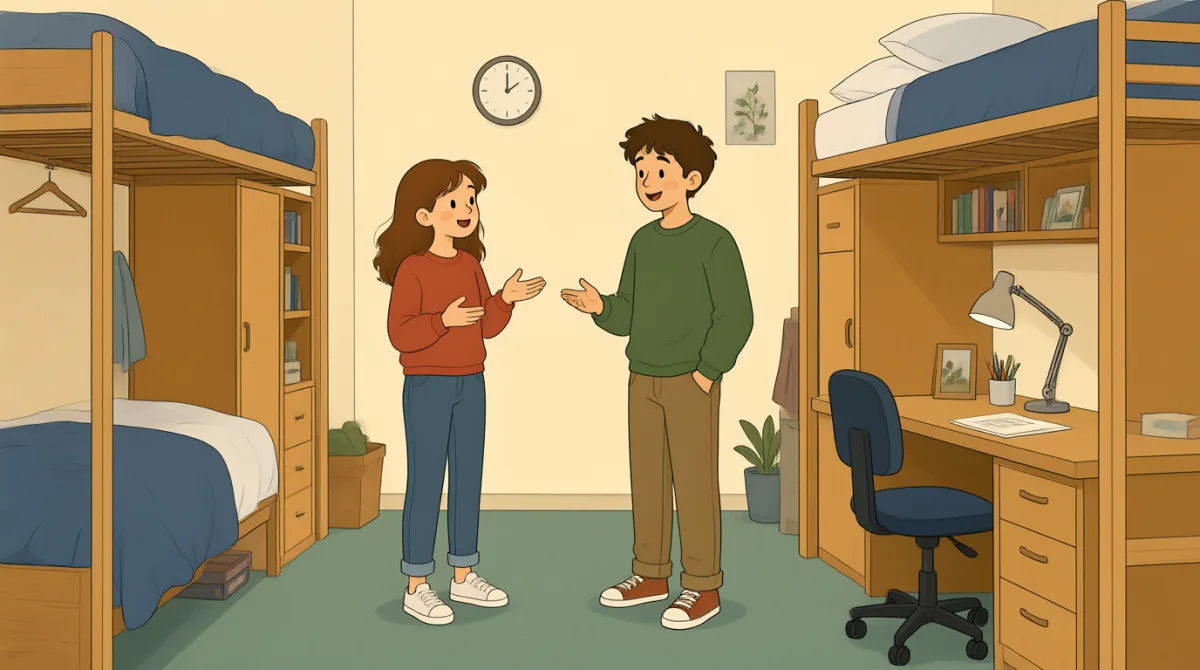

Hey, you must be Leo. I’m Emma—your new roommate. I just got here, and I’m still figuring out where everything goes.
안녕, 네가 레오구나. 난 에마야, 네 새 룸메이트. 방금 도착해서 아직 짐을 어디에 둘지 알아보는 중이야.

That’s me! Welcome in. I’m from California, and I’m studying environmental science. What brought you here?
맞아! 어서 와. 난 캘리포니아에서 왔고 환경과학을 전공해. 넌 여기 왜 오게 됐어?
I’m from Canada, and I’m studying business. I wanted to experience life somewhere new, though I’m a little nervous about being so far from home.
난 캐나다에서 왔고 경영학을 전공해. 새로운 곳에서 살아 보고 싶었어. 그래도 집에서 이렇게 멀리 떨어져 있으니 조금 걱정되긴 해.
I get that. Moving in was a lot to take in, but everyone I’ve met has been friendly. We’ll get the hang of things pretty quickly.
그 마음 이해해. 이사하는 건 정신없었지만, 지금까지 만난 사람들은 다 친절했어. 우리도 금방 익숙해질 거야.
I hope so! How should we share the room? I’m happy to keep my side tidy, and I’d rather check before borrowing anything.
그랬으면 좋겠다! 방은 어떻게 같이 쓰면 좋을까? 난 내 쪽은 깔끔하게 정리해 둘게. 그리고 뭘 빌릴 땐 먼저 물어보는 게 좋겠어.
That sounds fair. Let’s each use one desk and one closet, and we can agree on quiet hours when we need to study or sleep.
좋은 생각이야. 책상 하나랑 옷장 하나씩 쓰고, 공부하거나 잘 때는 서로 조용히 지켜야 하는 시간도 정하자.
Deal. I also like hiking and trying new food, so maybe we have a few things in common already.
좋아. 나도 하이킹하고 새로운 음식을 먹어 보는 걸 좋아해. 우리 벌써 공통점이 몇 가지 있는 것 같네.
For sure! There’s a campus trail and a food hall nearby. Want to explore them together tomorrow after our morning classes?
완전 그렇네! 근처에 캠퍼스 산책로랑 푸드홀이 있어. 내일 오전 수업 끝나고 같이 둘러볼래?
I’d love to. It’ll be nice to have someone show me around—and maybe I can finally find my way back without checking a map.
좋지. 누가 여기저기 안내해 주면 좋을 것 같아. 그러다 보면 지도 안 보고도 드디어 돌아오는 길을 찾을 수 있겠지.
어휘8
- figuring out where everything goesfiguring out where everything goes: 물건을 어디에 둘지 알아보는 것
Working out where things should be placed. You can use “figuring out” when you are learning how to do something or understand a new place.
물건을 어디에 두면 좋을지 알아가는 거예요. “figuring out”은 어떤 일을 하는 법을 배우거나 새로운 장소를 파악할 때 쓸 수 있어요.
- What brought you here?What brought you here?: 여기엔 왜 오게 됐어?
A friendly way to ask why someone came to a place. You can also use it to ask what led someone to a school, city, or event.
누군가 이곳에 온 이유를 친근하게 묻는 표현이에요. 학교나 도시, 행사에 오게 된 계기를 물을 때도 쓸 수 있어요.
- get the hang of thingsget the hang of things: 요령을 익히다, 익숙해지다
Become comfortable with how things work. Use this phrase when someone is learning a new routine or skill.
어떻게 돌아가는지 익숙해지는 거예요. 새로운 일과나 기술을 배우고 있을 때 이 표현을 쓸 수 있어요.
- keep my side tidykeep my side tidy: 내 쪽을 깔끔하게 정리해 두다
Keep my part of a shared space neat and organized. You can change “my side” to name another area you share.
함께 쓰는 공간에서 내가 사용하는 부분을 깔끔하고 정돈된 상태로 유지한다는 뜻이에요. “my side” 대신 함께 쓰는 다른 공간을 넣어 말할 수도 있어요.
- check before borrowing anythingcheck before borrowing anything: 뭘 빌리기 전에 먼저 물어보다
Ask for permission before using someone else’s things. This is a considerate phrase for shared living situations.
다른 사람의 물건을 쓰기 전에 허락을 구한다는 뜻이에요. 함께 사는 상황에서 배려를 나타내는 표현이에요.
- quiet hoursquiet hours: 조용히 해야 하는 시간
Times when people agree to keep noise low. You can use this phrase when discussing study or sleep schedules.
서로 소음을 줄이기로 한 시간을 말해요. 공부나 수면 시간을 의논할 때 쓸 수 있어요.
- have a few things in commonhave a few things in common: 공통점이 몇 가지 있다
Share some interests or qualities with another person. Use this phrase when you discover that you like some of the same things.
다른 사람과 관심사나 특징을 몇 가지 공유한다는 뜻이에요. 서로 좋아하는 것이 같다는 걸 알게 됐을 때 쓸 수 있어요.
- show me aroundshow me around: 여기저기 안내해 주다
Take me to different places and help me become familiar with them. You can use this when asking someone to introduce you to a new area.
여러 장소에 데려가 주고 그곳에 익숙해지도록 도와준다는 뜻이에요. 새로운 지역을 소개해 달라고 할 때 쓸 수 있어요.
핵심 문장8
- 1
I’m from Canada, and I’m studying business.
난 캐나다에서 왔고 경영학을 전공해.
This is a simple way to introduce your home country and what you study. You can replace “Canada” and “business” with your own details.
자신의 고향 나라와 전공을 간단히 소개하는 표현이에요. “Canada”와 “business”를 자신의 정보로 바꿔 말할 수 있어요.
- 2
I wanted to experience life somewhere new, though I’m a little nervous about being so far from home.
새로운 곳에서 살아 보고 싶었어. 그래도 집에서 이렇게 멀리 떨어져 있으니 조금 걱정되긴 해.
This sentence explains a reason for moving while also sharing a feeling. Use “though” to add a contrast or a concern.
이 문장은 이사를 온 이유를 말하면서 동시에 자신의 감정도 전해요. “though”를 사용하면 앞의 내용에 대조되는 점이나 걱정을 덧붙일 수 있어요.
- 3
We’ll get the hang of things pretty quickly.
우리도 금방 익숙해질 거야.
This is a reassuring way to say that people will soon become comfortable with a new situation. Use “get the hang of” when learning a routine or skill.
새로운 상황에도 곧 익숙해질 거라고 안심시켜 주는 표현이에요. 일과나 기술을 배우는 상황에서 “get the hang of”를 쓸 수 있어요.
- 4
I’d rather check before borrowing anything.
뭘 빌릴 땐 먼저 물어보는 게 좋겠어.
This is a polite way to explain that you prefer to ask permission first. You can use “I’d rather” to state what you prefer to do.
먼저 허락을 구하는 편이 좋다고 정중하게 말하는 표현이에요. “I’d rather”를 사용하면 자신이 선호하는 행동을 말할 수 있어요.
- 5
Let’s each use one desk and one closet, and we can agree on quiet hours when we need to study or sleep.
책상 하나랑 옷장 하나씩 쓰고, 공부하거나 잘 때는 서로 조용히 지켜야 하는 시간도 정하자.
This sentence suggests a practical plan for sharing a room. Use “Let’s” to propose an arrangement, then add details about what everyone will do.
방을 함께 쓰기 위한 실용적인 계획을 제안하는 문장이에요. “Let’s”로 제안을 시작하고, 모두가 어떻게 할지 구체적인 내용을 덧붙일 수 있어요.
- 6
I also like hiking and trying new food, so maybe we have a few things in common already.
나도 하이킹하고 새로운 음식을 먹어 보는 걸 좋아해. 우리 벌써 공통점이 몇 가지 있는 것 같네.
This sentence shares interests and helps start a friendly conversation. Use “we have a few things in common” when you discover shared interests.
자신의 관심사를 말하며 친근한 대화를 시작하는 문장이에요. 서로 공통된 관심사를 발견했을 때 “we have a few things in common”을 쓸 수 있어요.
- 7
Want to explore them together tomorrow after our morning classes?
내일 오전 수업 끝나고 같이 둘러볼래?
This is a casual way to invite someone to do something at a specific time. You can replace the activity and time with your own plans.
정해진 시간에 함께 뭔가 하자고 가볍게 제안하는 표현이에요. 활동이나 시간을 자신의 계획에 맞게 바꿔 말할 수 있어요.
- 8
It’ll be nice to have someone show me around—and maybe I can finally find my way back without checking a map.
누가 여기저기 안내해 주면 좋을 것 같아. 그러다 보면 지도 안 보고도 드디어 돌아오는 길을 찾을 수 있겠지.
This sentence expresses appreciation and adds a lighthearted detail about getting familiar with a place. Use “show me around” when someone can help you explore a new area.
고마운 마음을 표현하면서 장소에 익숙해지는 일에 관한 가벼운 농담을 덧붙인 문장이에요. 누군가 새로운 지역을 둘러보도록 도와줄 때 “show me around”를 쓸 수 있어요.