Asking About Routines and Meals
一日の流れと食事について尋ねる
Emma and Jack ask Grace about nap times, outdoor play, and what the children eat. Grace explains how the daycare handles allergies and keeps parents informed.
エマとジャックは、グレースにお昼寝の時間や外遊び、子どもたちが食べるものについて尋ねます。グレースは、食物アレルギーへの対応や保護者への連絡方法について説明します。
会話10
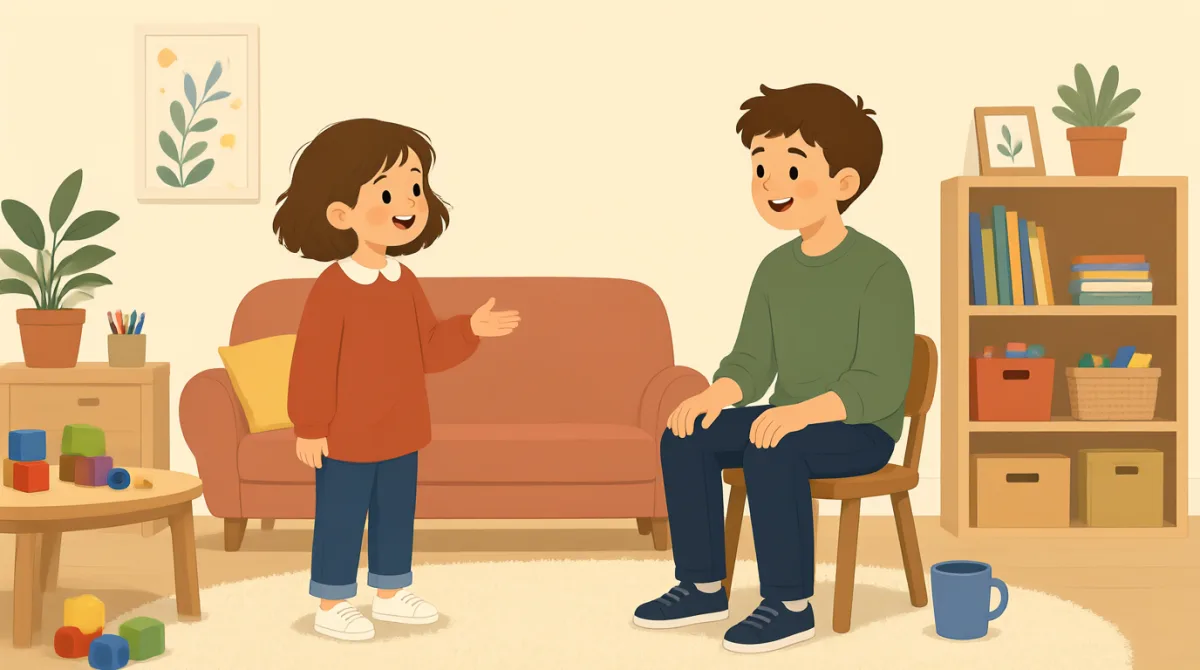

Could you walk us through a typical day? We’re especially curious about nap times and how much time the kids spend outside.
普段の一日の流れを教えていただけますか?特に、お昼寝の時間や子どもたちがどのくらい外で過ごすのかが気になります。

Of course. Younger children usually nap after lunch, while older ones can rest quietly or look at books if they’re not sleepy.
もちろんです。小さい子どもたちはたいてい昼食のあとにお昼寝をします。年上の子たちは、眠くなければ静かに休んだり、本を読んだりできます。

That sounds sensible. And do they get outdoor time every day, or does it depend on the weather?
それはいいですね。外遊びは毎日ありますか?それとも天気によりますか?
We go outside every day unless the weather is unsafe. The children can run around, play, and get some fresh air.
天候が危険でないかぎり、毎日外に出ます。子どもたちは走り回ったり、遊んだり、新鮮な空気を吸ったりできます。
Great. What do you usually serve for lunch and snacks? We’d also like to know how you handle food allergies.
いいですね。昼食やおやつには、どんなものを出すことが多いですか?食物アレルギーへの対応についても知りたいです。
Lunch is usually a balanced meal with vegetables, grains, and protein. We record each child’s allergies and keep those foods separate.
昼食はたいてい、野菜や穀物、たんぱく質をバランスよく取り入れた食事です。それぞれの子どものアレルギーを記録して、該当する食べ物は別にしています。
If a child has a serious allergy, do all the staff know what to do in an emergency?
重いアレルギーのある子がいる場合、緊急時にどう対応するか、スタッフ全員が把握していますか?
Yes. Staff review allergy plans regularly, and we make sure everyone knows the steps to take. We also contact parents right away if there’s a concern.
はい。スタッフはアレルギー対応計画を定期的に確認し、全員が必要な対応手順を把握していることを確かめています。心配なことがあれば、すぐに保護者に連絡します。
That’s reassuring. How do you keep parents updated about meals, naps, and how their child’s day went?
それなら安心ですね。食事やお昼寝のこと、お子さんが一日をどう過ごしたかは、どのように保護者に知らせていますか?
We send a daily update with meals, rest, and activities. If anything unusual comes up, we’ll call rather than leave you guessing.
食事や休息、活動内容をまとめた日々のお知らせを送っています。何かいつもと違うことがあれば、保護者の方が事情を分からずに心配することのないよう、電話でご連絡します。
語彙7
- walk us through a typical day普段の一日の流れを教える
To explain the usual schedule step by step. You can use this when asking someone to describe a routine.
いつもの予定を順を追って説明することです。相手に日課や一連の流れを説明してほしいときに使えます。
- rest quietly静かに休む
To relax without making much noise or doing active things. Here, older children can rest even if they are not sleepy.
大きな音を立てたり、活発に動いたりせずに、ゆっくり過ごすことです。ここでは、年上の子どもたちは眠くなくても休める、という意味です。
- get some fresh air新鮮な空気を吸う
To spend time outside and breathe outdoor air. It is often used when talking about taking a break or going outdoors.
外で過ごして、外の空気を吸うことです。休憩したり外出したりする話題でよく使われます。
- food allergies食物アレルギー
These are reactions to certain foods that can make someone ill. The phrase is useful when discussing dietary needs and safety.
特定の食べ物によって起こり、体調を悪くすることがある反応です。食事の配慮や安全について話すときに役立つ表現です。
- in an emergency緊急時に
Means during a sudden, serious situation that needs quick action. You can use it to ask what people should do if something goes wrong.
すぐに対応する必要がある、突然の深刻な状況で、という意味です。何か問題が起きたときにどうすべきか尋ねるときに使えます。
- keep parents updated保護者に最新情報を伝える
To regularly give parents new information. This phrase is useful when asking how a school or daycare communicates with families.
保護者に新しい情報を定期的に伝えることです。学校や保育施設が家庭とどのように連絡を取っているか尋ねるときに便利な表現です。
- leave you guessing事情が分からず不安にさせる
To make you uncertain because you have not been told what happened. Here, Grace promises to call parents instead of leaving them unsure.
何が起きたか伝えられていないため、相手を不安にさせることです。ここでは、グレースが保護者を不安なままにせず、電話で連絡すると約束しています。
重要な文7
- 1
Could you walk us through a typical day?
普段の一日の流れを教えていただけますか?
This is a polite way to ask someone to explain a usual routine. Replace “a typical day” with another routine or process you want to understand.
普段の流れを説明してもらいたいときの丁寧な尋ね方です。「a typical day」を知りたい別の日課や手順に置き換えて使えます。
- 2
Younger children usually nap after lunch, while older ones can rest quietly or look at books if they’re not sleepy.
小さい子どもたちはたいてい昼食のあとにお昼寝をしますが、年上の子たちは、眠くなければ静かに休んだり、本を読んだりできます。
This sentence compares routines for two groups using “while.” Use the same structure to explain how different people or groups do things.
この文では「while」を使って、二つのグループの日課を比べています。同じ形で、異なる人やグループがどうするかを説明できます。
- 3
We go outside every day unless the weather is unsafe.
天候が危険でないかぎり、毎日外に出ます。
This explains a regular plan and the condition that can change it. Use “unless” to say something happens except when a particular condition applies.
普段の予定と、それを変更する条件を説明する文です。「unless」は「〜でないかぎり」という意味で、特定の条件が当てはまるとき以外は何かが起こる、と伝えるときに使います。
- 4
We’d also like to know how you handle food allergies.
食物アレルギーへの対応についても知りたいです。
This is a polite way to ask how someone deals with an important concern. You can replace “food allergies” with another topic you need information about.
大切な心配事について、相手がどう対応しているかを丁寧に尋ねる表現です。「food allergies」を、情報が必要な別の話題に置き換えられます。
- 5
If a child has a serious allergy, do all the staff know what to do in an emergency?
重いアレルギーのある子がいる場合、緊急時にどう対応するか、スタッフ全員が把握していますか?
This question checks whether people are prepared for a specific situation. Use “If ..., do ...?” to ask about plans for possible events.
特定の状況に備えができているかを確認する質問です。「If ..., do ...?」を使うと、起こりうる出来事への対応について尋ねられます。
- 6
We send a daily update with meals, rest, and activities.
食事や休息、活動内容をまとめた日々のお知らせを送っています。
This clearly describes what information is shared and how often. You can adapt it to explain what a service includes in a regular update.
どんな情報をどのくらいの頻度で共有するかを、分かりやすく説明する文です。定期的なお知らせに何が含まれるか説明するときにも応用できます。
- 7
If anything unusual comes up, we’ll call rather than leave you guessing.
何かいつもと違うことがあれば、事情が分からず心配させるのではなく、電話で連絡します。
This explains what someone will do if a problem or unexpected event happens. “Rather than” introduces the action they prefer to take.
問題や予想外のことが起きたとき、どうするかを説明する文です。「rather than」は、代わりに選ぶ行動を示します。