Cheering Up Your Friend
友達を元気づける
Emma visits Leo and asks how he is feeling. They talk about his recovery and make plans for when he leaves the hospital.
エマがレオを見舞い、気分はどうか尋ねます。回復の様子について話し、退院後の予定を立てます。
会話8
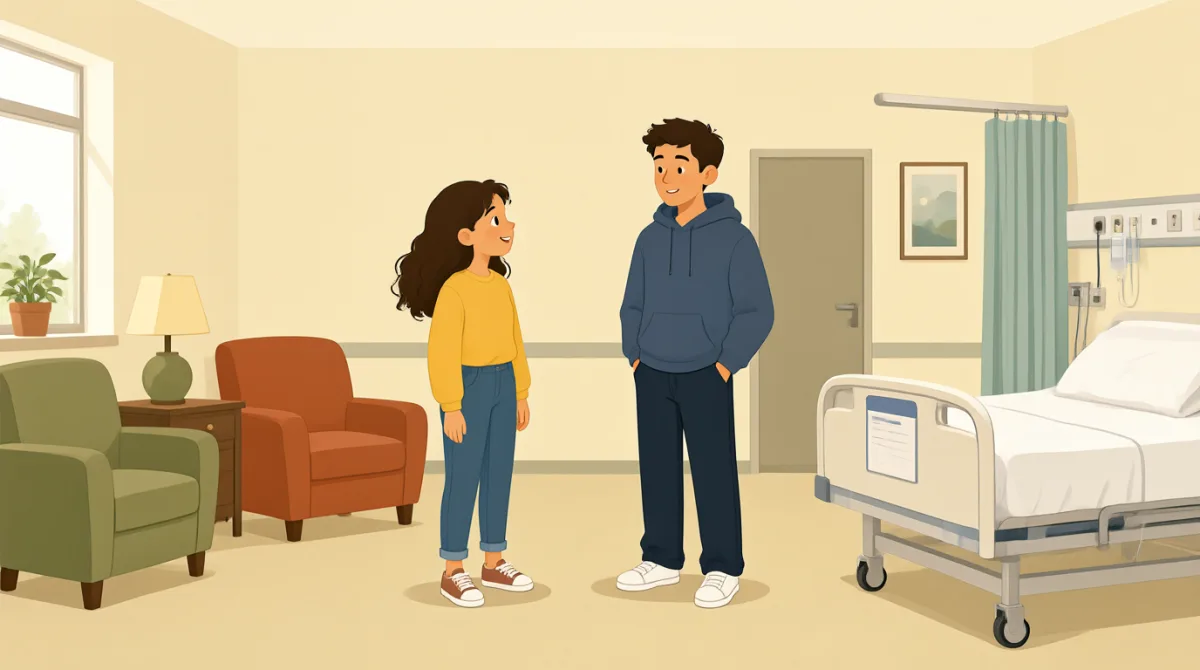

Hi, Leo. How are you feeling today?
やあ、レオ。今日は気分どう?

A little tired, but much better than yesterday.
ちょっと疲れてるけど、昨日よりずっといいよ。
That’s good to hear. Are you still in pain?
それはよかった。まだ痛む?
Not much. The doctor says I can go home soon.
そんなに痛くないよ。先生が、もうすぐ家に帰れるって。
Great! When you get out, let’s go for a walk.
よかった!退院したら、一緒に散歩しようよ。
Sounds nice. I miss getting outside and seeing my friends.
いいね。外に出たり、友達に会ったりするのが恋しいよ。
We miss you too. Take it easy, and you’ll be back on your feet soon.
私たちも会いたいよ。無理しないでね。もうすぐ元気に動けるようになるよ。
Thanks, Emma. Your visit really cheered me up.
ありがとう、エマ。来てくれて、すごく元気が出たよ。
語彙8
- a little tired少し疲れている
This means somewhat tired, but not very tired. Use it to describe how you feel.
「a little tired」は、ひどく疲れているわけではないけれど、少し疲れているという意味です。自分の体調や気分を伝えるときに使えます。
- much betterずっとよくなった
This means feeling a lot better than before. You can use it to talk about your health or mood.
「much better」は、以前よりずっとよくなったという意味です。体調や気分について話すときに使えます。
- in pain痛みがある
This means feeling physical pain. You can ask, “Are you still in pain?” to check on someone.
「in pain」は、体に痛みを感じているという意味です。相手の様子を気づかうときは、“Are you still in pain?”(まだ痛む?)と聞けます。
- go home家に帰る
This means leave the place where you are and return to your home. It is often used when someone leaves the hospital.
「go home」は、今いる場所を出て自分の家に帰るという意味です。誰かが退院するときによく使われます。
- get out退院する
Here, this means leave the hospital. You can also use it to talk about leaving a place or getting outside.
ここでの「get out」は、病院を出る、つまり退院するという意味です。ほかの場所を出ることや、外に出ることにも使えます。
- take it easy無理をしない
This means rest and avoid doing too much. It is a friendly way to tell someone to look after themselves.
「take it easy」は、休んで、あまり頑張りすぎないという意味です。相手の体を気づかって、無理しないでねと伝える表現です。
- back on your feet元気に動けるようになる
This means healthy and active again after being ill or injured. It is often used to encourage someone who is recovering.
「back on your feet」は、病気やけがから回復して、また元気に活動できるという意味です。回復中の人を励ますときによく使われます。
- cheered me up元気づけてくれた
This means made me feel happier. You can say this when someone's visit or kind words improve your mood.
「cheered me up」は、気分を明るくしてくれた、元気づけてくれたという意味です。誰かが訪ねてきたり、優しい言葉をかけてくれたりして、気分がよくなったときに使えます。
重要な文7
- 1
How are you feeling today?
今日は気分どう?
Use this to ask someone about their health or mood. You can change “today” to another time, such as “this morning.”
相手の体調や気分を尋ねる表現です。“today”を“this morning”のように別の時間に変えて使うこともできます。
- 2
A little tired, but much better than yesterday.
ちょっと疲れてるけど、昨日よりずっといいよ。
This is a simple way to describe how you feel compared with before. You can replace “tired” with another feeling, such as “worried.”
以前と比べて今の気分を簡単に伝える表現です。“tired”を“worried”など、ほかの気持ちを表す言葉に置き換えられます。
- 3
Are you still in pain?
まだ痛む?
Use this to ask if someone continues to feel pain. You can change “in pain” to another problem, such as “feeling sick.”
痛みがまだ続いているかを尋ねる表現です。“in pain”を“feeling sick”など、ほかの不調に置き換えることもできます。
- 4
The doctor says I can go home soon.
先生が、もうすぐ家に帰れるって。
This sentence shares news about a doctor's advice and a possible plan. You can use “The doctor says I can…” to talk about what you are allowed to do.
医師から聞いたことや、これからの予定を伝える文です。“The doctor says I can…”を使うと、何をしてよいと言われたかを話せます。
- 5
When you get out, let’s go for a walk.
退院したら、一緒に散歩しようよ。
Use this to suggest a future activity after someone leaves a place. “Let’s…” is a friendly way to make plans together.
相手がある場所を出たあとにすることを提案する表現です。“Let’s…”は、一緒に何かしようと気軽に誘う言い方です。
- 6
Take it easy, and you’ll be back on your feet soon.
無理しないでね。もうすぐ元気に動けるようになるよ。
This is a warm way to encourage someone who is recovering. “You’ll be…” can express a hopeful prediction about the future.
回復中の人を温かく励ます表現です。“You’ll be…”は、これからそうなるだろうという希望を込めた予想を表せます。
- 7
Your visit really cheered me up.
来てくれて、すごく元気が出たよ。
Use this to thank someone for making you feel happier. You can replace “Your visit” with “Your message” or “Your call.”
自分を明るい気持ちにしてくれた相手に感謝を伝える表現です。“Your visit”を“Your message”や“Your call”に置き換えることもできます。