Cheering Up Your Friend
Emma visits Leo and asks how he is feeling. They talk about his recovery and make plans for when he leaves the hospital.
Dialogue8
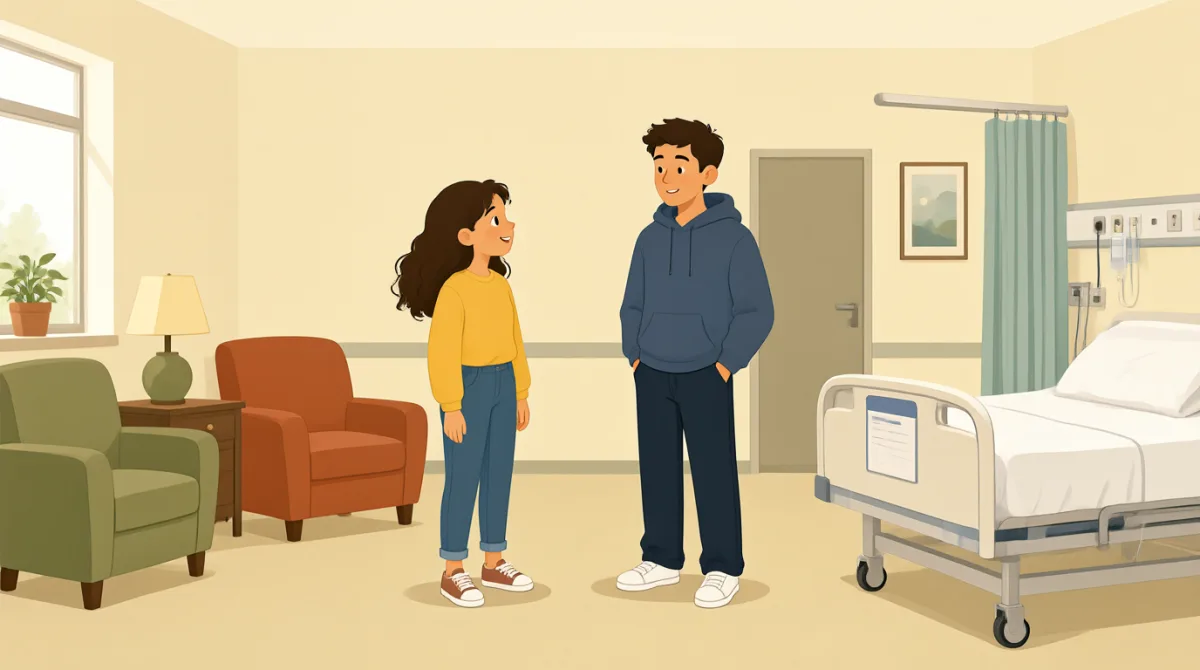

Hi, Leo. How are you feeling today?

A little tired, but much better than yesterday.
That’s good to hear. Are you still in pain?
Not much. The doctor says I can go home soon.
Great! When you get out, let’s go for a walk.
Sounds nice. I miss getting outside and seeing my friends.
We miss you too. Take it easy, and you’ll be back on your feet soon.
Thanks, Emma. Your visit really cheered me up.
Vocabulary8
- a little tired
This means somewhat tired, but not very tired. Use it to describe how you feel.
- much better
This means feeling a lot better than before. You can use it to talk about your health or mood.
- in pain
This means feeling physical pain. You can ask, “Are you still in pain?” to check on someone.
- go home
This means leave the place where you are and return to your home. It is often used when someone leaves the hospital.
- get out
Here, this means leave the hospital. You can also use it to talk about leaving a place or getting outside.
- take it easy
This means rest and avoid doing too much. It is a friendly way to tell someone to look after themselves.
- back on your feet
This means healthy and active again after being ill or injured. It is often used to encourage someone who is recovering.
- cheered me up
This means made me feel happier. You can say this when someone's visit or kind words improve your mood.
Key Sentences7
- 1
How are you feeling today?
Use this to ask someone about their health or mood. You can change “today” to another time, such as “this morning.”
- 2
A little tired, but much better than yesterday.
This is a simple way to describe how you feel compared with before. You can replace “tired” with another feeling, such as “worried.”
- 3
Are you still in pain?
Use this to ask if someone continues to feel pain. You can change “in pain” to another problem, such as “feeling sick.”
- 4
The doctor says I can go home soon.
This sentence shares news about a doctor's advice and a possible plan. You can use “The doctor says I can…” to talk about what you are allowed to do.
- 5
When you get out, let’s go for a walk.
Use this to suggest a future activity after someone leaves a place. “Let’s…” is a friendly way to make plans together.
- 6
Take it easy, and you’ll be back on your feet soon.
This is a warm way to encourage someone who is recovering. “You’ll be…” can express a hopeful prediction about the future.
- 7
Your visit really cheered me up.
Use this to thank someone for making you feel happier. You can replace “Your visit” with “Your message” or “Your call.”