Cheering Up Your Friend
ให้กำลังใจเพื่อน
Emma visits Leo and asks how he is feeling. They talk about his recovery and make plans for when he leaves the hospital.
เอ็มมาไปเยี่ยมลีโอและถามว่าเขารู้สึกอย่างไร ทั้งคู่คุยกันเรื่องการฟื้นตัวของเขาและวางแผนว่าจะทำอะไรเมื่อเขาออกจากโรงพยาบาล
บทสนทนา8
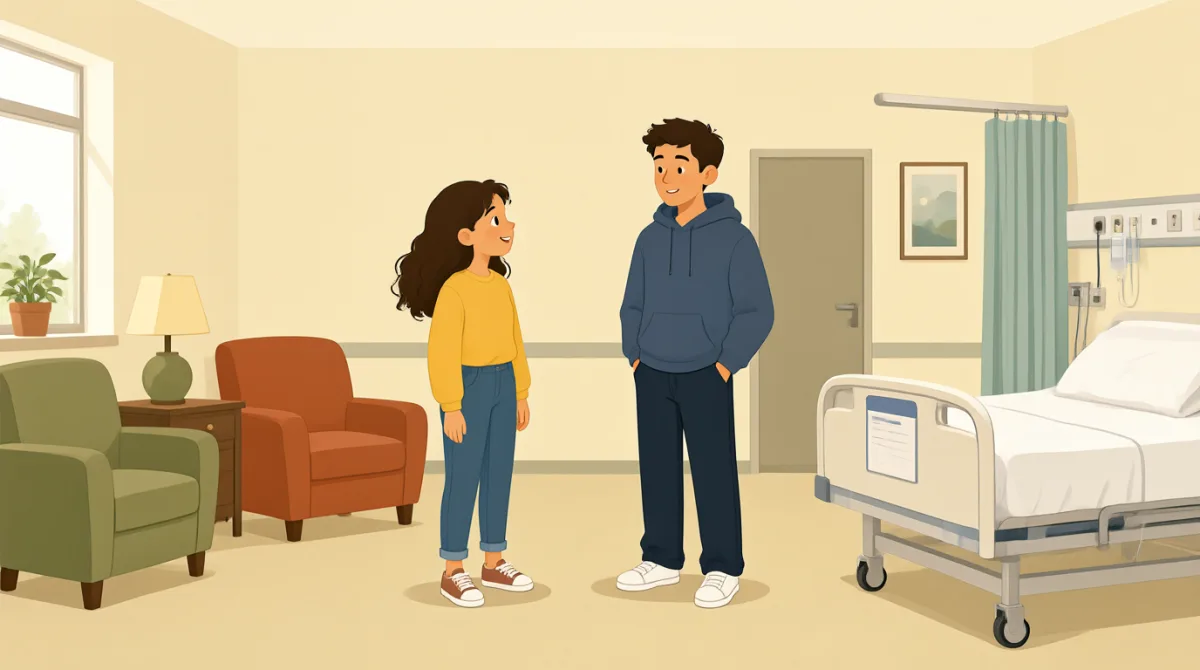

Hi, Leo. How are you feeling today?
สวัสดี ลีโอ วันนี้รู้สึกเป็นยังไงบ้าง

A little tired, but much better than yesterday.
เหนื่อยนิดหน่อย แต่ดีขึ้นกว่าเมื่อวานเยอะเลย
That’s good to hear. Are you still in pain?
ได้ยินแบบนั้นก็ดีแล้ว ยังเจ็บอยู่ไหม
Not much. The doctor says I can go home soon.
ไม่ค่อยแล้ว หมอบอกว่าอีกไม่นานก็กลับบ้านได้
Great! When you get out, let’s go for a walk.
เยี่ยมเลย! พอออกจากโรงพยาบาลแล้ว ไปเดินเล่นกันนะ
Sounds nice. I miss getting outside and seeing my friends.
ฟังดูดีนะ ผมคิดถึงการได้ออกไปข้างนอกและเจอเพื่อน ๆ จัง
We miss you too. Take it easy, and you’ll be back on your feet soon.
พวกเราก็คิดถึงนายเหมือนกัน พักผ่อนให้เต็มที่นะ เดี๋ยวก็กลับมาแข็งแรงได้ในไม่ช้า
Thanks, Emma. Your visit really cheered me up.
ขอบคุณนะ เอ็มมา การมาเยี่ยมของเธอทำให้ผมรู้สึกดีขึ้นมากจริง ๆ
คำศัพท์8
- a little tiredเหนื่อยนิดหน่อย
This means somewhat tired, but not very tired. Use it to describe how you feel.
คำนี้หมายถึงรู้สึกเหนื่อยพอสมควร แต่ไม่ได้เหนื่อยมาก ใช้บอกความรู้สึกของตัวเองได้
- much betterดีขึ้นมาก
This means feeling a lot better than before. You can use it to talk about your health or mood.
คำนี้หมายถึงรู้สึกดีขึ้นกว่าเดิมมาก ใช้พูดถึงสุขภาพหรืออารมณ์ก็ได้
- in painเจ็บปวด
This means feeling physical pain. You can ask, “Are you still in pain?” to check on someone.
คำนี้หมายถึงรู้สึกเจ็บทางร่างกาย คุณสามารถถามว่า “Are you still in pain?” เพื่อดูว่าอีกฝ่ายยังเจ็บอยู่หรือไม่
- go homeกลับบ้าน
This means leave the place where you are and return to your home. It is often used when someone leaves the hospital.
คำนี้หมายถึงออกจากสถานที่ที่คุณอยู่แล้วกลับไปบ้าน มักใช้เมื่อมีคนออกจากโรงพยาบาล
- get outออกไป
Here, this means leave the hospital. You can also use it to talk about leaving a place or getting outside.
ในที่นี้หมายถึงออกจากโรงพยาบาล นอกจากนี้ยังใช้พูดถึงการออกจากสถานที่หรือการออกไปข้างนอกได้ด้วย
- take it easyพักผ่อนให้เต็มที่
This means rest and avoid doing too much. It is a friendly way to tell someone to look after themselves.
คำนี้หมายถึงพักผ่อนและหลีกเลี่ยงการทำอะไรหนักเกินไป เป็นวิธีพูดอย่างเป็นมิตรเพื่อบอกให้ใครสักคนดูแลตัวเอง
- back on your feetกลับมาแข็งแรงอีกครั้ง
This means healthy and active again after being ill or injured. It is often used to encourage someone who is recovering.
คำนี้หมายถึงกลับมามีสุขภาพดีและทำกิจกรรมต่าง ๆ ได้อีกครั้งหลังจากป่วยหรือบาดเจ็บ มักใช้เพื่อให้กำลังใจคนที่กำลังฟื้นตัว
- cheered me upทำให้รู้สึกดีขึ้น
This means made me feel happier. You can say this when someone's visit or kind words improve your mood.
คำนี้หมายถึงทำให้รู้สึกมีความสุขมากขึ้น ใช้พูดเมื่อการมาเยี่ยมหรือคำพูดดี ๆ ของใครบางคนช่วยให้อารมณ์ดีขึ้น
ประโยคสำคัญ7
- 1
How are you feeling today?
วันนี้รู้สึกเป็นยังไงบ้าง
Use this to ask someone about their health or mood. You can change “today” to another time, such as “this morning.”
ใช้ประโยคนี้ถามเกี่ยวกับสุขภาพหรืออารมณ์ของใครบางคน คุณสามารถเปลี่ยน “today” เป็นช่วงเวลาอื่นได้ เช่น “this morning”
- 2
A little tired, but much better than yesterday.
เหนื่อยนิดหน่อย แต่ดีขึ้นกว่าเมื่อวานเยอะเลย
This is a simple way to describe how you feel compared with before. You can replace “tired” with another feeling, such as “worried.”
นี่เป็นวิธีง่าย ๆ ในการบอกว่าคุณรู้สึกอย่างไรเมื่อเปรียบเทียบกับก่อนหน้านี้ คุณสามารถเปลี่ยน “tired” เป็นความรู้สึกอื่นได้ เช่น “worried”
- 3
Are you still in pain?
ยังเจ็บอยู่ไหม
Use this to ask if someone continues to feel pain. You can change “in pain” to another problem, such as “feeling sick.”
ใช้ประโยคนี้ถามว่าใครบางคนยังรู้สึกเจ็บอยู่หรือไม่ คุณสามารถเปลี่ยน “in pain” เป็นปัญหาอื่นได้ เช่น “feeling sick”
- 4
The doctor says I can go home soon.
หมอบอกว่าอีกไม่นานก็กลับบ้านได้
This sentence shares news about a doctor's advice and a possible plan. You can use “The doctor says I can…” to talk about what you are allowed to do.
ประโยคนี้ใช้บอกข่าวเกี่ยวกับคำแนะนำของหมอและแผนที่อาจเกิดขึ้น คุณสามารถใช้ “The doctor says I can…” เพื่อพูดถึงสิ่งที่คุณได้รับอนุญาตให้ทำ
- 5
When you get out, let’s go for a walk.
พอออกจากโรงพยาบาลแล้ว ไปเดินเล่นกันนะ
Use this to suggest a future activity after someone leaves a place. “Let’s…” is a friendly way to make plans together.
ใช้ประโยคนี้เสนอว่าจะทำกิจกรรมในอนาคตหลังจากใครบางคนออกจากสถานที่หนึ่ง “Let’s…” เป็นวิธีที่เป็นมิตรในการวางแผนทำอะไรร่วมกัน
- 6
Take it easy, and you’ll be back on your feet soon.
พักผ่อนให้เต็มที่นะ เดี๋ยวก็กลับมาแข็งแรงได้ในไม่ช้า
This is a warm way to encourage someone who is recovering. “You’ll be…” can express a hopeful prediction about the future.
นี่เป็นวิธีพูดอย่างอบอุ่นเพื่อให้กำลังใจคนที่กำลังฟื้นตัว “You’ll be…” ใช้แสดงการคาดหวังในแง่ดีเกี่ยวกับอนาคตได้
- 7
Your visit really cheered me up.
การมาเยี่ยมของเธอทำให้ผมรู้สึกดีขึ้นมากจริง ๆ
Use this to thank someone for making you feel happier. You can replace “Your visit” with “Your message” or “Your call.”
ใช้ประโยคนี้ขอบคุณใครบางคนที่ทำให้คุณรู้สึกมีความสุขมากขึ้น คุณสามารถเปลี่ยน “Your visit” เป็น “Your message” หรือ “Your call” ได้