Cheering Up Your Friend
Animando a tu amigo
Emma visits Leo and asks how he is feeling. They talk about his recovery and make plans for when he leaves the hospital.
Emma visita a Leo y le pregunta cómo se siente. Hablan de su recuperación y hacen planes para cuando salga del hospital.
Diálogo8
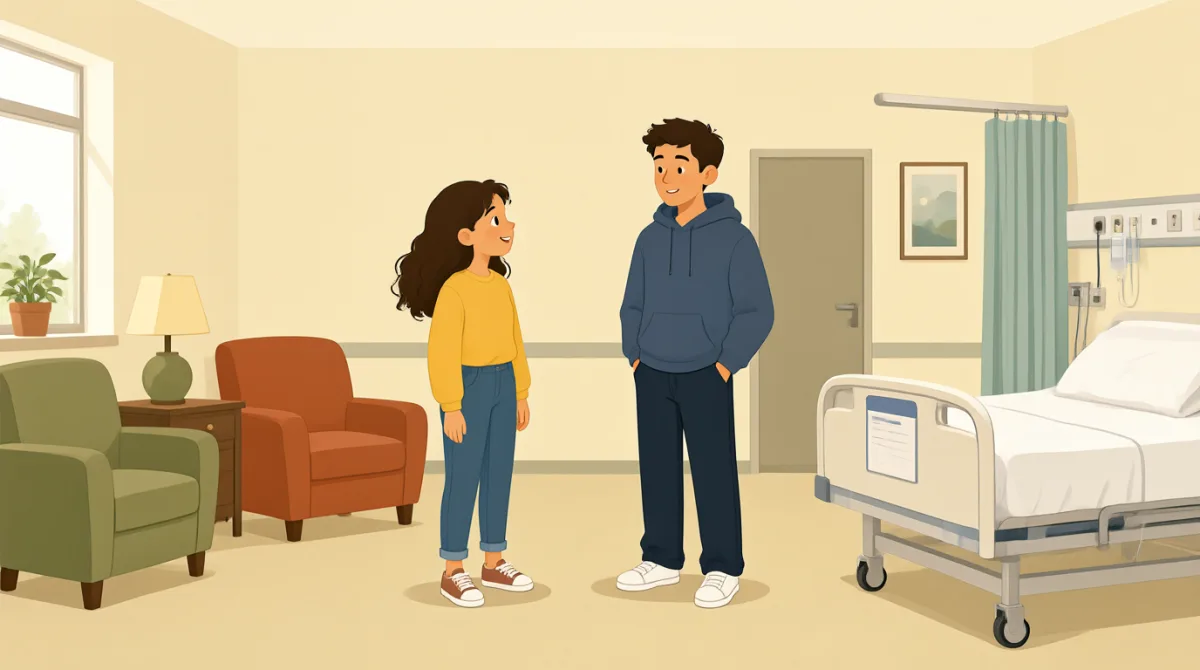

Hi, Leo. How are you feeling today?
Hola, Leo. ¿Cómo te sientes hoy?

A little tired, but much better than yesterday.
Un poco cansado, pero mucho mejor que ayer.
That’s good to hear. Are you still in pain?
Me alegra oírlo. ¿Todavía te duele?
Not much. The doctor says I can go home soon.
No mucho. El médico dice que pronto podré irme a casa.
Great! When you get out, let’s go for a walk.
¡Qué bien! Cuando salgas, vamos a dar un paseo.
Sounds nice. I miss getting outside and seeing my friends.
Suena bien. Extraño salir y ver a mis amigos.
We miss you too. Take it easy, and you’ll be back on your feet soon.
Nosotros también te extrañamos. Tómalo con calma y pronto volverás a estar bien.
Thanks, Emma. Your visit really cheered me up.
Gracias, Emma. Tu visita me animó mucho.
Vocabulario8
- a little tiredun poco cansado
This means somewhat tired, but not very tired. Use it to describe how you feel.
Significa estar algo cansado, pero no mucho. Úsalo para describir cómo te sientes.
- much bettermucho mejor
This means feeling a lot better than before. You can use it to talk about your health or mood.
Significa sentirse mucho mejor que antes. Puedes usarlo para hablar de tu salud o de tu estado de ánimo.
- in paintener dolor
This means feeling physical pain. You can ask, “Are you still in pain?” to check on someone.
Significa sentir dolor físico. Puedes preguntar “Are you still in pain?” (¿Todavía te duele?) para saber cómo está alguien.
- go homeir a casa
This means leave the place where you are and return to your home. It is often used when someone leaves the hospital.
Significa salir del lugar donde estás y volver a tu casa. Se usa a menudo cuando alguien sale del hospital.
- get outsalir
Here, this means leave the hospital. You can also use it to talk about leaving a place or getting outside.
Aquí significa salir del hospital. También puedes usarlo para hablar de salir de un lugar o de salir al aire libre.
- take it easytomárselo con calma
This means rest and avoid doing too much. It is a friendly way to tell someone to look after themselves.
Significa descansar y evitar hacer demasiadas cosas. Es una forma amistosa de decirle a alguien que se cuide.
- back on your feetvolver a estar bien
This means healthy and active again after being ill or injured. It is often used to encourage someone who is recovering.
Significa volver a estar sano y activo después de una enfermedad o lesión. Se suele usar para animar a alguien que se está recuperando.
- cheered me upme animó
This means made me feel happier. You can say this when someone's visit or kind words improve your mood.
Significa que me hizo sentir más feliz. Puedes decirlo cuando la visita o las palabras amables de alguien mejoran tu estado de ánimo.
Frases clave7
- 1
How are you feeling today?
¿Cómo te sientes hoy?
Use this to ask someone about their health or mood. You can change “today” to another time, such as “this morning.”
Usa esta pregunta para preguntarle a alguien por su salud o su estado de ánimo. Puedes cambiar “today” por otro momento, como “this morning”.
- 2
A little tired, but much better than yesterday.
Un poco cansado, pero mucho mejor que ayer.
This is a simple way to describe how you feel compared with before. You can replace “tired” with another feeling, such as “worried.”
Es una forma sencilla de describir cómo te sientes en comparación con antes. Puedes reemplazar “tired” por otra emoción, como “worried”.
- 3
Are you still in pain?
¿Todavía te duele?
Use this to ask if someone continues to feel pain. You can change “in pain” to another problem, such as “feeling sick.”
Usa esta pregunta para saber si alguien todavía siente dolor. Puedes cambiar “in pain” por otro problema, como “feeling sick”.
- 4
The doctor says I can go home soon.
El médico dice que pronto podré irme a casa.
This sentence shares news about a doctor's advice and a possible plan. You can use “The doctor says I can…” to talk about what you are allowed to do.
Esta frase comparte lo que ha dicho el médico y un posible plan. Puedes usar “The doctor says I can…” para hablar de lo que tienes permiso para hacer.
- 5
When you get out, let’s go for a walk.
Cuando salgas, vamos a dar un paseo.
Use this to suggest a future activity after someone leaves a place. “Let’s…” is a friendly way to make plans together.
Usa esta frase para proponer una actividad futura después de que alguien salga de un lugar. “Let’s…” es una forma amistosa de hacer planes juntos.
- 6
Take it easy, and you’ll be back on your feet soon.
Tómatelo con calma y pronto volverás a estar bien.
This is a warm way to encourage someone who is recovering. “You’ll be…” can express a hopeful prediction about the future.
Es una forma afectuosa de animar a alguien que se está recuperando. “You’ll be…” puede expresar una predicción esperanzadora sobre el futuro.
- 7
Your visit really cheered me up.
Tu visita me animó mucho.
Use this to thank someone for making you feel happier. You can replace “Your visit” with “Your message” or “Your call.”
Usa esta frase para agradecerle a alguien por hacerte sentir más feliz. Puedes reemplazar “Your visit” por “Your message” o “Your call.”