Arriving Late at Night
夜遅くに到着
The bus arrives late at night, and Emma checks that her suitcase is there. She asks Mia how to get to the taxi stand before they say goodbye.
バスが夜遅くに到着し、エマはスーツケースがあるか確認します。別れを告げる前に、ミアにタクシー乗り場への行き方を尋ねます。
会話8
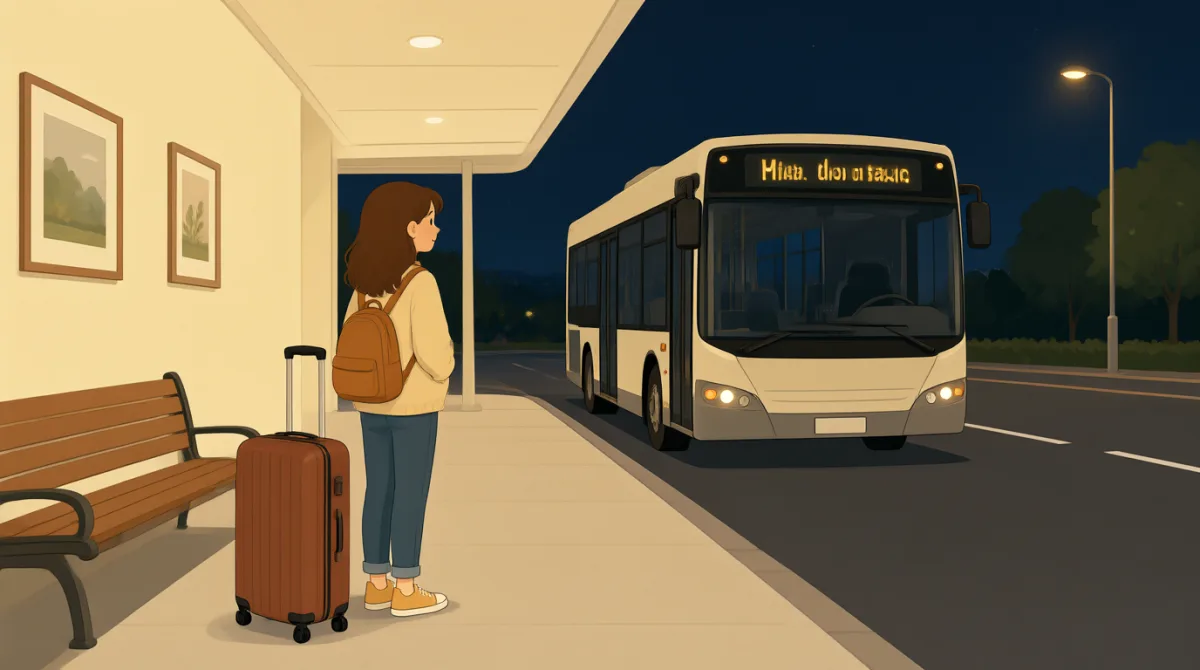

It’s really late. Is this the stop for downtown?
本当に遅いね。ここがダウンタウン行きの停留所?

Yes, this is downtown. Did you get your suitcase from under the bus?
うん、ここがダウンタウンだよ。バスの下からスーツケースは取った?
Yes, I have it. Where can I find the taxi stand?
うん、持ってるよ。タクシー乗り場はどこにあるの?
Go out through those doors, then turn left. You’ll see the taxis.
あのドアから外に出て、左に曲がって。タクシーが見えるよ。
Great, thank you. Is it safe to walk there with my suitcase?
よかった、ありがとう。スーツケースを持って歩いても安全かな?
Yes, it’s close and well lit. Stay on the sidewalk.
うん、近いし、明るいよ。歩道を歩いてね。
Thanks for helping me. I’m glad we arrived safely.
手伝ってくれてありがとう。無事に着いてよかった。
You’re welcome. Have a good night, Emma!
どういたしまして。エマ、よい夜を!
語彙8
- downtownダウンタウン
The central area of a city. You can use it to ask about or describe a place in town.
街の中心部のことです。街の中の場所について尋ねたり説明したりするときに使えます。
- suitcaseスーツケース
A case for carrying clothes and other things when you travel. You can use this word when talking about your luggage.
旅行のときに服やほかの荷物を入れて運ぶケースです。旅行の荷物について話すときに使います。
- under the busバスの下
This means below the bus, where luggage is often stored. Use it to ask where your bag was placed.
バスの下の部分のことで、荷物がよく収納されています。バッグをどこに預けたか尋ねるときに使えます。
- taxi standタクシー乗り場
A place where taxis wait for passengers. You can ask where to find one when you arrive.
乗客を待つタクシーが停まっている場所です。到着したとき、どこにあるか尋ねるのに使えます。
- turn left左に曲がる
Change direction to the left. Use it when giving or following directions.
左の方向へ進むことです。道順を伝えたり、聞いたりするときに使います。
- well lit明るい
Bright enough to see clearly. You can use this phrase to describe a place that has good lighting.
はっきり見えるくらい明るいという意味です。照明が十分にある場所を説明するときに使えます。
- sidewalk歩道
The path beside a road where people walk. Use it when talking about walking safely near traffic.
道路の脇にある、人が歩くための道です。車の近くを安全に歩くことについて話すときに使います。
- arrived safely無事に到着した
Got to a place without being hurt or having problems. You can use this phrase to say that a trip went well.
けがをしたり問題が起きたりせずに、目的地に着いたという意味です。旅が順調だったと伝えるときに使えます。
重要な文8
- 1
Is this the stop for downtown?
ここがダウンタウン行きの停留所?
Use this question to check whether you have reached the right stop. You can replace “downtown” with another destination.
正しい停留所に着いたか確認する質問です。「ダウンタウン」を別の目的地に置き換えて使えます。
- 2
Did you get your suitcase from under the bus?
バスの下からスーツケースは取った?
Use this question to check that someone collected their luggage. “Did you get...” is useful for asking about a completed action.
相手が荷物を受け取ったか確認するときの質問です。「Did you get...」は、すでに終わったことについて尋ねるのに便利です。
- 3
Where can I find the taxi stand?
タクシー乗り場はどこにあるの?
Use this to ask where a taxi pickup area is. You can replace “the taxi stand” with another place you need to find.
タクシーに乗る場所がどこか尋ねる表現です。「the taxi stand」を、自分が探している別の場所に置き換えられます。
- 4
Go out through those doors, then turn left.
あのドアから外に出て、左に曲がって。
This gives two simple directions in order. You can use “then” to show what someone should do next.
簡単な道順を順番に二つ伝える表現です。「then」を使うと、次にすることを示せます。
- 5
Is it safe to walk there with my suitcase?
スーツケースを持って歩いても安全かな?
Use this question to ask whether a walk is safe. You can replace “with my suitcase” with another situation or item.
歩いて行っても安全か尋ねる質問です。「with my suitcase」を、別の状況や持ち物に置き換えられます。
- 6
Stay on the sidewalk.
歩道を歩いてね。
This is a short instruction for walking safely beside a road. You can use “Stay on...” to tell someone where to remain.
道路の脇を安全に歩くための短い指示です。「Stay on...」を使うと、どこを歩き続けるべきか伝えられます。
- 7
I’m glad we arrived safely.
無事に着いてよかった。
Use this sentence to show relief that everyone reached a place without problems. You can change “we” to “you” or “they” to talk about others.
みんなが問題なく目的地に着いて、ほっとした気持ちを表す文です。「we」を「you」や「they」に変えると、別の人たちについて話せます。
- 8
Have a good night, Emma!
エマ、よい夜を!
This is a friendly way to say goodbye late in the day. Replace the name with the person you are speaking to.
夜遅くに別れを告げるときの、親しみのある表現です。名前を、話しかけている相手の名前に変えて使えます。