Arriving Late at Night
Późny przyjazd nocą
The bus arrives late at night, and Emma checks that her suitcase is there. She asks Mia how to get to the taxi stand before they say goodbye.
Autobus przyjeżdża późno w nocy, a Emma sprawdza, czy jej walizka jest na miejscu. Zanim się pożegnają, pyta Mię, jak dojść do postoju taksówek.
Dialog8
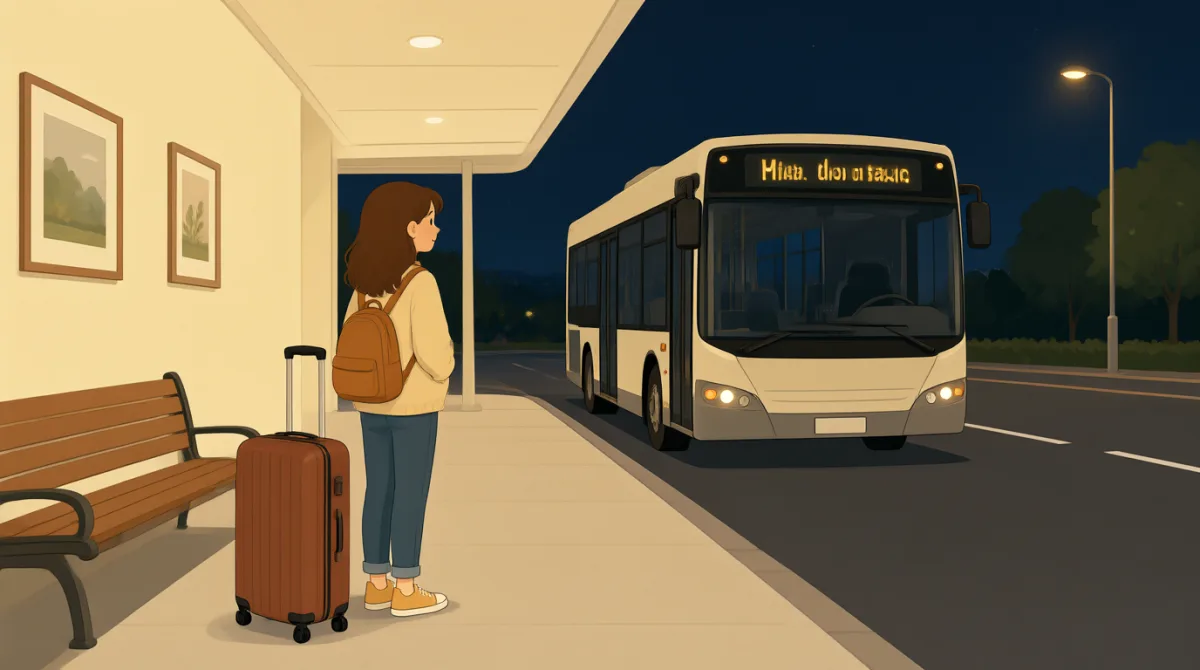

It’s really late. Is this the stop for downtown?
Jest już naprawdę późno. Czy to przystanek w centrum?

Yes, this is downtown. Did you get your suitcase from under the bus?
Tak, to centrum. Odebrałaś walizkę z luku bagażowego?
Yes, I have it. Where can I find the taxi stand?
Tak, mam ją. Gdzie znajdę postój taksówek?
Go out through those doors, then turn left. You’ll see the taxis.
Wyjdź tamtymi drzwiami, a potem skręć w lewo. Zobaczysz taksówki.
Great, thank you. Is it safe to walk there with my suitcase?
Świetnie, dzięki. Czy bezpiecznie będzie tam dojść z walizką?
Yes, it’s close and well lit. Stay on the sidewalk.
Tak, to blisko i jest dobrze oświetlone. Idź chodnikiem.
Thanks for helping me. I’m glad we arrived safely.
Dzięki za pomoc. Cieszę się, że bezpiecznie dotarłyśmy.
You’re welcome. Have a good night, Emma!
Nie ma za co. Dobranoc, Emma!
Słownictwo8
- downtowncentrum miasta
The central area of a city. You can use it to ask about or describe a place in town.
Centralna część miasta. Tego wyrażenia możesz użyć, pytając o jakieś miejsce w centrum albo je opisując.
- suitcasewalizka
A case for carrying clothes and other things when you travel. You can use this word when talking about your luggage.
Bagaż do przewożenia ubrań i innych rzeczy podczas podróży. Tego słowa możesz użyć, gdy mówisz o swoim bagażu.
- under the buspod autobusem
This means below the bus, where luggage is often stored. Use it to ask where your bag was placed.
To znaczy, że coś znajduje się pod autobusem, w miejscu, gdzie często przechowuje się bagaż. Możesz użyć tego wyrażenia, pytając, gdzie umieszczono twoją torbę.
- taxi standpostój taksówek
A place where taxis wait for passengers. You can ask where to find one when you arrive.
Miejsce, w którym taksówki czekają na pasażerów. Po przyjeździe możesz zapytać, gdzie je znaleźć.
- turn leftskręcić w lewo
Change direction to the left. Use it when giving or following directions.
Zmienić kierunek, skręcając w lewą stronę. Tego wyrażenia używa się, wskazując drogę lub stosując się do wskazówek.
- well litdobrze oświetlony
Bright enough to see clearly. You can use this phrase to describe a place that has good lighting.
Oświetlony na tyle jasno, by dobrze wszystko widzieć. Tego wyrażenia możesz użyć do opisania miejsca z dobrym oświetleniem.
- sidewalkchodnik
The path beside a road where people walk. Use it when talking about walking safely near traffic.
Część drogi dla pieszych, biegnąca wzdłuż jezdni. Tego słowa używa się, mówiąc o bezpiecznym poruszaniu się w pobliżu ruchu ulicznego.
- arrived safelybezpiecznie dotarliśmy
Got to a place without being hurt or having problems. You can use this phrase to say that a trip went well.
Dotarliśmy na miejsce bez obrażeń ani problemów. Tego wyrażenia możesz użyć, by powiedzieć, że podróż przebiegła pomyślnie.
Kluczowe zdania8
- 1
Is this the stop for downtown?
Czy to przystanek w centrum?
Use this question to check whether you have reached the right stop. You can replace “downtown” with another destination.
Tego pytania użyj, by sprawdzić, czy dotarłaś do właściwego przystanku. Zamiast “downtown” możesz podać inne miejsce docelowe.
- 2
Did you get your suitcase from under the bus?
Odebrałaś walizkę z luku bagażowego?
Use this question to check that someone collected their luggage. “Did you get...” is useful for asking about a completed action.
Tego pytania użyj, by sprawdzić, czy ktoś odebrał swój bagaż. Konstrukcja “Did you get...” przydaje się, gdy pytasz o czynność, która już się odbyła.
- 3
Where can I find the taxi stand?
Gdzie znajdę postój taksówek?
Use this to ask where a taxi pickup area is. You can replace “the taxi stand” with another place you need to find.
Tego pytania użyj, by dowiedzieć się, gdzie znajduje się miejsce, z którego można wziąć taksówkę. Zamiast “the taxi stand” możesz podać inne miejsce, którego szukasz.
- 4
Go out through those doors, then turn left.
Wyjdź tamtymi drzwiami, a potem skręć w lewo.
This gives two simple directions in order. You can use “then” to show what someone should do next.
To dwie proste wskazówki dotyczące drogi, podane w odpowiedniej kolejności. “Then” oznacza, co należy zrobić później.
- 5
Is it safe to walk there with my suitcase?
Czy bezpiecznie będzie tam dojść z walizką?
Use this question to ask whether a walk is safe. You can replace “with my suitcase” with another situation or item.
Tego pytania użyj, by sprawdzić, czy dojście gdzieś pieszo jest bezpieczne. Zamiast “with my suitcase” możesz wspomnieć o innej sytuacji lub rzeczy.
- 6
Stay on the sidewalk.
Idź chodnikiem.
This is a short instruction for walking safely beside a road. You can use “Stay on...” to tell someone where to remain.
To krótkie polecenie, które pomaga bezpiecznie poruszać się wzdłuż jezdni. Zwrotu “Stay on...” użyj, by powiedzieć komuś, gdzie ma pozostać.
- 7
I’m glad we arrived safely.
Cieszę się, że bezpiecznie dotarłyśmy.
Use this sentence to show relief that everyone reached a place without problems. You can change “we” to “you” or “they” to talk about others.
Tego zdania użyj, by wyrazić ulgę, że wszyscy dotarli na miejsce bez problemów. Zamiast “we” możesz użyć “you” lub “they”, mówiąc o innych osobach.
- 8
Have a good night, Emma!
Dobranoc, Emma!
This is a friendly way to say goodbye late in the day. Replace the name with the person you are speaking to.
To przyjazny sposób na pożegnanie się późnym wieczorem. Zamiast imienia wstaw imię osoby, z którą rozmawiasz.