Arriving Late at Night
늦은 밤 도착
The bus arrives late at night, and Emma checks that her suitcase is there. She asks Mia how to get to the taxi stand before they say goodbye.
버스가 늦은 밤에 도착하고, 에마는 여행 가방이 있는지 확인해요. 작별 인사를 나누기 전에 미아에게 택시 승강장에 어떻게 가는지 물어봐요.
대화8
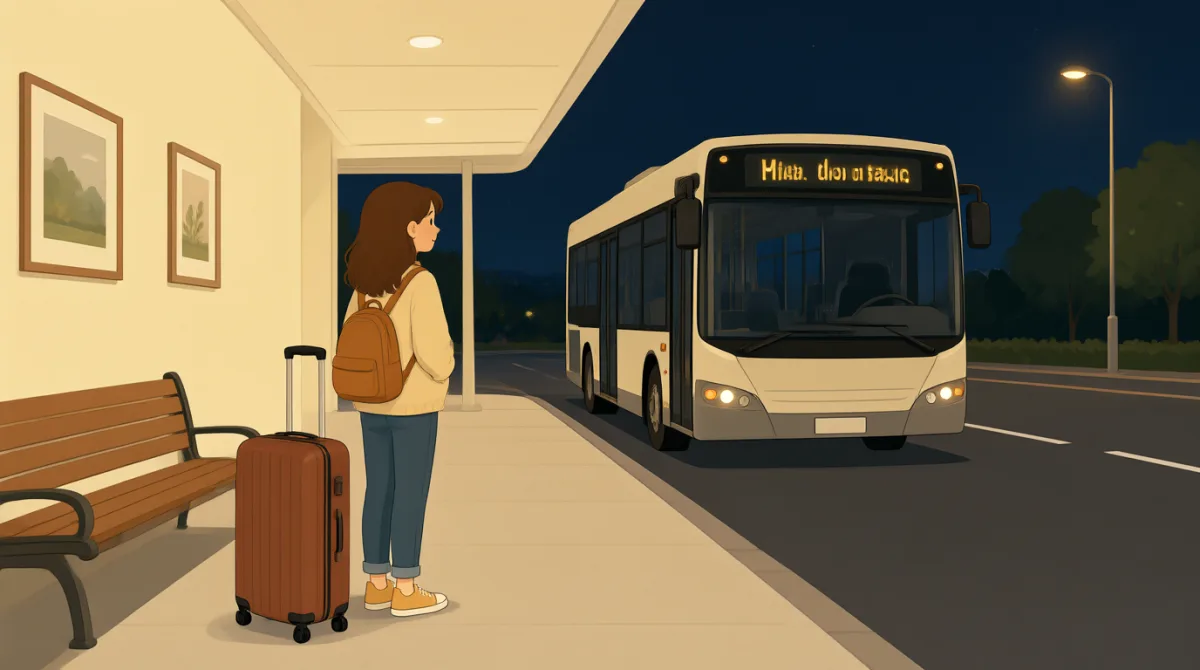

It’s really late. Is this the stop for downtown?
정말 늦었네. 여기가 시내로 가는 정류장이야?

Yes, this is downtown. Did you get your suitcase from under the bus?
응, 여기가 시내야. 버스 아래에서 여행 가방 꺼냈어?
Yes, I have it. Where can I find the taxi stand?
응, 있어. 택시 승강장은 어디야?
Go out through those doors, then turn left. You’ll see the taxis.
저 문으로 나가서 왼쪽으로 돌아. 택시가 보일 거야.
Great, thank you. Is it safe to walk there with my suitcase?
좋아, 고마워. 여행 가방 끌고 거기까지 걸어가도 안전할까?
Yes, it’s close and well lit. Stay on the sidewalk.
응, 가까운 데다 조명도 밝아. 인도로 다녀.
Thanks for helping me. I’m glad we arrived safely.
도와줘서 고마워. 무사히 도착해서 다행이야.
You’re welcome. Have a good night, Emma!
천만에. 잘 자, 에마!
어휘8
- downtown시내
The central area of a city. You can use it to ask about or describe a place in town.
도시의 중심 지역을 뜻해요. 도시 안의 장소를 묻거나 설명할 때 쓸 수 있어요.
- suitcase여행 가방
A case for carrying clothes and other things when you travel. You can use this word when talking about your luggage.
여행할 때 옷이나 다른 물건을 넣어 다니는 가방이에요. 여행 짐에 관해 이야기할 때 쓸 수 있어요.
- under the bus버스 아래
This means below the bus, where luggage is often stored. Use it to ask where your bag was placed.
버스 아래쪽을 뜻해요. 보통 짐을 보관하는 곳이죠. 가방을 어디에 실었는지 물을 때 쓸 수 있어요.
- taxi stand택시 승강장
A place where taxis wait for passengers. You can ask where to find one when you arrive.
택시가 손님을 기다리는 곳이에요. 도착한 뒤 택시 승강장이 어디인지 물을 때 쓸 수 있어요.
- turn left왼쪽으로 돌다
Change direction to the left. Use it when giving or following directions.
왼쪽 방향으로 방향을 바꾸는 거예요. 길을 알려 주거나 안내를 따라갈 때 쓸 수 있어요.
- well lit조명이 밝은
Bright enough to see clearly. You can use this phrase to describe a place that has good lighting.
주변을 잘 볼 수 있을 만큼 밝다는 뜻이에요. 조명이 잘 되어 있는 장소를 설명할 때 쓸 수 있어요.
- sidewalk인도
The path beside a road where people walk. Use it when talking about walking safely near traffic.
사람들이 걸어 다니는 도로 옆의 길이에요. 차가 다니는 곳 근처에서 안전하게 걷는 것에 관해 이야기할 때 쓸 수 있어요.
- arrived safely무사히 도착했다
Got to a place without being hurt or having problems. You can use this phrase to say that a trip went well.
다치거나 문제가 생기지 않고 목적지에 도착했다는 뜻이에요. 여행이 순조로웠다고 말할 때 쓸 수 있어요.
핵심 문장8
- 1
Is this the stop for downtown?
Is this the stop for downtown? (여기가 시내로 가는 정류장이야?)
Use this question to check whether you have reached the right stop. You can replace “downtown” with another destination.
이 질문은 내가 맞는 정류장에 도착했는지 확인할 때 써요. “downtown” 대신 다른 목적지를 넣어도 돼요.
- 2
Did you get your suitcase from under the bus?
Did you get your suitcase from under the bus? (버스 아래에서 여행 가방 꺼냈어?)
Use this question to check that someone collected their luggage. “Did you get...” is useful for asking about a completed action.
상대가 자기 짐을 챙겼는지 확인할 때 쓰는 질문이에요. “Did you get...”은 이미 끝난 일을 물어볼 때 유용해요.
- 3
Where can I find the taxi stand?
Where can I find the taxi stand? (택시 승강장은 어디야?)
Use this to ask where a taxi pickup area is. You can replace “the taxi stand” with another place you need to find.
택시를 타는 곳이 어디인지 물을 때 써요. “the taxi stand” 대신 찾고 싶은 다른 장소를 넣어도 돼요.
- 4
Go out through those doors, then turn left.
Go out through those doors, then turn left. (저 문으로 나가서 왼쪽으로 돌아.)
This gives two simple directions in order. You can use “then” to show what someone should do next.
간단한 길 안내 두 가지를 순서대로 말하는 표현이에요. “then”을 쓰면 다음에 해야 할 일을 나타낼 수 있어요.
- 5
Is it safe to walk there with my suitcase?
Is it safe to walk there with my suitcase? (여행 가방 끌고 거기까지 걸어가도 안전할까?)
Use this question to ask whether a walk is safe. You can replace “with my suitcase” with another situation or item.
걸어가도 안전한지 물을 때 쓰는 질문이에요. “with my suitcase” 대신 다른 상황이나 물건을 넣어도 돼요.
- 6
Stay on the sidewalk.
Stay on the sidewalk. (인도로 다녀.)
This is a short instruction for walking safely beside a road. You can use “Stay on...” to tell someone where to remain.
도로 옆을 안전하게 걸으라고 짧게 안내하는 말이에요. “Stay on...”을 써서 어디에 계속 머물러야 하는지 알려 줄 수 있어요.
- 7
I’m glad we arrived safely.
I’m glad we arrived safely. (우리가 무사히 도착해서 다행이야.)
Use this sentence to show relief that everyone reached a place without problems. You can change “we” to “you” or “they” to talk about others.
모두 별일 없이 도착해서 안도하는 마음을 나타내는 문장이에요. 다른 사람들에 관해 말할 때는 “we”를 “you”나 “they”로 바꿀 수 있어요.
- 8
Have a good night, Emma!
Have a good night, Emma! (잘 자, 에마!)
This is a friendly way to say goodbye late in the day. Replace the name with the person you are speaking to.
늦은 시간에 친근하게 작별 인사를 할 때 쓰는 말이에요. 부르는 이름은 대화 상대의 이름으로 바꾸면 돼요.