Arriving on the Island
島に到着
The ferry reaches the island, and Emma and Jack get ready to go ashore. They talk about what to see first.
フェリーが島に到着し、エマとジャックは船を降りる準備をします。まず何を見るか話します。
会話8
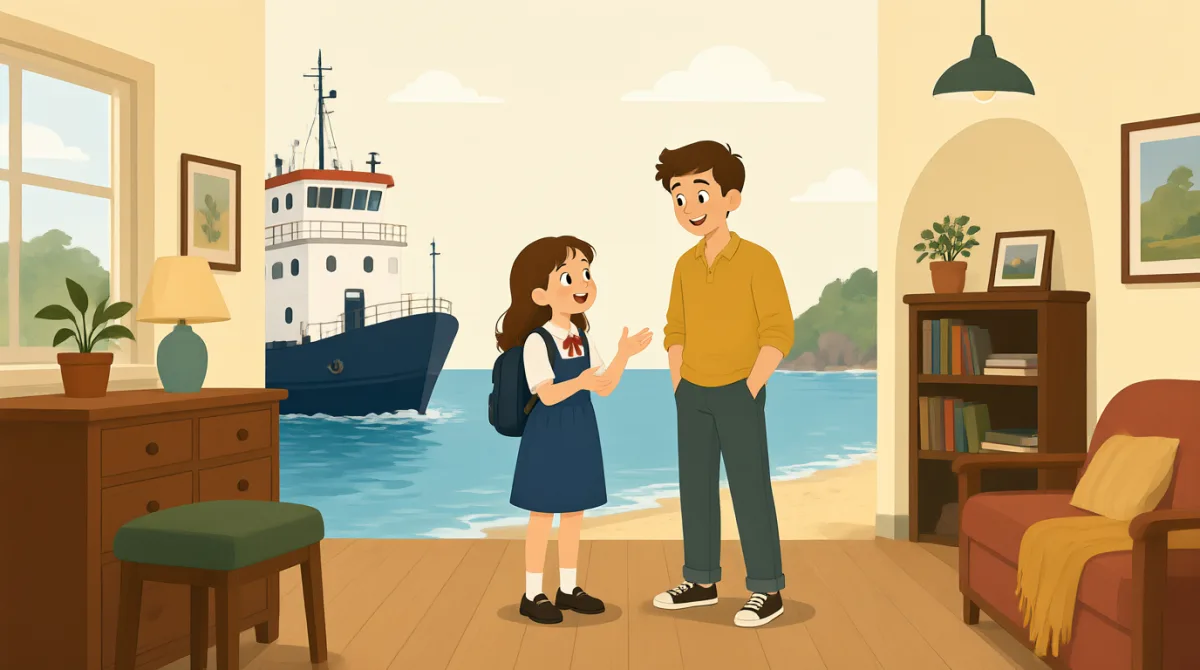

We’re here! The ferry is slowing down, so let’s get our bags ready.
着いたね!フェリーが減速してるから、荷物をまとめよう。

Great! I can see the island now. Do we walk off this way?
やった!島が見えるね。こっちから歩いて降りるの?
Yes, follow the signs to the exit. The crew will open the gate soon.
そうだよ。出口の案内に従ってね。乗組員がもうすぐゲートを開けてくれるよ。
I’m excited to explore! What should we see first?
見て回るのが楽しみ!まず何を見ようか?
Let’s walk to the harbor and find the visitor center. It’s nearby.
港まで歩いて、ビジターセンターを探そう。すぐ近くだよ。
Good idea. We can pick up a map and ask about the beach.
いいね。地図をもらって、ビーチについて聞けるね。
Sure. After that, we can follow the path along the water.
そうだね。そのあと、水辺の小道を歩こう。
Perfect! I’ll take my bag. Let’s go ashore.
いいね!バッグを持つね。さあ、上陸しよう。
語彙8
- get our bags ready荷物をまとめる
To prepare your bags so you can take them with you. You can say this when you are about to leave a place.
持って行けるように、荷物を準備することです。出発しようとしているときに使えます。
- walk off歩いて降りる
To leave a boat or other vehicle by walking. Here, Emma asks if this is the way to leave the ferry.
船や乗り物から歩いて出ることです。ここでは、エマがフェリーを降りる道を尋ねています。
- follow the signs案内表示に従う
To go in the direction shown by signs. This is useful when finding your way around a station, airport, or ferry terminal.
案内表示が示す方向へ進むことです。駅や空港、フェリーターミナルで道を探すときに役立ちます。
- crew乗組員
The people who work on a ship or ferry. Here, the crew will open the gate for passengers.
船やフェリーで働く人たちのことです。ここでは、乗組員が乗客のためにゲートを開けます。
- visitor centerビジターセンター
A place where visitors can get information about an area. You can often pick up maps and ask questions there.
その地域の情報を訪問者に提供する場所です。地図をもらったり、質問したりできます。
- pick up a map地図をもらう
To get or collect a map. You can use this phrase when you need a map for a new place.
地図を受け取る、または手に入れることです。初めて訪れる場所で地図が必要なときに使えます。
- along the water水辺に沿って
Beside the water, following its edge. You can use this phrase to describe a path or walk near the sea, a lake, or a river.
水のそばを、その岸に沿って進むことです。海や湖、川の近くにある道や散歩コースを説明するときに使えます。
- go ashore上陸する
To leave a boat and step onto land. This phrase is often used when arriving by ferry or ship.
船を降りて陸に足を踏み入れることです。フェリーや船で到着したときによく使う表現です。
重要な文8
- 1
The ferry is slowing down, so let’s get our bags ready.
The ferry is slowing down, so let’s get our bags ready.(フェリーが減速してるから、荷物をまとめよう。)
This sentence explains what is happening and suggests what to do next. Use “Let’s get [something] ready” to prepare for an upcoming activity.
何が起きているかを伝え、次にすることを提案する文です。「Let’s get [something] ready」は、これからすることに向けて何かを準備するときに使います。
- 2
Do we walk off this way?
Do we walk off this way?(こっちから歩いて降りるの?)
This is a simple way to check which direction to go when leaving a boat or vehicle. You can replace “walk off” with another action, such as “go out.”
船や乗り物を降りるとき、どちらへ行けばよいかを確かめる簡単な表現です。「walk off」は「go out」など別の動作に置き換えられます。
- 3
The crew will open the gate soon.
The crew will open the gate soon.(乗組員がもうすぐゲートを開けてくれるよ。)
This sentence uses “will” to talk about something that is expected to happen. You can use the pattern “will [action] soon” for near-future events.
この文では「will」を使って、これから起きると予想されることを表しています。「will [action] soon」の形は、近いうちに起きることを伝えるのに使えます。
- 4
What should we see first?
What should we see first?(まず何を見ようか?)
This is a useful question when deciding what to visit or do. You can replace “see” with another verb, such as “do” or “try.”
訪れる場所やすることを決めるときに便利な質問です。「see」は「do」や「try」など、別の動詞に置き換えられます。
- 5
Let’s walk to the harbor and find the visitor center.
Let’s walk to the harbor and find the visitor center.(港まで歩いて、ビジターセンターを探そう。)
This sentence suggests a plan and gives two things to do. Use “Let’s [action] and [action]” to make a friendly suggestion.
この文は計画を提案し、することを二つ伝えています。「Let’s [action] and [action]」の形で、気軽に提案できます。
- 6
We can pick up a map and ask about the beach.
We can pick up a map and ask about the beach.(地図をもらって、ビーチについて聞けるね。)
This sentence uses “can” to describe possible activities. You can use the same pattern to suggest useful things to do in a new place.
この文では「can」を使って、できることを表しています。同じ形で、初めて訪れる場所ですると便利なことを提案できます。
- 7
After that, we can follow the path along the water.
After that, we can follow the path along the water.(そのあと、水辺の小道を歩こう。)
“After that” helps put activities in order. Use it to explain what you plan to do next.
「After that」は、行動の順番を示す表現です。次に何をする予定かを伝えるときに使えます。
- 8
Let’s go ashore.
Let’s go ashore.(さあ、上陸しよう。)
This is a short, natural way to suggest leaving a boat and going onto land. You can also say “Let’s go inside” or “Let’s go outside” when changing places.
船を降りて陸へ行こうと提案する、短く自然な表現です。場所を移るときは「Let’s go inside」や「Let’s go outside」とも言えます。