Finding Seats Outside
外の席を探す
On the ferry, Emma and Jack look for seats outside. They find a place to sit and enjoy the view.
フェリーの上で、エマとジャックは外の席を探します。座る場所を見つけて、景色を楽しみます。
会話8
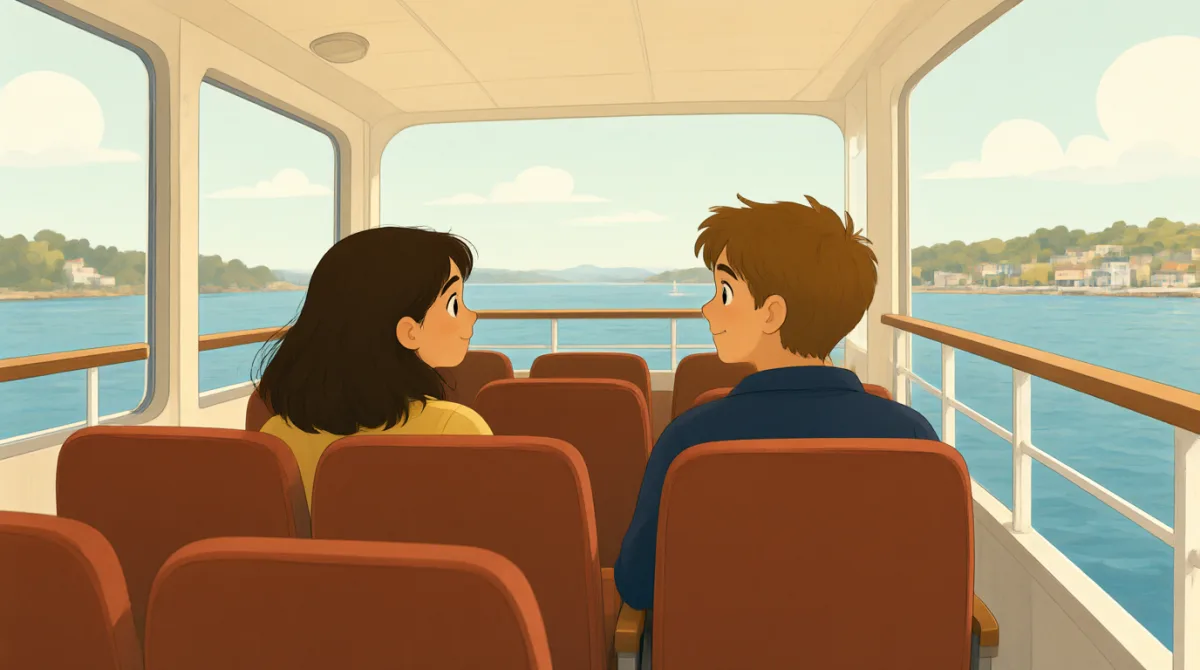

Is there a place to sit outside? I’d love to see the view.
外に座れるところあるかな?景色を見たいな。

I think there are seats on the upper deck. Let’s go up.
上のデッキに席があると思うよ。上に行こう。
Are these seats free? I don’t see anyone here.
この席、空いてるかな?誰もいないみたいだけど。
They look free. Let’s sit here, near the rail.
空いてそうだね。ここ、手すりの近くに座ろう。
Great! The water looks so blue today.
いいね!今日は水がすごく青く見えるね。
Yeah, and we can see the island from here.
うん、それにここから島が見えるよ。
I’m glad we came outside. It’s much nicer up here.
外に出てきてよかった。こっちのほうがずっと気持ちいいね。
Me too. Let’s enjoy the ride before we arrive.
僕も。着くまで、船旅を楽しもう。
語彙8
- outside外で
In this conversation, outside means in the open air, not inside the ferry. You can ask, “Can we sit outside?”
この会話での “outside” は、フェリーの中ではなく、外の空気に触れる場所という意味です。“Can we sit outside?”(外に座れますか?)と聞けます。
- the view景色
The view is what you can see around you, such as the sea and the island. Use “I’d love to see the view” to say you want to look at the scenery.
“the view” は、海や島のように、周りに見えるもののことです。“I’d love to see the view” と言うと、景色を見たいという気持ちを伝えられます。
- upper deck上のデッキ
The upper deck is the higher level of a boat or ferry. You can say, “Let’s go up to the upper deck.”
“upper deck” は、船やフェリーの上の階のことです。“Let’s go up to the upper deck.”(上のデッキに行こう)と言えます。
- free空いている
Here, free means available for someone to use, not costing no money. You can ask, “Is this seat free?”
ここでの “free” は、お金がかからないという意味ではなく、誰かが使える状態、つまり「空いている」という意味です。“Is this seat free?”(この席、空いてますか?)と聞けます。
- near the rail手すりの近く
Near the rail means close to the barrier along the edge of the deck. You can use this phrase to describe where you want to sit.
“near the rail” は、デッキの端にある柵の近くという意味です。座りたい場所を伝えるときに使えます。
- the island島
An island is land with water all around it. In this dialogue, Emma and Jack can see the island from the ferry.
“island” は、周りを水に囲まれた陸地のことです。この会話では、エマとジャックがフェリーから島を見ています。
- came outside外に出てきた
“Came outside” means moved from inside to a place outdoors. You can say, “I’m glad we came outside” when you are happy you went outdoors.
“came outside” は、中から外へ移動したという意味です。外に出られてうれしいときは、“I’m glad we came outside” と言えます。
- arrive着く
To arrive means to reach a place. Use “before we arrive” to talk about what you can do before reaching your destination.
“arrive” は、目的地に到着するという意味です。“before we arrive” を使うと、目的地に着く前にできることについて話せます。
重要な文7
- 1
Is there a place to sit outside?
外に座れるところあるかな?
Use this question to ask if there is somewhere to sit outdoors. You can replace “outside” with another place, such as “near the window.”
外で座れる場所があるか尋ねるときの表現です。“outside” を “near the window”(窓の近く)のような別の場所に変えて使えます。
- 2
I think there are seats on the upper deck.
上のデッキに席があると思うよ。
This is a useful way to share information when you are not completely sure. You can replace “seats” or “on the upper deck” with other details.
完全には確かでない情報を伝えるときに便利な言い方です。“seats” や “on the upper deck” を、別の情報に置き換えることもできます。
- 3
Are these seats free?
この席、空いてるかな?
Use this question to check if seats are available. You can also ask, “Is this seat free?” when asking about one seat.
席が空いているか確認するときに使います。ひとつの席について聞くなら、“Is this seat free?” と言えます。
- 4
Let’s sit here, near the rail.
ここ、手すりの近くに座ろう。
Use “Let’s” to suggest doing something together, and add a place to say where. For example, “Let’s sit here, near the window.”
“Let’s” は、何かを一緒にしようと提案するときに使います。場所を付け加えて、どこで行うかを伝えられます。たとえば、“Let’s sit here, near the window.”(ここ、窓の近くに座ろう)と言えます。
- 5
The water looks so blue today.
今日は水がすごく青く見えるね。
This sentence describes what you see and gives a simple opinion. You can change “blue” to another describing word, such as “calm.”
目にしたものを描写し、簡単な感想を伝える文です。“blue” を “calm”(穏やかな)のような別の形容詞に変えられます。
- 6
I’m glad we came outside.
外に出てきてよかった。
Use this sentence to say you are happy about a choice you made. You can replace “came outside” with another activity, such as “took the ferry.”
自分たちの選択をうれしく思っているときに使います。“came outside” を “took the ferry”(フェリーに乗った)のような別の行動に置き換えられます。
- 7
Let’s enjoy the ride before we arrive.
着くまで、船旅を楽しもう。
This is a friendly suggestion to enjoy a journey before reaching your destination. You can replace “the ride” with “the trip.”
目的地に着く前に旅を楽しもうと提案する、親しみのある言い方です。“the ride” を “the trip” に置き換えることもできます。