Arriving on the Island
द्वीप पर पहुँचना
The ferry reaches the island, and Emma and Jack get ready to go ashore. They talk about what to see first.
फेरी द्वीप पर पहुँचती है और एमा और जैक किनारे उतरने की तैयारी करते हैं। वे बात करते हैं कि सबसे पहले क्या देखें।
संवाद8
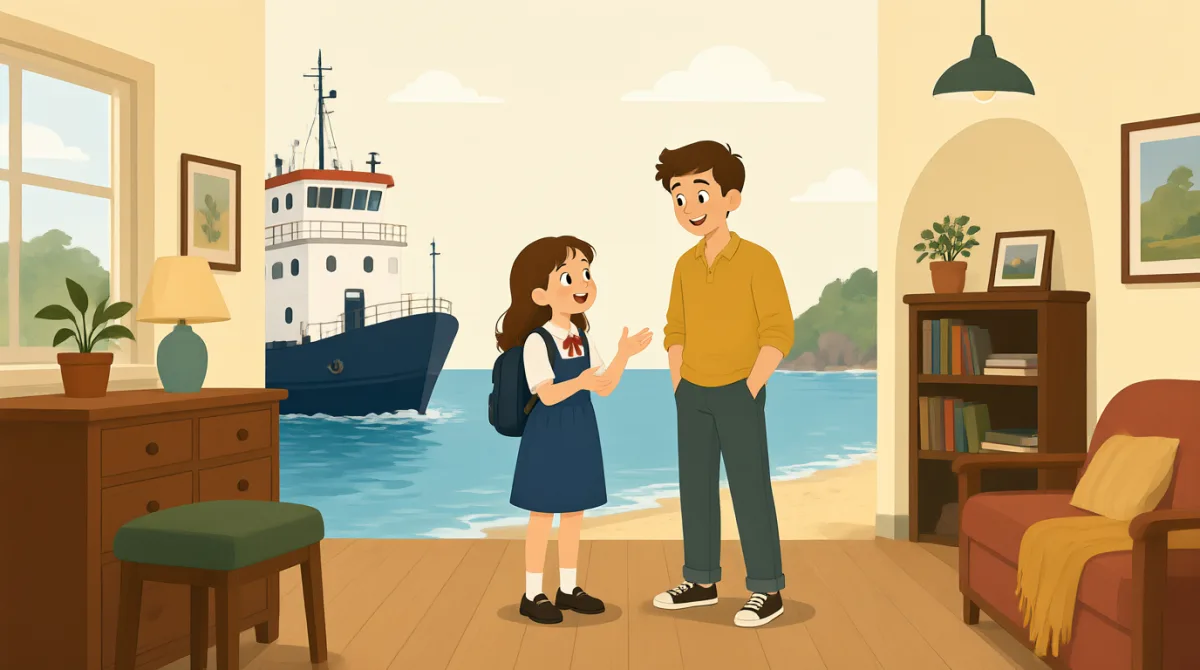

We’re here! The ferry is slowing down, so let’s get our bags ready.
हम पहुँच गए! फेरी धीमी हो रही है, तो चलो अपने बैग तैयार कर लें।

Great! I can see the island now. Do we walk off this way?
बढ़िया! अब मुझे द्वीप दिख रहा है। क्या हमें इस तरफ़ से पैदल उतरना है?
Yes, follow the signs to the exit. The crew will open the gate soon.
हाँ, बाहर जाने के लिए संकेतों का अनुसरण करो। जहाज़ का दल जल्द ही फाटक खोल देगा।
I’m excited to explore! What should we see first?
मैं घूमने-फिरने के लिए बहुत उत्साहित हूँ! हमें सबसे पहले क्या देखना चाहिए?
Let’s walk to the harbor and find the visitor center. It’s nearby.
चलो बंदरगाह तक पैदल चलते हैं और पर्यटक सूचना केंद्र ढूँढ़ते हैं। वह पास ही है।
Good idea. We can pick up a map and ask about the beach.
अच्छा विचार है। हम वहाँ से नक्शा ले सकते हैं और समुद्र तट के बारे में पूछ सकते हैं।
Sure. After that, we can follow the path along the water.
ज़रूर। उसके बाद, हम पानी के किनारे वाले रास्ते पर चल सकते हैं।
Perfect! I’ll take my bag. Let’s go ashore.
बढ़िया! मैं अपना बैग ले लेती हूँ। चलो किनारे उतरें।
शब्दावली8
- get our bags readyअपने बैग तैयार करना
To prepare your bags so you can take them with you. You can say this when you are about to leave a place.
अपने बैग इस तरह तैयार करना कि उन्हें साथ ले जा सको। किसी जगह से निकलने वाले हों, तो यह कह सकते हो।
- walk offपैदल उतरना
To leave a boat or other vehicle by walking. Here, Emma asks if this is the way to leave the ferry.
चलकर नाव या किसी दूसरे वाहन से बाहर निकलना। यहाँ एमा पूछती है कि क्या फेरी से उतरने का रास्ता यही है।
- follow the signsसंकेतों का अनुसरण करना
To go in the direction shown by signs. This is useful when finding your way around a station, airport, or ferry terminal.
संकेतों में बताई गई दिशा में जाना। स्टेशन, हवाई अड्डे या फेरी टर्मिनल में रास्ता ढूँढ़ते समय यह वाक्यांश काम आता है।
- crewजहाज़ का दल
The people who work on a ship or ferry. Here, the crew will open the gate for passengers.
जहाज़ या फेरी पर काम करने वाले लोग। यहाँ जहाज़ का दल यात्रियों के लिए फाटक खोलेगा।
- visitor centerपर्यटक सूचना केंद्र
A place where visitors can get information about an area. You can often pick up maps and ask questions there.
ऐसी जगह जहाँ पर्यटकों को किसी इलाके के बारे में जानकारी मिलती है। वहाँ अक्सर नक्शे लिए जा सकते हैं और सवाल पूछे जा सकते हैं।
- pick up a mapनक्शा लेना
To get or collect a map. You can use this phrase when you need a map for a new place.
नक्शा प्राप्त करना या लेकर जाना। किसी नई जगह के लिए नक्शे की ज़रूरत हो, तो यह वाक्यांश इस्तेमाल कर सकते हो।
- along the waterपानी के किनारे
Beside the water, following its edge. You can use this phrase to describe a path or walk near the sea, a lake, or a river.
पानी के पास, उसके किनारे-किनारे। समुद्र, झील या नदी के पास के रास्ते या सैर का वर्णन करने के लिए यह वाक्यांश इस्तेमाल कर सकते हो।
- go ashoreकिनारे उतरना
To leave a boat and step onto land. This phrase is often used when arriving by ferry or ship.
नाव से उतरकर ज़मीन पर कदम रखना। फेरी या जहाज़ से पहुँचने पर यह वाक्यांश अक्सर इस्तेमाल होता है।
मुख्य वाक्य8
- 1
The ferry is slowing down, so let’s get our bags ready.
फेरी धीमी हो रही है, तो चलो अपने बैग तैयार कर लें।
This sentence explains what is happening and suggests what to do next. Use “Let’s get [something] ready” to prepare for an upcoming activity.
इस वाक्य में बताया गया है कि क्या हो रहा है और आगे क्या करना चाहिए, इसका सुझाव दिया गया है। आने वाली किसी गतिविधि की तैयारी के लिए “Let’s get [something] ready” कहो।
- 2
Do we walk off this way?
क्या हमें इस तरफ़ से पैदल उतरना है?
This is a simple way to check which direction to go when leaving a boat or vehicle. You can replace “walk off” with another action, such as “go out.”
नाव या वाहन से उतरते समय किस दिशा में जाना है, यह पूछने का यह एक आसान तरीका है। “walk off” की जगह कोई दूसरी क्रिया, जैसे “go out,” रख सकते हो।
- 3
The crew will open the gate soon.
जहाज़ का दल जल्द ही फाटक खोल देगा।
This sentence uses “will” to talk about something that is expected to happen. You can use the pattern “will [action] soon” for near-future events.
इस वाक्य में “will” का इस्तेमाल ऐसी बात के लिए है जिसके होने की उम्मीद है। निकट भविष्य की घटनाओं के लिए “will [action] soon” वाला ढाँचा इस्तेमाल कर सकते हो।
- 4
What should we see first?
हमें सबसे पहले क्या देखना चाहिए?
This is a useful question when deciding what to visit or do. You can replace “see” with another verb, such as “do” or “try.”
कहाँ जाना है या क्या करना है, यह तय करते समय यह सवाल काम आता है। “see” की जगह “do” या “try” जैसी दूसरी क्रिया रख सकते हो।
- 5
Let’s walk to the harbor and find the visitor center.
चलो बंदरगाह तक पैदल चलते हैं और पर्यटक सूचना केंद्र ढूँढ़ते हैं।
This sentence suggests a plan and gives two things to do. Use “Let’s [action] and [action]” to make a friendly suggestion.
यह वाक्य एक योजना सुझाता है और करने के लिए दो काम बताता है। दोस्ताना सुझाव देने के लिए “Let’s [action] and [action]” कहो।
- 6
We can pick up a map and ask about the beach.
हम नक्शा ले सकते हैं और समुद्र तट के बारे में पूछ सकते हैं।
This sentence uses “can” to describe possible activities. You can use the same pattern to suggest useful things to do in a new place.
इस वाक्य में “can” का इस्तेमाल उन कामों के लिए है जिन्हें करना मुमकिन है। किसी नई जगह पर काम आने वाली चीज़ों का सुझाव देने के लिए भी यही ढाँचा इस्तेमाल कर सकते हो।
- 7
After that, we can follow the path along the water.
उसके बाद, हम पानी के किनारे वाले रास्ते पर चल सकते हैं।
“After that” helps put activities in order. Use it to explain what you plan to do next.
“After that” से कामों का क्रम बताया जाता है। आगे क्या करने की योजना है, यह समझाने के लिए इसका इस्तेमाल करो।
- 8
Let’s go ashore.
चलो किनारे उतरें।
This is a short, natural way to suggest leaving a boat and going onto land. You can also say “Let’s go inside” or “Let’s go outside” when changing places.
नाव से उतरकर ज़मीन पर जाने का सुझाव देने का यह छोटा और स्वाभाविक तरीका है। जगह बदलते समय “Let’s go inside” या “Let’s go outside” भी कह सकते हो।