Arriving on the Island
抵達島上
The ferry reaches the island, and Emma and Jack get ready to go ashore. They talk about what to see first.
渡輪抵達島上,Emma和Jack準備下船。他們聊起先去看看什麼。
對話8
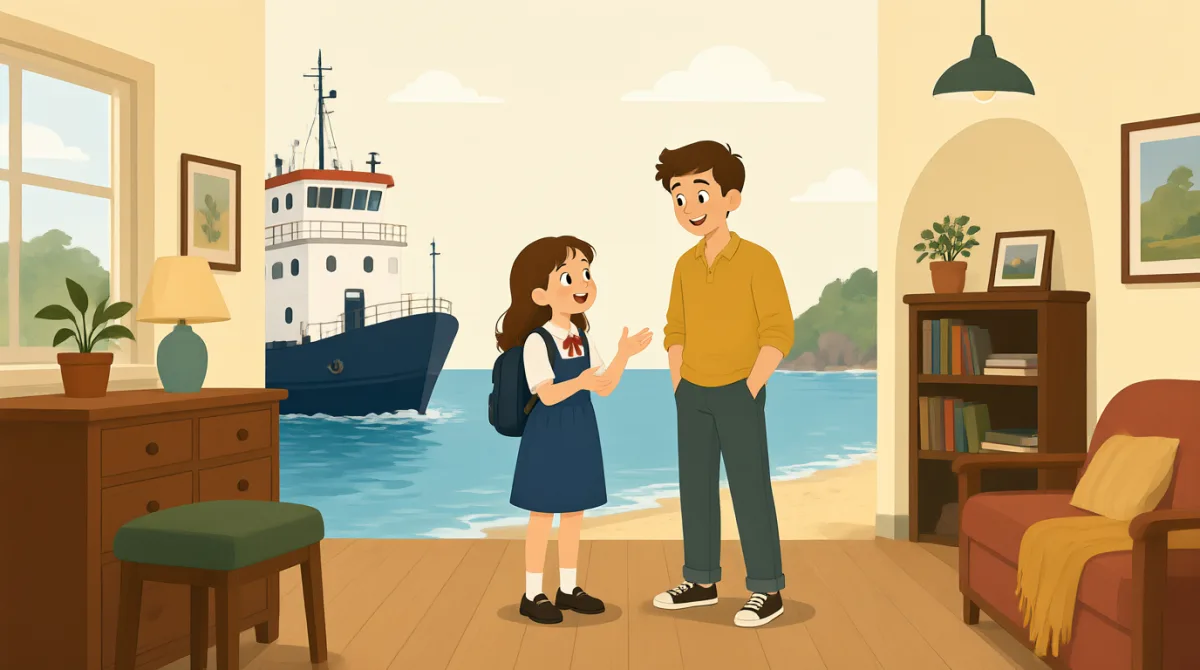

We’re here! The ferry is slowing down, so let’s get our bags ready.
到了!渡輪正在減速,我們把行李準備好吧。

Great! I can see the island now. Do we walk off this way?
太好了!我現在能看到島了。我們從這邊下船嗎?
Yes, follow the signs to the exit. The crew will open the gate soon.
對,跟著出口標誌走。船員很快就會開啟艙門。
I’m excited to explore! What should we see first?
我好期待去逛逛!我們先去看什麼?
Let’s walk to the harbor and find the visitor center. It’s nearby.
我們先走到港口,找一下游客中心。那裡就在附近。
Good idea. We can pick up a map and ask about the beach.
好主意。我們可以拿一張地圖,再問問海灘的情況。
Sure. After that, we can follow the path along the water.
好啊。之後我們可以沿著水邊的小路走。
Perfect! I’ll take my bag. Let’s go ashore.
太好了!我拿上包,我們下船吧。
詞彙8
- get our bags ready收拾好行李
To prepare your bags so you can take them with you. You can say this when you are about to leave a place.
把行李收拾好,方便帶著一起走。快要離開一個地方時,可以這麼說。
- walk off步行下船
To leave a boat or other vehicle by walking. Here, Emma asks if this is the way to leave the ferry.
走著離開船或其他交通工具。這裡,艾瑪是在問從這邊下渡輪嗎。
- follow the signs跟著指示牌走
To go in the direction shown by signs. This is useful when finding your way around a station, airport, or ferry terminal.
按照指示牌指示的方向走。在車站、機場或渡輪碼頭找路時,這個說法很實用。
- crew船員
The people who work on a ship or ferry. Here, the crew will open the gate for passengers.
在船上或渡輪上工作的人。這裡,船員會開啟艙門讓乘客下船。
- visitor center遊客中心
A place where visitors can get information about an area. You can often pick up maps and ask questions there.
遊客可以在這裡瞭解當地資訊。通常可以在這裡拿地圖、問問題。
- pick up a map拿一張地圖
To get or collect a map. You can use this phrase when you need a map for a new place.
拿到或領取一張地圖。到了陌生的地方需要地圖時,可以用這個說法。
- along the water沿著水邊
Beside the water, following its edge. You can use this phrase to describe a path or walk near the sea, a lake, or a river.
在水邊,沿著岸邊走。這個說法可以用來描述海邊、湖邊或河邊的小路或散步路線。
- go ashore上岸
To leave a boat and step onto land. This phrase is often used when arriving by ferry or ship.
離開船,踏上陸地。乘渡輪或船抵達時,經常會用到這個說法。
關鍵句8
- 1
The ferry is slowing down, so let’s get our bags ready.
渡輪正在減速,我們把行李準備好吧。
This sentence explains what is happening and suggests what to do next. Use “Let’s get [something] ready” to prepare for an upcoming activity.
這句話先說明正在發生什麼,再提議接下來做什麼。用 “Let’s get [something] ready”(我們把[某物]準備好吧)來為即將進行的事情做準備。
- 2
Do we walk off this way?
我們從這邊步行下船嗎?
This is a simple way to check which direction to go when leaving a boat or vehicle. You can replace “walk off” with another action, such as “go out.”
離開船或其他交通工具時,可以用這句簡單地確認該往哪個方向走。你可以把 “walk off” 換成其他動作,比如 “go out”。
- 3
The crew will open the gate soon.
船員很快就會開啟艙門。
This sentence uses “will” to talk about something that is expected to happen. You can use the pattern “will [action] soon” for near-future events.
這句話用 “will” 來表達預計會發生的事。說不久之後會發生的事情時,可以用 “will [action] soon” 這個句型。
- 4
What should we see first?
我們先去看什麼?
This is a useful question when deciding what to visit or do. You can replace “see” with another verb, such as “do” or “try.”
決定先去參觀什麼或做什麼時,這個問題很實用。你可以把 “see” 換成其他動詞,比如 “do” 或 “try”。
- 5
Let’s walk to the harbor and find the visitor center.
我們走到港口,再去找遊客中心吧。
This sentence suggests a plan and gives two things to do. Use “Let’s [action] and [action]” to make a friendly suggestion.
這句話提出一個計劃,並說出兩件要做的事。用 “Let’s [action] and [action]” 來友好地提出建議。
- 6
We can pick up a map and ask about the beach.
我們可以拿一張地圖,再問問海灘的情況。
This sentence uses “can” to describe possible activities. You can use the same pattern to suggest useful things to do in a new place.
這句話用 “can” 來說明可以做哪些事。在陌生的地方,也可以用同樣的句型來建議做些有用的事。
- 7
After that, we can follow the path along the water.
之後,我們可以沿著水邊的小路走。
“After that” helps put activities in order. Use it to explain what you plan to do next.
“After that” 可以幫助你按順序說明要做的事。用它來解釋接下來打算做什麼。
- 8
Let’s go ashore.
我們上岸吧。
This is a short, natural way to suggest leaving a boat and going onto land. You can also say “Let’s go inside” or “Let’s go outside” when changing places.
這是提議離開船、走上陸地的一種簡短自然的說法。換地方時,你也可以說 “Let’s go inside” 或 “Let’s go outside”。