Washing and Cutting Vegetables
野菜を洗って切る
Grace shows Emma and Leo how to wash and cut the vegetables safely. Leo asks how small the pieces should be.
グレースがエマとレオに、野菜の安全な洗い方と切り方を教えます。レオは、どれくらい小さく切ればいいか尋ねます。
会話9
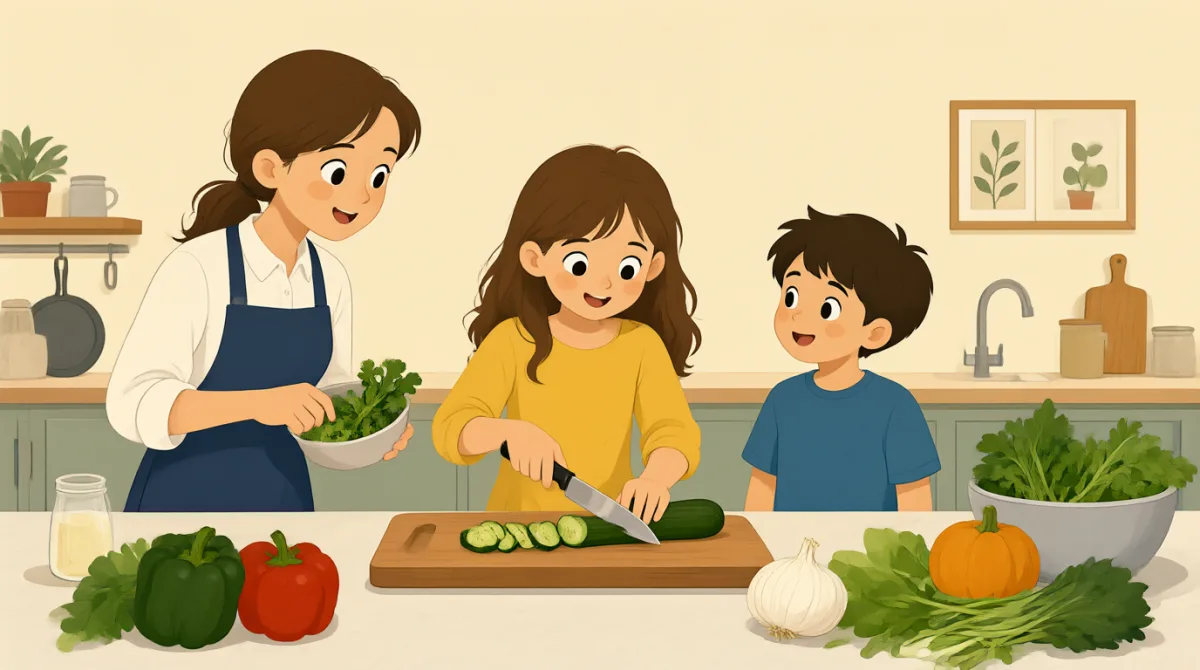

First, rinse the vegetables under cold water. Make sure you wash off all the dirt.
まず、野菜を冷たい水で洗い流して。泥を全部落としてね。

Should I wash the carrots too, even though we’re going to peel them?
皮をむくつもりだけど、ニンジンも洗ったほうがいい?
Yes, wash them first. Then use the peeler and keep your fingers away from the blade.
うん、先に洗ってね。それからピーラーを使って、刃に指が近づかないようにして。

Got it. Now, how small should I cut these onions?
わかった。じゃあ、この玉ねぎはどれくらい小さく切ればいい?
Cut them into small pieces, about the size of your fingernail. Use the cutting board.
爪くらいの大きさに細かく切ってね。まな板を使って。
Okay. I’ll hold the onion still. Is this knife sharp?
オッケー。玉ねぎを押さえておくね。この包丁、よく切れる?
Yes, so cut slowly. Curl your fingers in, and keep the knife tip on the board.
うん、だからゆっくり切ってね。指を内側に丸めて、包丁の先をまな板につけておいて。
Like this? I’m going to cut the carrots into little rounds.
こう?ニンジンを小さな輪切りにするね。
That’s right, Emma. Nice work. Put the cut vegetables in this bowl.
そうだよ、エマ。上手だね。切った野菜をこのボウルに入れてね。
語彙8
- rinse the vegetables野菜を洗い流す
Wash the vegetables quickly with water. You can use this phrase when you clean vegetables before cooking.
水で野菜をさっと洗うことです。料理をする前に野菜をきれいにするときに使える表現です。
- wash off all the dirt泥を全部洗い落とす
Remove dirt from something by washing it. You can say this when food or another item is dirty.
洗って、ものについた泥や汚れを取り除くことです。食べ物などが汚れているときに使えます。
- peel them皮をむく
Take the thin outer skin off the vegetables. Use this phrase when preparing carrots or other vegetables.
野菜の薄い外皮を取り除くことです。ニンジンなどの野菜を調理するときに使える表現です。
- keep your fingers away from the blade刃に指を近づけない
Move your fingers away from the sharp part of a knife. This is a useful safety instruction when cutting food.
指を包丁の鋭い部分から離すことです。食べ物を切るときの安全指示として役立ちます。
- cut them into small pieces細かく切る
Use a knife to make the vegetables into small parts. You can use this phrase to explain how you want food cut.
包丁を使って、野菜を小さなかけらにすることです。食材をどのように切ってほしいか伝えるときに使えます。
- hold the onion still玉ねぎを押さえておく
Keep the onion in one place while you cut it. This phrase is useful for giving safe cutting instructions.
切っている間、玉ねぎが動かないようにすることです。安全な切り方を教えるときに便利な表現です。
- curl your fingers in指を内側に丸める
Bend your fingers toward your palm while holding food. This helps keep your fingers away from the knife.
食材を押さえるとき、指を手のひら側に曲げることです。指が包丁に近づくのを防げます。
- cut the carrots into little roundsニンジンを小さな輪切りにする
Slice the carrots into small, round pieces. You can use this phrase to describe a way of cutting vegetables.
ニンジンを小さくて丸い形に切ることです。野菜の切り方を説明するときに使える表現です。
重要な文8
- 1
First, rinse the vegetables under cold water.
まず、野菜を冷たい水で洗い流して。
This gives a clear first step for washing vegetables. You can reuse the pattern “First, rinse [food] under cold water” for other ingredients.
野菜を洗うときの最初の手順をはっきり伝える文です。“First, rinse [food] under cold water”(まず、[食材]を冷たい水で洗い流して)という形は、ほかの食材にも使えます。
- 2
Should I wash the carrots too, even though we’re going to peel them?
皮をむくつもりだけど、ニンジンも洗ったほうがいい?
This is a useful way to check whether an extra step is needed. Use “Should I [action] too, even though…?” when you are unsure.
追加の作業が必要かどうかを確認するときに便利な言い方です。迷ったときは、“Should I [action] too, even though…?”(…だけど、[動作]もしたほうがいい?)を使えます。
- 3
Then use the peeler and keep your fingers away from the blade.
それからピーラーを使って、刃に指が近づかないようにして。
This sentence gives two simple instructions for peeling safely. You can use “Then use…” to give the next step in a task.
皮を安全にむくための簡単な指示を2つ伝えています。“Then use…”(それから…を使って)を使うと、作業の次の手順を伝えられます。
- 4
Now, how small should I cut these onions?
じゃあ、この玉ねぎはどれくらい小さく切ればいい?
This is a natural way to ask about the size of food pieces. You can replace “onions” with another ingredient.
食材をどれくらいの大きさに切るか尋ねる自然な言い方です。“onions”を別の食材に置き換えて使えます。
- 5
Cut them into small pieces, about the size of your fingernail.
爪くらいの大きさに細かく切ってね。
This explains both how to cut something and how small the pieces should be. Use “about the size of…” to describe an approximate size.
切り方と、どれくらいの大きさにするかの両方を説明しています。“about the size of…”(…くらいの大きさ)を使うと、おおよそのサイズを伝えられます。
- 6
I’ll hold the onion still.
玉ねぎを押さえておくね。
This sentence says what you will do to help with a task. You can use “I’ll hold [something] still” when someone else needs to work on it.
作業を手伝うために自分が何をするかを伝える文です。相手が何かを作業する間、“I’ll hold [something] still”([何か]を押さえておくね)と言えます。
- 7
Curl your fingers in, and keep the knife tip on the board.
指を内側に丸めて、包丁の先をまな板につけておいて。
This gives clear advice for cutting safely. You can use “keep [something] on…” to tell someone where to place or hold it.
安全に切るためのわかりやすいアドバイスです。“keep [something] on…”([何か]を…につけておく)を使うと、置く場所や保ち方を伝えられます。
- 8
Put the cut vegetables in this bowl.
切った野菜をこのボウルに入れてね。
This is a simple instruction for where to place prepared food. You can replace “cut vegetables” and “this bowl” with other items and containers.
下ごしらえした食べ物をどこに置くか伝える簡単な指示です。“cut vegetables”や“this bowl”を別の食材や容器に置き換えて使えます。