Washing and Cutting Vegetables
सब्ज़ियाँ धोना और काटना
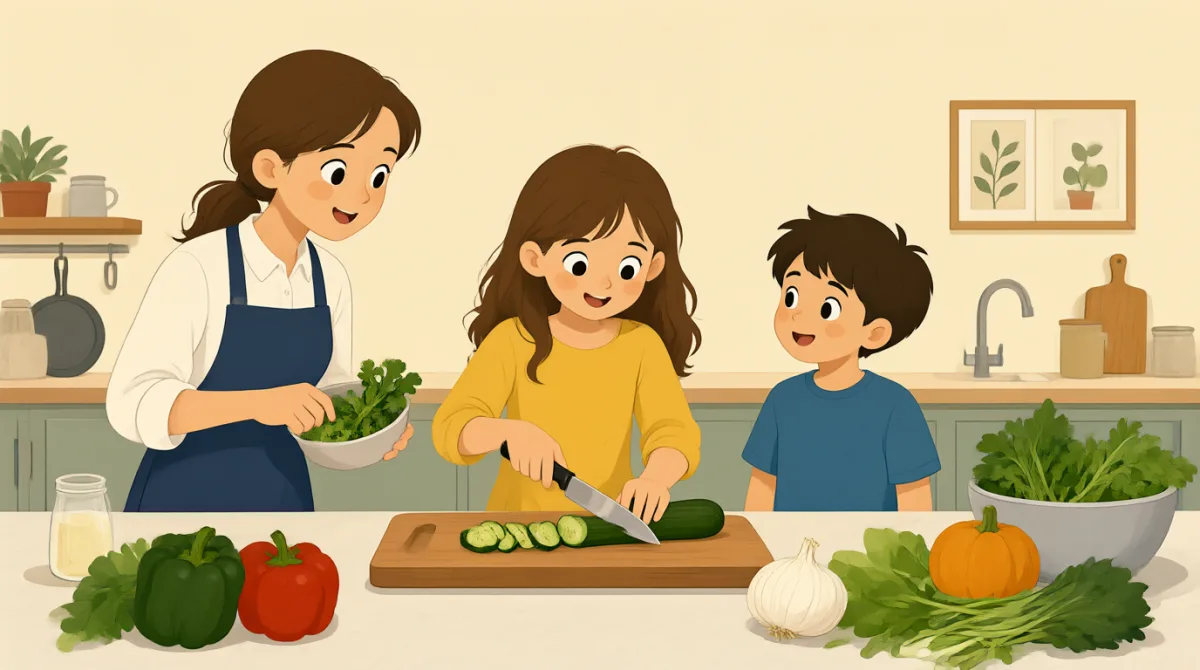
Grace shows Emma and Leo how to wash and cut the vegetables safely. Leo asks how small the pieces should be.
ग्रेस एमा और लियो को सब्ज़ियाँ सुरक्षित तरीके से धोना और काटना सिखाती है। लियो पूछता है कि टुकड़े कितने छोटे होने चाहिए।
संवाद9

First, rinse the vegetables under cold water. Make sure you wash off all the dirt.
सबसे पहले, सब्ज़ियों को ठंडे पानी से धो लो। ध्यान रहे कि सारी मिट्टी निकल जाए।

Should I wash the carrots too, even though we’re going to peel them?
क्या गाजरों को भी धोऊँ, जबकि हम उनका छिलका उतारने वाले हैं?
Yes, wash them first. Then use the peeler and keep your fingers away from the blade.
हाँ, पहले उन्हें धो लो। फिर पीलर इस्तेमाल करना और अपनी उँगलियाँ उसकी धार से दूर रखना।

Got it. Now, how small should I cut these onions?
समझ गया। अब, इन प्याज़ों को कितना छोटा काटूँ?
Cut them into small pieces, about the size of your fingernail. Use the cutting board.
इन्हें छोटे-छोटे टुकड़ों में काटो, लगभग अपने नाखून जितने। चॉपिंग बोर्ड इस्तेमाल करना।
Okay. I’ll hold the onion still. Is this knife sharp?
ठीक है। मैं प्याज़ को स्थिर पकड़ूँगा। क्या यह चाकू तेज़ है?
Yes, so cut slowly. Curl your fingers in, and keep the knife tip on the board.
हाँ, इसलिए धीरे-धीरे काटना। अपनी उँगलियाँ अंदर की ओर मोड़कर रखना और चाकू की नोक बोर्ड पर टिकाए रखना।
Like this? I’m going to cut the carrots into little rounds.
ऐसे? मैं गाजरों को छोटे गोल टुकड़ों में काटने वाली हूँ।
That’s right, Emma. Nice work. Put the cut vegetables in this bowl.
बिल्कुल, एमा। बहुत बढ़िया। कटी हुई सब्ज़ियाँ इस कटोरे में डाल दो।
शब्दावली8
- rinse the vegetablesसब्ज़ियों को पानी से धोना
Wash the vegetables quickly with water. You can use this phrase when you clean vegetables before cooking.
सब्ज़ियों को पानी से जल्दी से साफ़ करना। खाना पकाने से पहले सब्ज़ियाँ साफ़ करने के लिए तुम इस वाक्यांश का इस्तेमाल कर सकती हो।
- wash off all the dirtसारी मिट्टी धोकर निकालना
Remove dirt from something by washing it. You can say this when food or another item is dirty.
किसी चीज़ को धोकर उस पर लगी मिट्टी हटाना। खाना या कोई दूसरी चीज़ गंदी हो, तो तुम ऐसा कह सकती हो।
- peel themउनका छिलका उतारना
Take the thin outer skin off the vegetables. Use this phrase when preparing carrots or other vegetables.
सब्ज़ियों की पतली बाहरी परत हटाना। गाजर या दूसरी सब्ज़ियाँ तैयार करते समय इस वाक्यांश का इस्तेमाल करो।
- keep your fingers away from the bladeअपनी उँगलियाँ चाकू की धार से दूर रखना
Move your fingers away from the sharp part of a knife. This is a useful safety instruction when cutting food.
अपनी उँगलियों को चाकू के तेज़ हिस्से से दूर रखना। खाना काटते समय सुरक्षा के लिए यह एक काम की हिदायत है।
- cut them into small piecesउन्हें छोटे-छोटे टुकड़ों में काटना
Use a knife to make the vegetables into small parts. You can use this phrase to explain how you want food cut.
सब्ज़ियों को चाकू से छोटे टुकड़ों में काटना। खाना किस आकार में काटना है, यह बताने के लिए तुम इस वाक्यांश का इस्तेमाल कर सकती हो।
- hold the onion stillप्याज़ को स्थिर पकड़ना
Keep the onion in one place while you cut it. This phrase is useful for giving safe cutting instructions.
प्याज़ काटते समय उसे एक ही जगह पर टिकाकर रखना। सुरक्षित तरीके से काटने की हिदायत देने के लिए यह वाक्यांश काम आता है।
- curl your fingers inअपनी उँगलियाँ अंदर की ओर मोड़ना
Bend your fingers toward your palm while holding food. This helps keep your fingers away from the knife.
खाना पकड़ते समय अपनी उँगलियों को हथेली की ओर मोड़ना। इससे तुम्हारी उँगलियाँ चाकू से दूर रहती हैं।
- cut the carrots into little roundsगाजरों को छोटे गोल टुकड़ों में काटना
Slice the carrots into small, round pieces. You can use this phrase to describe a way of cutting vegetables.
गाजरों को छोटे, गोल टुकड़ों में काटना। सब्ज़ियाँ काटने का तरीका बताने के लिए तुम इस वाक्यांश का इस्तेमाल कर सकती हो।
मुख्य वाक्य8
- 1
First, rinse the vegetables under cold water.
सबसे पहले, सब्ज़ियों को ठंडे पानी से धो लो।
This gives a clear first step for washing vegetables. You can reuse the pattern “First, rinse [food] under cold water” for other ingredients.
सब्ज़ियाँ धोने का यह एक साफ़-साफ़ बताया गया पहला कदम है। दूसरी चीज़ों के लिए भी “First, rinse [food] under cold water” वाला ढाँचा इस्तेमाल कर सकती हो।
- 2
Should I wash the carrots too, even though we’re going to peel them?
क्या गाजरों को भी धोऊँ, जबकि हम उनका छिलका उतारने वाले हैं?
This is a useful way to check whether an extra step is needed. Use “Should I [action] too, even though…?” when you are unsure.
यह पूछने का अच्छा तरीका है कि कोई अतिरिक्त काम करना ज़रूरी है या नहीं। अगर तुम्हें पक्का न हो, तो “Should I [action] too, even though…?” का इस्तेमाल करो।
- 3
Then use the peeler and keep your fingers away from the blade.
फिर पीलर इस्तेमाल करना और अपनी उँगलियाँ उसकी धार से दूर रखना।
This sentence gives two simple instructions for peeling safely. You can use “Then use…” to give the next step in a task.
इस वाक्य में सुरक्षित तरीके से छिलका उतारने के दो आसान निर्देश हैं। किसी काम का अगला कदम बताने के लिए “Then use…” कह सकती हो।
- 4
Now, how small should I cut these onions?
अब, इन प्याज़ों को कितना छोटा काटूँ?
This is a natural way to ask about the size of food pieces. You can replace “onions” with another ingredient.
खाने के टुकड़ों का आकार पूछने का यह एक स्वाभाविक तरीका है। तुम “onions” की जगह किसी दूसरी सामग्री का नाम रख सकती हो।
- 5
Cut them into small pieces, about the size of your fingernail.
इन्हें छोटे-छोटे टुकड़ों में काटो, लगभग अपने नाखून जितने।
This explains both how to cut something and how small the pieces should be. Use “about the size of…” to describe an approximate size.
इसमें बताया गया है कि किसी चीज़ को कैसे काटना है और टुकड़े कितने छोटे होने चाहिए। किसी चीज़ का अनुमानित आकार बताने के लिए “about the size of…” का इस्तेमाल करो।
- 6
I’ll hold the onion still.
मैं प्याज़ को स्थिर पकड़ूँगा।
This sentence says what you will do to help with a task. You can use “I’ll hold [something] still” when someone else needs to work on it.
इस वाक्य में बताया गया है कि तुम किसी काम में मदद करने के लिए क्या करोगी। जब किसी दूसरे व्यक्ति को किसी चीज़ पर काम करना हो, तो “I’ll hold [something] still” कह सकती हो।
- 7
Curl your fingers in, and keep the knife tip on the board.
अपनी उँगलियाँ अंदर की ओर मोड़कर रखना और चाकू की नोक बोर्ड पर टिकाए रखना।
This gives clear advice for cutting safely. You can use “keep [something] on…” to tell someone where to place or hold it.
यह सुरक्षित तरीके से काटने की साफ़ हिदायत है। किसी को यह बताने के लिए कि कोई चीज़ कहाँ रखनी या टिकाए रखनी है, “keep [something] on…” का इस्तेमाल कर सकती हो।
- 8
Put the cut vegetables in this bowl.
कटी हुई सब्ज़ियाँ इस कटोरे में डाल दो।
This is a simple instruction for where to place prepared food. You can replace “cut vegetables” and “this bowl” with other items and containers.
तैयार खाने की चीज़ें कहाँ रखनी हैं, यह बताने का यह एक आसान निर्देश है। तुम दूसरी चीज़ों और बर्तनों के नाम डालकर “cut vegetables” और “this bowl” की जगह बदल सकती हो।