Following the Recipe
レシピどおりに作る
The class follows the recipe and adds the ingredients to a pot. Grace explains when to stir and how long to cook the food.
クラスのみんなでレシピどおりに材料を鍋に入れます。グレースが、いつかき混ぜるか、どのくらい煮るかを説明します。
会話9
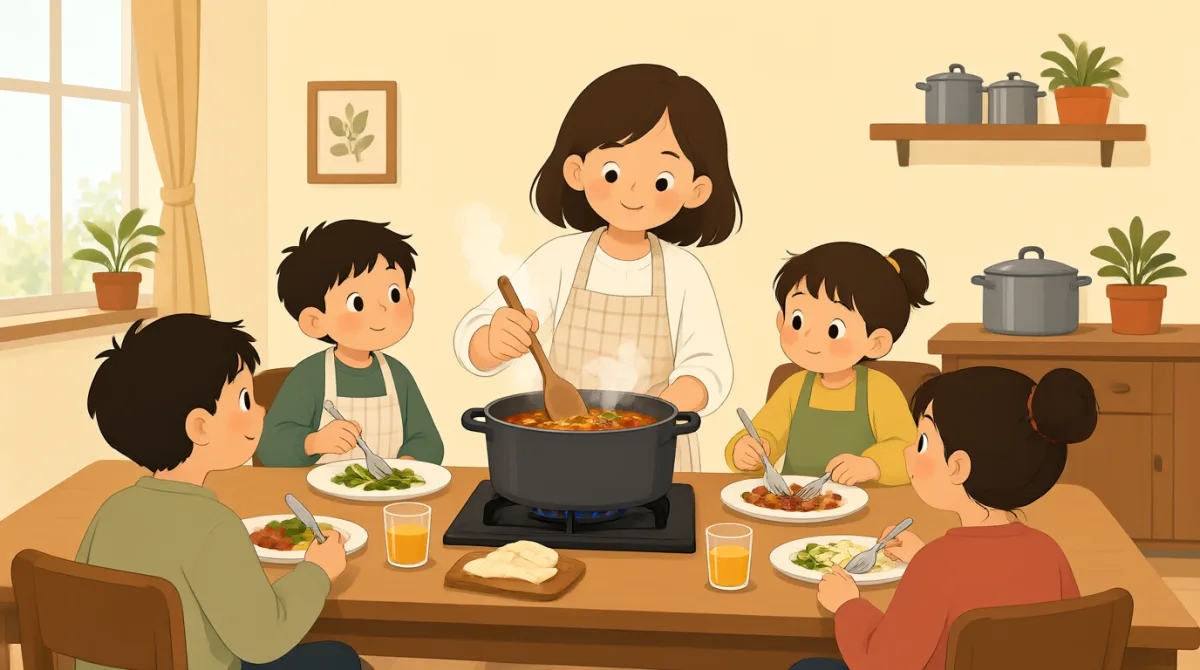

Now, read the recipe. First, pour two cups of water into the pot.
じゃあ、レシピを見て。まず、鍋に水をカップ2杯入れて。

Should I add the tomatoes now, or wait until the water gets hot?
トマトは今入れる?それとも、お湯が熱くなるまで待つ?
Wait until it boils. Then add the tomatoes, beans, and a little salt.
沸騰するまで待って。それから、トマトと豆、それに塩を少し入れて。

How long should we cook everything? I don't want to burn lunch.
全部でどのくらい煮ればいい?昼ごはんを焦がしたくないな。
Cook it for ten minutes. Stir it gently every few minutes.
10分煮てね。数分おきに、そっとかき混ぜて。
The soup is bubbling now. Should I turn the heat down?
スープがぐつぐつしてきたよ。火を弱めたほうがいい?
Yes, turn it down to low. Keep stirring so nothing sticks.
うん、弱火にして。鍋底にくっつかないように、かき混ぜ続けてね。
I stirred it, and the beans feel soft. Can we taste it now?
かき混ぜたよ。豆も柔らかくなってる。もう味見していい?
Sure. Take a small spoonful, and tell me if it needs more salt.
もちろん。スプーンで少しすくって、塩を足したほうがいいか教えて。
語彙8
- pour two cups of water水をカップ2杯入れる
This means to put two cups of water into the pot. You can use “pour” when adding a liquid to a container.
鍋に水をカップ2杯入れる、という意味です。「pour」は、容器に液体を注ぎ入れるときに使えます。
- until it boils沸騰するまで
This means to wait until the water gets very hot and starts bubbling. You can say “until it boils” when explaining when to do something.
水がとても熱くなって、泡が立ち始めるまで待つ、という意味です。何かをするタイミングを説明するときに「until it boils」と言えます。
- add the tomatoesトマトを入れる
This means to put the tomatoes into the pot. Use “add” when putting an ingredient into food.
トマトを鍋に入れる、という意味です。食材を料理に加えるときは「add」を使います。
- stir it gentlyそっとかき混ぜる
This means to mix the food slowly and carefully with a spoon. You can use “stir gently” when giving cooking instructions.
スプーンで料理をゆっくり、丁寧に混ぜる、という意味です。料理の手順を伝えるときに「stir gently」と言えます。
- turn it down to low弱火にする
This means to lower the heat to a low setting. You can use this phrase when a dish needs to cook more slowly.
火加減を弱くする、という意味です。料理をゆっくり煮たいときに使える表現です。
- sticksくっつく
Here, “sticks” means food gets attached to the bottom of the pot. You can say “so nothing sticks” when explaining why you should stir.
ここでの「sticks」は、食べ物が鍋の底にくっつくという意味です。かき混ぜる理由を説明するときに「so nothing sticks(何もくっつかないように)」と言えます。
- a small spoonfulスプーン一杯分
This means a small amount of food that fits on a spoon. Use it when tasting food or serving a little.
スプーンにのるくらいの少量の食べ物、という意味です。味見をしたり、少しだけ取り分けたりするときに使います。
- needs more salt塩をもっと足したほうがいい
This means the food may need extra salt to taste better. You can use this phrase when asking someone to check the flavor.
料理をもっとおいしくするために、塩を足す必要があるかもしれない、という意味です。味を確かめてもらうときに使える表現です。
重要な文8
- 1
First, pour two cups of water into the pot.
まず、鍋に水をカップ2杯入れて。
This gives a clear first step in a recipe. You can reuse the pattern “First, pour [amount] of [liquid] into the [container].”
レシピの最初の手順をはっきり伝える文です。「First, pour [amount] of [liquid] into the [container].」という形を使えば、同じように手順を伝えられます。
- 2
Should I add the tomatoes now, or wait until the water gets hot?
トマトは今入れる?それとも、お湯が熱くなるまで待つ?
This is a useful way to ask whether to do something now or later. Replace “add the tomatoes” with another task to ask about the right time.
何かを今するべきか、あとでするべきか尋ねる便利な言い方です。「add the tomatoes」を別の作業に置き換えて、ちょうどよいタイミングを尋ねられます。
- 3
Cook it for ten minutes.
10分煮てね。
This tells someone how long to cook something. You can use “Cook it for [time]” to give a simple cooking instruction.
どのくらいの時間、何かを調理すればよいか伝える文です。「Cook it for [time]」を使うと、簡単に調理時間を指示できます。
- 4
Stir it gently every few minutes.
数分おきに、そっとかき混ぜて。
This gives both the action and how often to do it. You can change “gently” or “every few minutes” to give different instructions.
何をするかだけでなく、どのくらいの頻度でするかも伝える文です。「gently」や「every few minutes」を変えると、いろいろな指示ができます。
- 5
Yes, turn it down to low.
うん、弱火にして。
This is a short, practical instruction for lowering the heat. You can replace “low” with another heat setting, such as “medium.”
火を弱めるための、短く実用的な指示です。「low」を「medium(中火)」のような別の火加減に置き換えられます。
- 6
Keep stirring so nothing sticks.
鍋底にくっつかないように、かき混ぜ続けてね。
This explains what to keep doing and why. Use “Keep [verb]-ing so [result]” to give a helpful reminder.
何を続けるのか、そしてその理由を説明しています。「Keep [verb]-ing so [result]」を使うと、役立つ注意を伝えられます。
- 7
Can we taste it now?
もう味見していい?
This is a simple way to ask if it is okay to try some food. You can replace “taste it” with another action to ask permission.
食べ物を少し試してもいいか尋ねる、簡単な言い方です。「taste it」を別の行動に置き換えると、許可を尋ねる表現になります。
- 8
Take a small spoonful, and tell me if it needs more salt.
スプーンで少しすくって、塩を足したほうがいいか教えて。
This gives someone two clear steps: taste a little and say what the food needs. You can replace “more salt” with another ingredient or seasoning.
少し味見をして、料理に何が必要か伝えるという、はっきりした2つの手順を指示しています。「more salt」を別の食材や調味料に置き換えられます。