Washing and Cutting Vegetables
การล้างและหั่นผัก
Grace shows Emma and Leo how to wash and cut the vegetables safely. Leo asks how small the pieces should be.
เกรซสอนเอมมาและลีโอให้รู้วิธีล้างและหั่นผักอย่างปลอดภัย ลีโอถามว่าควรหั่นให้ชิ้นเล็กแค่ไหน
บทสนทนา9
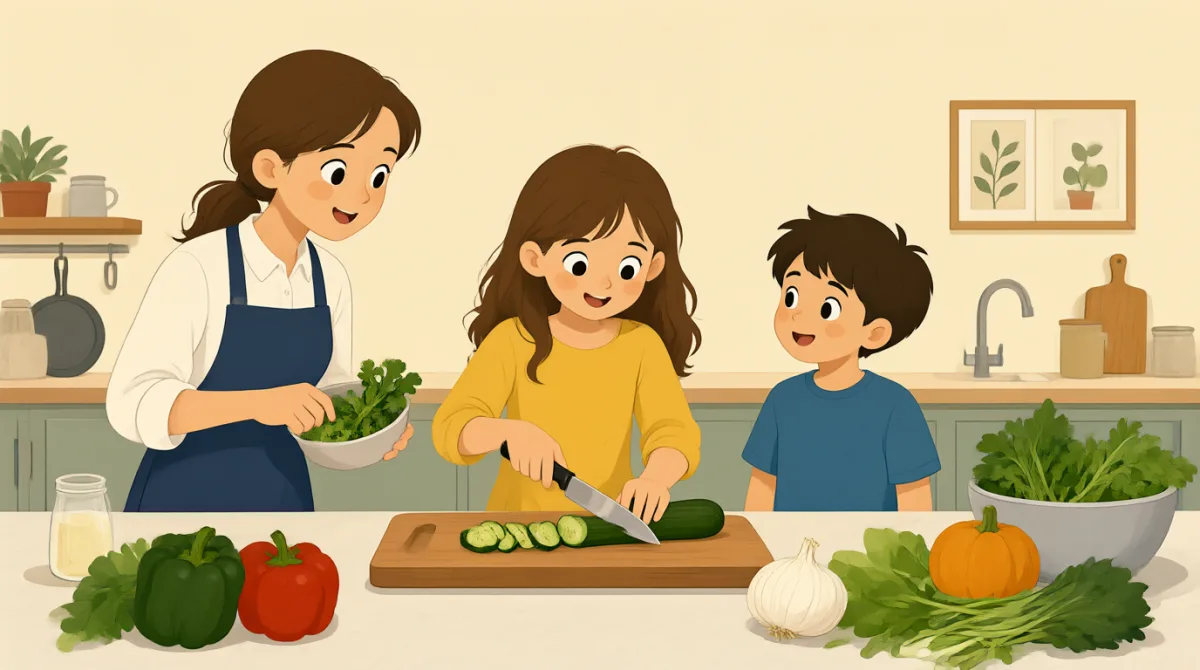

First, rinse the vegetables under cold water. Make sure you wash off all the dirt.
ก่อนอื่น ล้างผักด้วยน้ำเย็นไหลผ่านนะ ตรวจดูให้แน่ใจว่าล้างดินออกหมดแล้ว

Should I wash the carrots too, even though we’re going to peel them?
ต้องล้างแครอตด้วยไหมคะ ทั้งที่เราจะปอกเปลือกมันอยู่แล้ว
Yes, wash them first. Then use the peeler and keep your fingers away from the blade.
ใช่ ล้างก่อนนะ แล้วใช้ที่ปอกผัก โดยวางนิ้วให้ห่างจากใบมีด

Got it. Now, how small should I cut these onions?
เข้าใจแล้วครับ แล้วตอนนี้ผมควรหั่นหอมใหญ่พวกนี้ให้เล็กแค่ไหนครับ
Cut them into small pieces, about the size of your fingernail. Use the cutting board.
หั่นให้เป็นชิ้นเล็ก ๆ ขนาดประมาณเล็บมือของเธอนะ ใช้เขียงด้วย
Okay. I’ll hold the onion still. Is this knife sharp?
โอเคครับ ผมจะจับหอมใหญ่ให้อยู่นิ่ง ๆ มีดเล่มนี้คมไหมครับ
Yes, so cut slowly. Curl your fingers in, and keep the knife tip on the board.
คมจ้ะ เพราะฉะนั้นค่อย ๆ หั่นนะ งอนิ้วเข้ามา แล้วให้ปลายมีดแตะอยู่บนเขียง
Like this? I’m going to cut the carrots into little rounds.
แบบนี้ใช่ไหมคะ ฉันจะหั่นแครอตเป็นแว่นเล็ก ๆ
That’s right, Emma. Nice work. Put the cut vegetables in this bowl.
ถูกต้องจ้ะ เอมมา ทำได้ดีมาก ใส่ผักที่หั่นแล้วลงในชามนี้นะ
คำศัพท์8
- rinse the vegetablesล้างผักผ่านน้ำ
Wash the vegetables quickly with water. You can use this phrase when you clean vegetables before cooking.
ล้างผักอย่างรวดเร็วด้วยน้ำ ใช้วลีนี้เมื่อต้องการทำความสะอาดผักก่อนปรุงอาหาร
- wash off all the dirtล้างดินออกให้หมด
Remove dirt from something by washing it. You can say this when food or another item is dirty.
นำดินออกจากสิ่งของด้วยการล้าง ใช้พูดเมื่ออาหารหรือสิ่งของอื่น ๆ สกปรก
- peel themปอกเปลือกพวกมัน
Take the thin outer skin off the vegetables. Use this phrase when preparing carrots or other vegetables.
ลอกเปลือกบาง ๆ ด้านนอกของผักออก ใช้วลีนี้เมื่อต้องเตรียมแครอตหรือผักชนิดอื่น ๆ
- keep your fingers away from the bladeวางนิ้วให้ห่างจากใบมีด
Move your fingers away from the sharp part of a knife. This is a useful safety instruction when cutting food.
ขยับนิ้วให้ห่างจากส่วนคมของมีด นี่เป็นคำแนะนำด้านความปลอดภัยที่มีประโยชน์เมื่อต้องหั่นอาหาร
- cut them into small piecesหั่นพวกมันให้เป็นชิ้นเล็ก ๆ
Use a knife to make the vegetables into small parts. You can use this phrase to explain how you want food cut.
ใช้มีดหั่นผักให้เป็นชิ้นเล็ก ๆ ใช้วลีนี้เพื่ออธิบายว่าต้องการให้อาหารถูกหั่นอย่างไร
- hold the onion stillจับหอมใหญ่ให้อยู่นิ่ง ๆ
Keep the onion in one place while you cut it. This phrase is useful for giving safe cutting instructions.
จับหอมใหญ่ให้อยู่กับที่ขณะหั่น วลีนี้มีประโยชน์เมื่อต้องให้คำแนะนำเกี่ยวกับการหั่นอย่างปลอดภัย
- curl your fingers inงอนิ้วเข้ามา
Bend your fingers toward your palm while holding food. This helps keep your fingers away from the knife.
งอนิ้วเข้าหาฝ่ามือขณะจับอาหาร วิธีนี้ช่วยให้นิ้วอยู่ห่างจากมีด
- cut the carrots into little roundsหั่นแครอตเป็นแว่นเล็ก ๆ
Slice the carrots into small, round pieces. You can use this phrase to describe a way of cutting vegetables.
หั่นแครอตให้เป็นชิ้นเล็ก ๆ รูปร่างกลม ใช้วลีนี้เพื่อบรรยายวิธีหั่นผัก
ประโยคสำคัญ8
- 1
First, rinse the vegetables under cold water.
ก่อนอื่น ล้างผักด้วยน้ำเย็นไหลผ่านนะ
This gives a clear first step for washing vegetables. You can reuse the pattern “First, rinse [food] under cold water” for other ingredients.
ประโยคนี้บอกขั้นตอนแรกของการล้างผักอย่างชัดเจน คุณสามารถนำรูปแบบ “First, rinse [food] under cold water” ไปใช้กับวัตถุดิบอื่น ๆ ได้
- 2
Should I wash the carrots too, even though we’re going to peel them?
ต้องล้างแครอตด้วยไหมคะ ทั้งที่เราจะปอกเปลือกมันอยู่แล้ว
This is a useful way to check whether an extra step is needed. Use “Should I [action] too, even though…?” when you are unsure.
นี่เป็นวิธีที่มีประโยชน์ในการถามว่าจำเป็นต้องทำขั้นตอนเพิ่มเติมหรือไม่ ใช้ “Should I [action] too, even though…?” เมื่อคุณไม่แน่ใจ
- 3
Then use the peeler and keep your fingers away from the blade.
แล้วใช้ที่ปอกผัก โดยวางนิ้วให้ห่างจากใบมีด
This sentence gives two simple instructions for peeling safely. You can use “Then use…” to give the next step in a task.
ประโยคนี้ให้คำสั่งง่าย ๆ สองอย่างเพื่อปอกเปลือกอย่างปลอดภัย คุณสามารถใช้ “Then use…” เพื่อบอกขั้นตอนถัดไปของงาน
- 4
Now, how small should I cut these onions?
แล้วตอนนี้ผมควรหั่นหอมใหญ่พวกนี้ให้เล็กแค่ไหนครับ
This is a natural way to ask about the size of food pieces. You can replace “onions” with another ingredient.
นี่เป็นวิธีถามเกี่ยวกับขนาดของชิ้นอาหารอย่างเป็นธรรมชาติ คุณสามารถแทนที่ “onions” ด้วยวัตถุดิบชนิดอื่นได้
- 5
Cut them into small pieces, about the size of your fingernail.
หั่นให้เป็นชิ้นเล็ก ๆ ขนาดประมาณเล็บมือของเธอนะ
This explains both how to cut something and how small the pieces should be. Use “about the size of…” to describe an approximate size.
ประโยคนี้อธิบายทั้งวิธีหั่นและขนาดของชิ้นอาหาร ใช้ “about the size of…” เพื่อบอกขนาดโดยประมาณ
- 6
I’ll hold the onion still.
ผมจะจับหอมใหญ่ให้อยู่นิ่ง ๆ
This sentence says what you will do to help with a task. You can use “I’ll hold [something] still” when someone else needs to work on it.
ประโยคนี้บอกว่าคุณจะทำอะไรเพื่อช่วยในงานนั้น คุณสามารถใช้ “I’ll hold [something] still” เมื่ออีกคนต้องทำงานกับสิ่งนั้น
- 7
Curl your fingers in, and keep the knife tip on the board.
งอนิ้วเข้ามา แล้วให้ปลายมีดแตะอยู่บนเขียง
This gives clear advice for cutting safely. You can use “keep [something] on…” to tell someone where to place or hold it.
ประโยคนี้ให้คำแนะนำที่ชัดเจนสำหรับการหั่นอย่างปลอดภัย คุณสามารถใช้ “keep [something] on…” เพื่อบอกให้ใครวางหรือจับบางสิ่งไว้ตรงไหน
- 8
Put the cut vegetables in this bowl.
ใส่ผักที่หั่นแล้วลงในชามนี้นะ
This is a simple instruction for where to place prepared food. You can replace “cut vegetables” and “this bowl” with other items and containers.
นี่เป็นคำสั่งง่าย ๆ เพื่อบอกว่าจะวางอาหารที่เตรียมแล้วไว้ที่ไหน คุณสามารถแทนที่ “cut vegetables” และ “this bowl” ด้วยสิ่งของและภาชนะอื่น ๆ ได้