Bringing Your Own Bag
マイバッグを持っていこう
Emma and Mia reach the checkout with their market purchases. Emma remembers her reusable bag, and Mia asks how to keep the vegetables fresh on the way home.
エマとミアは買ったものを持ってレジに着きます。エマはマイバッグを持ってきたことを思い出し、ミアは帰り道に野菜を新鮮に保つ方法を尋ねます。
会話9
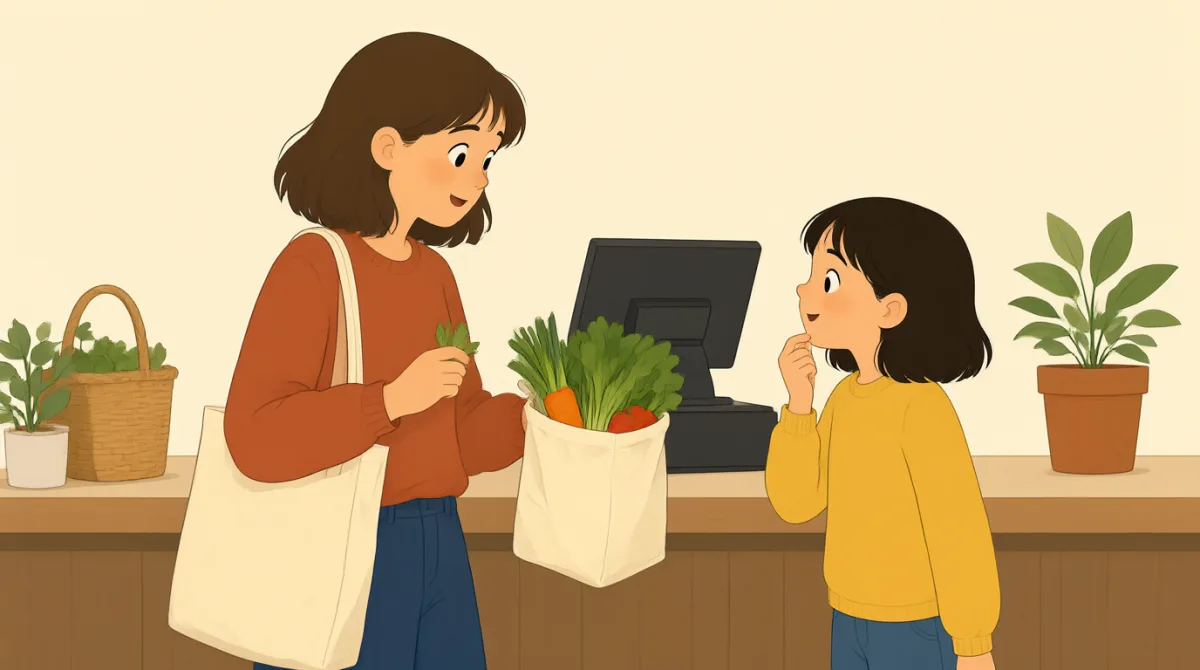

Here’s my reusable bag. We bought more than I expected!
マイバッグ持ってきたよ。思ったよりたくさん買っちゃったね!

Good thinking. I’ll put your vegetables and fruit in here.
いい考えですね。野菜と果物はここに入れますね。

Thanks. How can we keep the vegetables fresh on the way home?
ありがとう。帰り道に野菜を新鮮に保つにはどうしたらいい?
Keep them out of the sun, and don’t leave them in a hot car.
日なたを避けて、暑い車の中に置きっぱなしにしないでくださいね。
We’re walking home, so that should be easy.
歩いて帰るから、それなら大丈夫だね。
Should we keep the greens separate from the apples?
葉物野菜はリンゴと分けておいたほうがいい?
Yes, that’s best. The apples can make the greens wilt sooner.
はい、そのほうがいいですね。リンゴがあると、葉物野菜が早くしおれることがあります。
Good to know. How much do we owe you?
なるほどね。いくら払えばいい?
That’s twelve dollars. Thanks for shopping local, and enjoy your food!
12ドルです。地元のお店で買ってくださってありがとうございます。おいしく召し上がってください!
語彙6
- reusable bag繰り返し使えるバッグ
A bag you can use many times instead of throwing it away. Here, Emma brings one to carry their market purchases.
捨てずに何度も使えるバッグのことです。この場面では、エマが市場で買ったものを入れるために持ってきています。
- Good thinking.いい考えですね
This means someone made a smart choice. You can say it to praise a helpful idea.
相手が賢い選択をしたという意味です。役に立つアイデアをほめるときに使えます。
- on the way home帰り道に
This means while traveling home. Use it to talk about something that happens during your trip back.
家に帰る途中という意味です。帰りの移動中に起きることについて話すときに使います。
- out of the sun日なたを避けて
This means in a place where direct sunlight does not reach. You can use it when giving advice about protecting food or other things.
直射日光の当たらない場所に、という意味です。食べ物などを守るためのアドバイスをするときに使えます。
- leave them in a hot car暑い車の中に置きっぱなしにする
This means to let the vegetables stay inside a warm car. The phrase is useful for warning someone about where not to store food.
野菜を暑い車内に入れたままにする、という意味です。食べ物をどこに置かないほうがいいか注意するときに役立つ表現です。
- owe youあなたに支払うべき
This means to need to pay you money. Ask “How much do we owe you?” to find out the amount to pay.
あなたにお金を払う必要がある、という意味です。“How much do we owe you?”(いくらお支払いすればいいですか?)と尋ねれば、支払う金額がわかります。
重要な文8
- 1
Here’s my reusable bag.
マイバッグ持ってきたよ。
This is a simple way to tell someone you brought a bag for your shopping. You can replace “reusable bag” with another item you have brought.
買い物用のバッグを持ってきたと伝える簡単な言い方です。“reusable bag”を、持ってきた別の物に置き換えて使えます。
- 2
We bought more than I expected!
思ったよりたくさん買っちゃったね!
Use this sentence when you purchased a larger amount than you thought you would. “More than I expected” is also useful for talking about time, cost, or results.
思っていたより多く買ったときに使う文です。“More than I expected”は、時間や費用、結果について話すときにも便利です。
- 3
How can we keep the vegetables fresh on the way home?
帰り道に野菜を新鮮に保つにはどうしたらいい?
This is a polite way to ask for advice about keeping food fresh during a trip. Replace “the vegetables” with another item you want to protect.
移動中に食べ物を新鮮に保つ方法を尋ねる表現です。守りたい別の物に合わせて、“the vegetables”を置き換えて使えます。
- 4
Keep them out of the sun, and don’t leave them in a hot car.
日なたを避けて、暑い車の中に置きっぱなしにしないでくださいね。
This gives two clear instructions for protecting food from heat. You can use “Keep them out of...” to explain where something should not be.
食べ物を暑さから守るための、わかりやすい指示が二つ含まれています。“Keep them out of...”は、ある物をどこに置かないようにするか伝えるときに使えます。
- 5
We’re walking home, so that should be easy.
歩いて帰るから、それなら大丈夫だね。
This sentence connects a plan with a likely result. Use “so that should be easy” when you think something will not be difficult.
予定と、そこから予想できる結果をつなげる文です。難しくなさそうだと思うときは、“so that should be easy”と言えます。
- 6
Should we keep the greens separate from the apples?
葉物野菜はリンゴと分けておいたほうがいい?
Use “Should we...?” to ask for advice about what to do. “Keep [one thing] separate from [another]” is useful for talking about storage.
“Should we...?”は、どうするのがよいかアドバイスを求める表現です。“Keep [one thing] separate from [another]”は、物の保管方法について話すときに便利です。
- 7
How much do we owe you?
いくら払えばいい?
This is a natural question to ask when you are ready to pay. You can use it at a market, shop, or restaurant.
支払いをするときに自然に使える質問です。市場やお店、レストランで使えます。
- 8
Thanks for shopping local, and enjoy your food!
地元のお店で買ってくださってありがとうございます。おいしく召し上がってください!
This is a friendly way to thank customers for buying from nearby sellers. You can reuse “Thanks for...” to show appreciation for someone’s action.
近くのお店で買い物をしてくれたお客さんに、親しみを込めてお礼を伝える言い方です。“Thanks for...”を使えば、相手の行動に感謝を伝えられます。