Bringing Your Own Bag
自帶購物袋
Emma and Mia reach the checkout with their market purchases. Emma remembers her reusable bag, and Mia asks how to keep the vegetables fresh on the way home.
艾瑪和米婭帶著買好的東西來到結賬處。艾瑪想起自己帶了可重複使用的購物袋,米婭則詢問回家路上怎樣讓蔬菜保持新鮮。
對話9
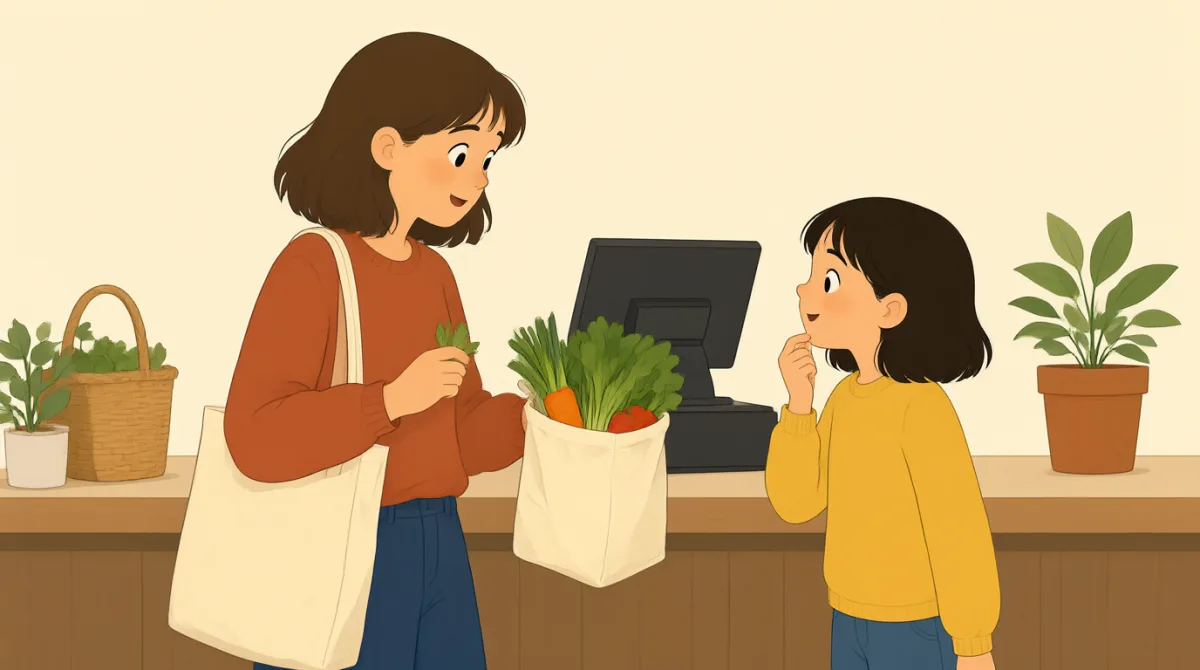

Here’s my reusable bag. We bought more than I expected!
這是我的環保袋。我們買的東西比我想的多!

Good thinking. I’ll put your vegetables and fruit in here.
想得周到。我把你們的蔬菜和水果放進袋子裡。

Thanks. How can we keep the vegetables fresh on the way home?
謝謝。回家的路上,怎麼才能讓蔬菜保持新鮮?
Keep them out of the sun, and don’t leave them in a hot car.
別讓它們曬太陽,也別把它們留在熱車裡。
We’re walking home, so that should be easy.
我們走路回家,所以應該沒問題。
Should we keep the greens separate from the apples?
我們要把綠葉菜和蘋果分開嗎?
Yes, that’s best. The apples can make the greens wilt sooner.
對,最好分開。蘋果會讓綠葉菜更快蔫掉。
Good to know. How much do we owe you?
知道了。我們一共該付您多少錢?
That’s twelve dollars. Thanks for shopping local, and enjoy your food!
一共十二美元。謝謝你們支援本地農產品,祝你們吃得開心!
詞彙6
- reusable bag可重複使用的購物袋
A bag you can use many times instead of throwing it away. Here, Emma brings one to carry their market purchases.
可以反覆使用、不用一次性丟掉的袋子。這裡,艾瑪帶了一個袋子來裝她們在集市買的東西。
- Good thinking.想得周到。
This means someone made a smart choice. You can say it to praise a helpful idea.
意思是某人做了個明智的選擇。你可以用這句話來誇獎一個有幫助的好主意。
- on the way home回家的路上
This means while traveling home. Use it to talk about something that happens during your trip back.
意思是在回家的途中。你可以用它來談論回家路上發生的事。
- out of the sun避開陽光
This means in a place where direct sunlight does not reach. You can use it when giving advice about protecting food or other things.
意思是放在陽光直射不到的地方。給別人建議如何保護食物或其他東西時,可以用這個表達。
- leave them in a hot car把它們留在熱車裡
This means to let the vegetables stay inside a warm car. The phrase is useful for warning someone about where not to store food.
意思是讓蔬菜待在溫熱的車裡。這個表達可以用來提醒別人不要把食物放在某個地方。
- owe you該付你……錢
This means to need to pay you money. Ask “How much do we owe you?” to find out the amount to pay.
意思是需要付錢給你。問“How much do we owe you?”(我們該付您多少錢?)就能知道要付多少。
關鍵句8
- 1
Here’s my reusable bag.
這是我的可重複使用購物袋。
This is a simple way to tell someone you brought a bag for your shopping. You can replace “reusable bag” with another item you have brought.
這是告訴別人你帶了購物袋的一種簡單說法。你可以把“reusable bag”換成自己帶來的其他物品。
- 2
We bought more than I expected!
我們買的東西比我預想的多!
Use this sentence when you purchased a larger amount than you thought you would. “More than I expected” is also useful for talking about time, cost, or results.
買的東西比原先以為的多時,可以用這句話。“More than I expected”也可以用來談論時間、費用或結果超出預期。
- 3
How can we keep the vegetables fresh on the way home?
回家的路上,怎麼才能讓蔬菜保持新鮮?
This is a polite way to ask for advice about keeping food fresh during a trip. Replace “the vegetables” with another item you want to protect.
這是一種禮貌地詢問如何在路上保持食物新鮮的說法。你可以把“the vegetables”換成其他想要妥善儲存的東西。
- 4
Keep them out of the sun, and don’t leave them in a hot car.
別讓它們曬太陽,也別把它們留在熱車裡。
This gives two clear instructions for protecting food from heat. You can use “Keep them out of...” to explain where something should not be.
這句話給出了兩條清楚的建議,告訴別人如何避免食物受熱。你可以用“Keep them out of...”來說明某樣東西應該放在哪裡,或不應該放在哪裡。
- 5
We’re walking home, so that should be easy.
我們走路回家,所以應該沒問題。
This sentence connects a plan with a likely result. Use “so that should be easy” when you think something will not be difficult.
這句話把一個計劃和可能的結果聯絡起來。覺得某件事應該不難時,可以用“so that should be easy”。
- 6
Should we keep the greens separate from the apples?
我們要把綠葉菜和蘋果分開嗎?
Use “Should we...?” to ask for advice about what to do. “Keep [one thing] separate from [another]” is useful for talking about storage.
用“Should we...?”來詢問該怎麼做。“Keep [one thing] separate from [another]”適合用來談論如何存放東西。
- 7
How much do we owe you?
我們該付您多少錢?
This is a natural question to ask when you are ready to pay. You can use it at a market, shop, or restaurant.
準備付款時,這是一種自然的問法。在集市、商店或餐館都可以用。
- 8
Thanks for shopping local, and enjoy your food!
謝謝你們支援本地商家,祝你們吃得開心!
This is a friendly way to thank customers for buying from nearby sellers. You can reuse “Thanks for...” to show appreciation for someone’s action.
這是感謝顧客購買附近商家商品的一種友好說法。你可以用“Thanks for...”來感謝別人做了某件事。