Bringing Your Own Bag
अपना थैला साथ लाना
Emma and Mia reach the checkout with their market purchases. Emma remembers her reusable bag, and Mia asks how to keep the vegetables fresh on the way home.
एमा और मिया बाज़ार से खरीदी हुई चीज़ों के साथ भुगतान करने पहुँचती हैं। एमा को अपना दोबारा इस्तेमाल किया जा सकने वाला थैला याद आ जाता है, और मिया पूछती है कि घर जाते समय सब्ज़ियों को ताज़ा कैसे रखा जाए।
संवाद9
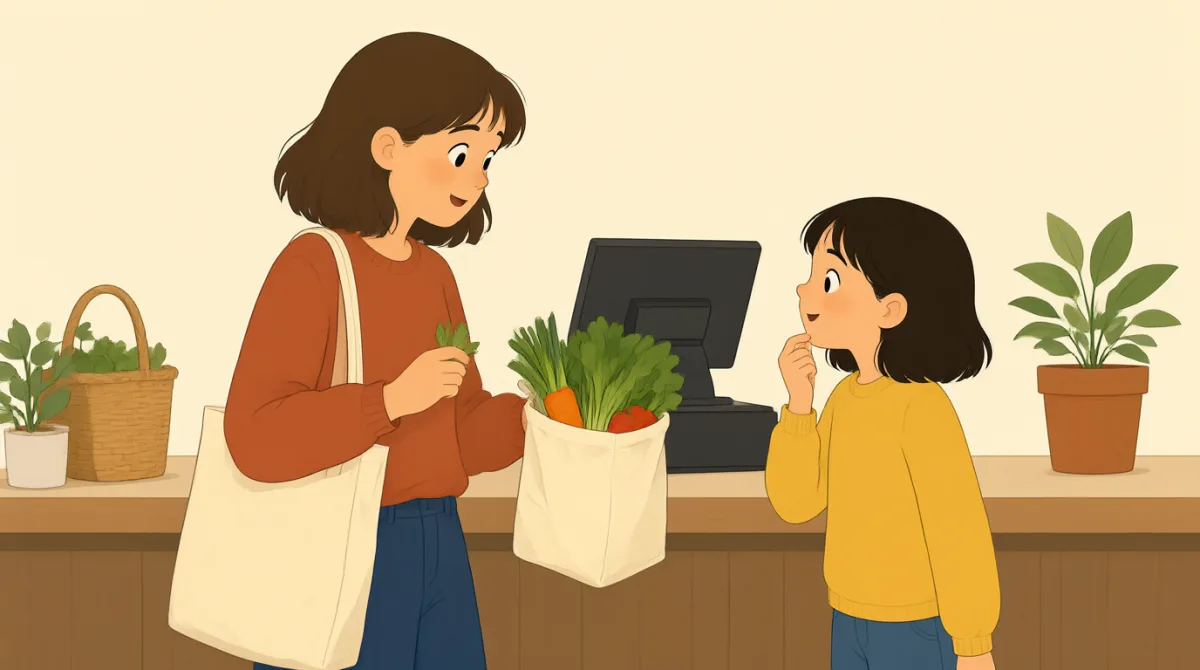

Here’s my reusable bag. We bought more than I expected!
ये रहा मेरा दोबारा इस्तेमाल किया जा सकने वाला थैला। हमने मेरी उम्मीद से ज़्यादा सामान खरीद लिया!

Good thinking. I’ll put your vegetables and fruit in here.
अच्छा सोचा आपने। मैं आपकी सब्ज़ियाँ और फल इसमें रख देता हूँ।

Thanks. How can we keep the vegetables fresh on the way home?
धन्यवाद। घर जाते समय हम सब्ज़ियों को ताज़ा कैसे रख सकते हैं?
Keep them out of the sun, and don’t leave them in a hot car.
उन्हें धूप से दूर रखिए और गरम गाड़ी में मत छोड़िए।
We’re walking home, so that should be easy.
हम पैदल घर जा रहे हैं, तो यह आसान होना चाहिए।
Should we keep the greens separate from the apples?
क्या हमें हरी पत्तेदार सब्ज़ियाँ सेबों से अलग रखनी चाहिए?
Yes, that’s best. The apples can make the greens wilt sooner.
हाँ, यही बेहतर है। सेबों की वजह से हरी पत्तेदार सब्ज़ियाँ जल्दी मुरझा सकती हैं।
Good to know. How much do we owe you?
अच्छा, यह जानना ज़रूरी था। हमें आपको कितने पैसे देने हैं?
That’s twelve dollars. Thanks for shopping local, and enjoy your food!
बारह डॉलर हुए। स्थानीय चीज़ें खरीदने के लिए धन्यवाद, और अपने खाने का मज़ा लीजिए!
शब्दावली6
- reusable bagदोबारा इस्तेमाल किया जा सकने वाला थैला
A bag you can use many times instead of throwing it away. Here, Emma brings one to carry their market purchases.
ऐसा थैला जिसे फेंकने के बजाय कई बार इस्तेमाल किया जा सकता है। यहाँ एमा बाज़ार से खरीदी हुई चीज़ें ले जाने के लिए ऐसा थैला लाई है।
- Good thinking.अच्छा सोचा।
This means someone made a smart choice. You can say it to praise a helpful idea.
इसका मतलब है कि किसी ने समझदारी भरा फ़ैसला किया। किसी उपयोगी सुझाव की तारीफ़ करने के लिए आप यह कह सकते हैं।
- on the way homeघर जाते समय
This means while traveling home. Use it to talk about something that happens during your trip back.
इसका मतलब है घर लौटते हुए। घर वापस आने के सफ़र के दौरान होने वाली किसी बात के बारे में कहने के लिए इसका इस्तेमाल करें।
- out of the sunधूप से दूर
This means in a place where direct sunlight does not reach. You can use it when giving advice about protecting food or other things.
इसका मतलब है ऐसी जगह पर जहाँ सीधी धूप न पड़ती हो। खाने-पीने की चीज़ों या दूसरी चीज़ों को बचाने की सलाह देते समय आप इसका इस्तेमाल कर सकते हैं।
- leave them in a hot carउन्हें गरम गाड़ी में छोड़ देना
This means to let the vegetables stay inside a warm car. The phrase is useful for warning someone about where not to store food.
इसका मतलब है सब्ज़ियों को गरम गाड़ी के अंदर रहने देना। खाने की चीज़ें कहाँ नहीं रखनी चाहिए, इस बारे में किसी को सावधान करने के लिए यह वाक्यांश काम आता है।
- owe youआपको पैसे देने हैं
This means to need to pay you money. Ask “How much do we owe you?” to find out the amount to pay.
इसका मतलब है कि आपको किसी को पैसे चुकाने हैं। कितनी रकम देनी है, यह जानने के लिए पूछें: “How much do we owe you?” (हमें आपको कितने पैसे देने हैं?)
मुख्य वाक्य8
- 1
Here’s my reusable bag.
ये रहा मेरा दोबारा इस्तेमाल किया जा सकने वाला थैला।
This is a simple way to tell someone you brought a bag for your shopping. You can replace “reusable bag” with another item you have brought.
किसी को बताने का यह एक आसान तरीका है कि आप खरीदारी के लिए थैला लाए हैं। “reusable bag” की जगह आप अपने साथ लाई हुई किसी दूसरी चीज़ का नाम रख सकते हैं।
- 2
We bought more than I expected!
हमने मेरी उम्मीद से ज़्यादा सामान खरीद लिया!
Use this sentence when you purchased a larger amount than you thought you would. “More than I expected” is also useful for talking about time, cost, or results.
जब आपने सोचा था उससे ज़्यादा सामान खरीदा हो, तब यह वाक्य कहें। समय, खर्च या नतीजों के बारे में बात करते समय भी “More than I expected” काम आता है।
- 3
How can we keep the vegetables fresh on the way home?
घर जाते समय हम सब्ज़ियों को ताज़ा कैसे रख सकते हैं?
This is a polite way to ask for advice about keeping food fresh during a trip. Replace “the vegetables” with another item you want to protect.
सफ़र के दौरान खाने की चीज़ों को ताज़ा रखने के बारे में सलाह माँगने का यह एक विनम्र तरीका है। “the vegetables” की जगह उस दूसरी चीज़ का नाम रखें जिसे आप सुरक्षित रखना चाहते हैं।
- 4
Keep them out of the sun, and don’t leave them in a hot car.
उन्हें धूप से दूर रखिए और गरम गाड़ी में मत छोड़िए।
This gives two clear instructions for protecting food from heat. You can use “Keep them out of...” to explain where something should not be.
इसमें खाने की चीज़ों को गर्मी से बचाने के दो साफ़ निर्देश दिए गए हैं। किसी चीज़ को कहाँ नहीं रखना चाहिए, यह बताने के लिए आप “Keep them out of...” का इस्तेमाल कर सकते हैं।
- 5
We’re walking home, so that should be easy.
हम पैदल घर जा रहे हैं, तो यह आसान होना चाहिए।
This sentence connects a plan with a likely result. Use “so that should be easy” when you think something will not be difficult.
इस वाक्य में किसी योजना को उसके संभावित नतीजे से जोड़ा गया है। जब आपको लगे कि कोई काम मुश्किल नहीं होगा, तब “so that should be easy” का इस्तेमाल करें।
- 6
Should we keep the greens separate from the apples?
क्या हमें हरी पत्तेदार सब्ज़ियाँ सेबों से अलग रखनी चाहिए?
Use “Should we...?” to ask for advice about what to do. “Keep [one thing] separate from [another]” is useful for talking about storage.
क्या करना चाहिए, इस बारे में सलाह माँगने के लिए “Should we...?” का इस्तेमाल करें। चीज़ों को रखने के बारे में बात करते समय “Keep [one thing] separate from [another]” काम आता है।
- 7
How much do we owe you?
हमें आपको कितने पैसे देने हैं?
This is a natural question to ask when you are ready to pay. You can use it at a market, shop, or restaurant.
जब आप पैसे देने के लिए तैयार हों, तब यह एक स्वाभाविक सवाल है। आप इसे बाज़ार, दुकान या रेस्तराँ में पूछ सकते हैं।
- 8
Thanks for shopping local, and enjoy your food!
स्थानीय चीज़ें खरीदने के लिए धन्यवाद, और अपने खाने का मज़ा लीजिए!
This is a friendly way to thank customers for buying from nearby sellers. You can reuse “Thanks for...” to show appreciation for someone’s action.
पास के विक्रेताओं से खरीदारी करने के लिए ग्राहकों को धन्यवाद देने का यह एक दोस्ताना तरीका है। किसी के काम के लिए आभार जताने हेतु आप “Thanks for...” का दोबारा इस्तेमाल कर सकते हैं।