Describing Your Symptoms to the Nurse
看護師に症状を伝える
The nurse asks Leo about his symptoms. He describes his cough, sore throat, runny nose, and fever.
看護師がレオに症状を尋ねます。レオはせき、のどの痛み、鼻水、熱について説明します。
会話8
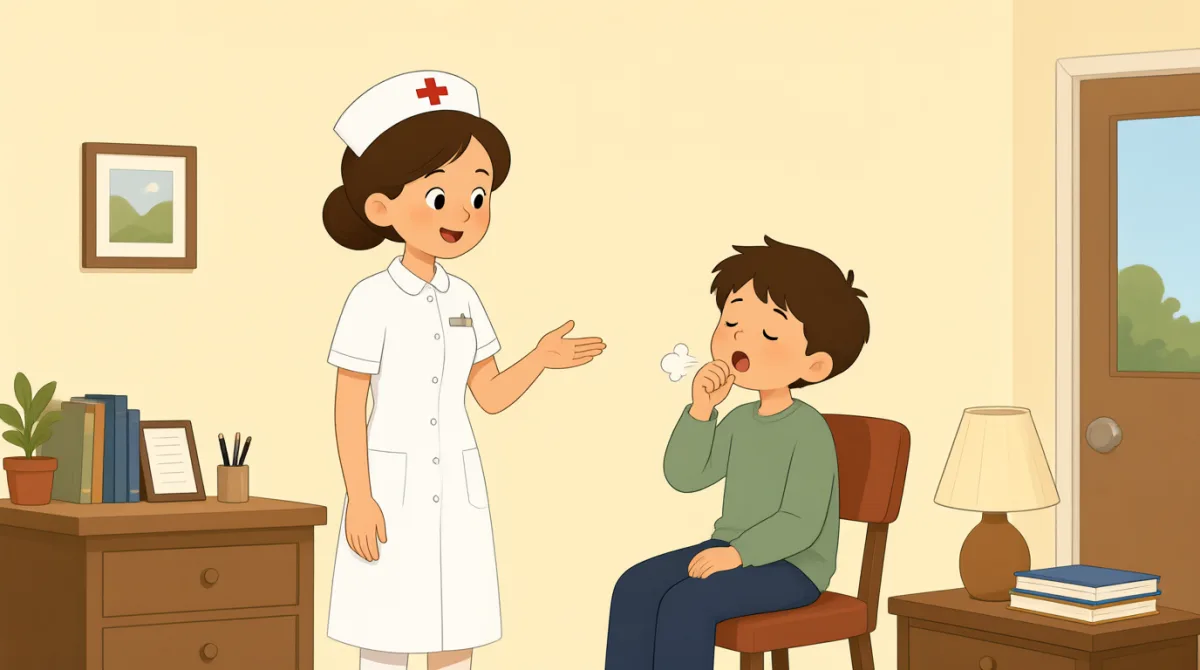

Hi, Leo. I’m the nurse. What symptoms are bothering you today?
こんにちは、レオ。看護師のミアです。今日はどんな症状がありますか?

I have a cough and a sore throat. My nose is running, too.
せきとのどの痛みがあります。鼻水も出ます。
I’m sorry to hear that. Do you have a fever?
それは大変ですね。熱はありますか?
I think so. I felt hot last night, but I didn’t check.
たぶんあります。昨夜は体が熱っぽかったんですが、熱は測りませんでした。
How bad is your cough? Does it keep you awake at night?
せきはどのくらいひどいですか?夜、せきで眠れないことはありますか?
It’s not too bad, but I cough more when I lie down.
それほどひどくないですが、横になるとせきが増えます。
Okay. I’ll check your temperature and write down your symptoms.
わかりました。体温を測って、症状を記録しますね。
Thanks. My throat hurts when I swallow, too.
ありがとうございます。飲み込むときものどが痛みます。
語彙8
- symptoms症状
Symptoms are signs that you may be sick, such as a cough or a fever. You can use this word to tell a nurse what is wrong.
症状とは、せきや熱のように、体調が悪いときに現れるサインのことです。看護師にどこが具合悪いのか伝えるときに使えます。
- a sore throatのどの痛み
A sore throat is pain or discomfort in your throat. Say “I have a sore throat” to describe it.
のどの痛みとは、のどに痛みや違和感があることです。「I have a sore throat」と言うと、その症状を伝えられます。
- My nose is running鼻水が出る
This means that liquid is coming from your nose. It is a common way to describe a cold.
これは、鼻から液体が出ているという意味です。風邪の症状を表すときによく使う言い方です。
- a fever熱
A fever is when your body temperature is higher than usual. You can say “I think I have a fever” if you are not sure.
熱があるとは、体温がいつもより高い状態のことです。はっきりしないときは「I think I have a fever」と言えます。
- keep you awake眠れなくさせる
This means to stop you from sleeping. You can use it to ask if a cough or another problem affects someone at night.
これは、相手が眠るのを妨げるという意味です。せきなどの症状が夜に睡眠の妨げになるか尋ねるときに使えます。
- lie down横になる
To lie down means to rest with your body in a flat position. You can use it to describe when a symptom gets worse.
横になるとは、体を平らな状態にして休むことです。症状がいつ悪化するかを説明するときに使えます。
- check your temperature体温を測る
This means to measure how hot your body is. A nurse may check your temperature to see if you have a fever.
これは、体がどれくらい熱いかを測るという意味です。熱があるか確認するために、看護師が体温を測ることがあります。
- swallow飲み込む
To swallow means to move food or drink down your throat. You can use it to explain when your throat hurts.
飲み込むとは、食べ物や飲み物をのどの奥へ送ることです。のどがいつ痛むのか説明するときに使えます。
重要な文8
- 1
What symptoms are bothering you today?
今日はどんな症状がありますか?
This is a useful question for asking someone what health problems they have. You can replace “symptoms” with “problems” in other situations.
相手にどんな体の不調があるか尋ねるときに便利な表現です。別の場面では「symptoms」を「problems」に置き換えられます。
- 2
I have a cough and a sore throat.
せきとのどの痛みがあります。
Use this sentence to name two common cold symptoms. You can replace them with other health problems, such as “a headache” or “a runny nose.”
風邪でよくある症状を二つ伝える表現です。「a headache(頭痛)」や「a runny nose(鼻水)」など、ほかの症状に置き換えることもできます。
- 3
I think so.
たぶんそうです。
This is a short way to say that you believe something is true but are not completely sure. Use it to answer questions when you are uncertain.
確かではないけれど、そうだと思うときの短い言い方です。自信がないときに質問への答えとして使えます。
- 4
I felt hot last night, but I didn’t check.
昨夜は体が熱っぽかったんですが、熱は測りませんでした。
Use this sentence to describe something that happened in the past and explain what you did not do. You can change “felt hot” to another past experience.
過去にあったことと、そのときしなかったことを説明する表現です。「felt hot」を別の過去の経験に置き換えることもできます。
- 5
Does it keep you awake at night?
夜、せきで眠れないことはありますか?
This question asks whether something makes it hard for a person to sleep. You can replace “it” with a cough, pain, or noise.
何かのせいで眠りにくくなるか尋ねる質問です。「it」は、せきや痛み、騒音などに置き換えられます。
- 6
I cough more when I lie down.
横になると、せきが増えます。
Use this sentence to explain when a symptom gets worse. You can use “I feel worse when…” to describe other situations.
症状がどんなときに悪化するかを説明する表現です。別の状況については「I feel worse when…」を使って説明できます。
- 7
I’ll check your temperature and write down your symptoms.
体温を測って、症状を記録しますね。
This sentence explains two things a nurse will do. Use “I’ll” to talk about something you plan to do next.
看護師がこれからすることを二つ伝える表現です。「I’ll」は、これからする予定のことを話すときに使います。
- 8
My throat hurts when I swallow, too.
飲み込むときものどが痛みます。
Use this sentence to describe pain and say when it happens. You can change “when I swallow” to “when I talk” or “when I eat.”
痛みと、それが起きるタイミングを説明する表現です。「when I swallow」は「when I talk(話すとき)」や「when I eat(食べるとき)」に置き換えられます。