Checking Messages Later
あとでメッセージを確認する
After her appointment, Emma checks her phone and replies to Grace's message. She lets Grace know that the task is finished.
用事を済ませたあと、エマはスマホを確認して、グレースのメッセージに返信します。作業が終わったことを伝えます。
会話8
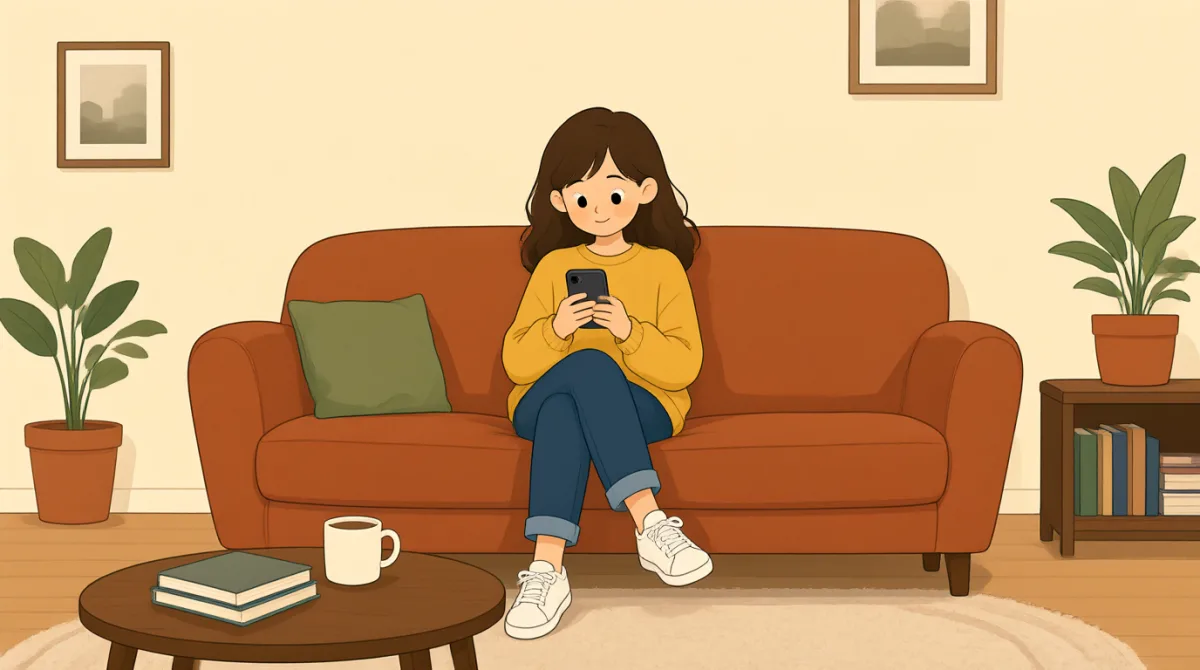

Hi, Grace. I just saw your message. I'm home now after my appointment.
やあ、グレース。今メッセージに気づいたよ。用事が終わって、今は家にいるよ。

Thanks for letting me know, Emma. Did you finish the task before you left?
連絡してくれてありがとう、エマ。帰る前に作業は終わった?
Yes, I finished the report and sent it to you before I left.
うん、帰る前に報告書を仕上げて、グレースに送ったよ。
Great. I got it. Thanks for taking care of that before your appointment.
よかった。受け取ったよ。用事の前に対応してくれてありがとう。
You're welcome. I also left the notes on your desk for tomorrow.
どういたしまして。明日のために、メモもグレースの机に置いておいたよ。
I saw them. Everything looks clear, so you can relax tonight.
見たよ。どれも分かりやすいから、今夜はゆっくり休んでね。
Thanks! I'll check my messages again in the morning.
ありがとう!また朝にメッセージを確認するね。
Sounds good. Have a nice evening, Emma.
いいね。よい夜を過ごしてね、エマ。
語彙7
- just saw your message今メッセージに気づいた
This means you noticed and read someone's message a short time ago. Use it when replying after a delay.
少し前に相手のメッセージに気づいて、読んだという意味です。少し時間がたってから返信するときに使います。
- finish the task作業を終える
This means to complete a piece of work. You can use it to ask if someone completed an assignment.
やるべき仕事を完了するという意味です。誰かが課題や作業を終えたか尋ねるときにも使えます。
- sent it to youあなたに送った
This means you sent something to the person you are speaking to. Use it when telling someone you shared a file or message.
話している相手に何かを送ったという意味です。ファイルやメッセージを共有したことを伝えるときに使います。
- taking care of thatそれに対応する
This means handling or completing something that needs to be done. Use it to thank someone for doing a task.
やるべきことを引き受けたり、完了したりするという意味です。誰かが作業をしてくれたことにお礼を言うときに使えます。
- left the notesメモを置いておいた
This means you put the notes somewhere before going away. Use it to tell someone where you placed something.
その場を離れる前に、メモをどこかに置いたという意味です。何かを置いた場所を伝えるときに使います。
- check my messagesメッセージを確認する
This means to look at your messages and read them. You can use it to talk about checking messages later.
メッセージを見て読むという意味です。あとでメッセージを確認することについて話すときに使えます。
- Have a nice eveningよい夜を過ごしてね
This is a friendly way to wish someone a pleasant evening. Use it when ending a conversation at the end of the day.
相手が楽しい夜を過ごせるよう願う、親しみのある表現です。一日の終わりに会話を締めくくるときに使います。
重要な文8
- 1
I just saw your message.
今メッセージに気づいたよ。
This is a simple way to explain that you are replying after noticing a message. You can replace “your message” with “your email” or “your text.”
メッセージに気づいて返信していることを伝える、シンプルな表現です。“your message”を“your email”や“your text”に置き換えることもできます。
- 2
I'm home now after my appointment.
用事が終わって、今は家にいるよ。
This sentence tells someone where you are and what you did before getting there. You can use the same pattern to say, “I'm home now after work.”
今いる場所と、そこに着く前に何をしたかを伝える文です。同じパターンで、“I'm home now after work.”(仕事が終わって、今は家にいるよ)と言うこともできます。
- 3
Did you finish the task before you left?
帰る前に作業は終わった?
This is a useful question for checking whether someone completed work before going somewhere. Replace “the task” with a specific job or assignment.
どこかへ行く前に仕事を終えたか確認するときに便利な質問です。“the task”を具体的な仕事や課題に置き換えて使えます。
- 4
Yes, I finished the report and sent it to you before I left.
うん、帰る前に報告書を仕上げて、あなたに送ったよ。
This sentence confirms that work is complete and says what you did with it. You can change “the report” to another item, such as “the form.”
作業が終わったことを伝え、仕上げたものをどうしたかも説明する文です。“the report”は“the form”など、別のものに置き換えられます。
- 5
I also left the notes on your desk for tomorrow.
明日のために、メモもあなたの机に置いておいたよ。
This tells someone where you put something and when it is needed. You can use “left” with other items and places, such as “I left the keys by the door.”
何かをどこに置いたか、またそれがいつ必要なのかを伝える文です。“left”はほかの物や場所と組み合わせて、“I left the keys by the door.”(鍵をドアのそばに置いておいたよ)のようにも使えます。
- 6
I'll check my messages again in the morning.
朝にまたメッセージを確認するね。
This is a clear way to say when you plan to look at your messages. Use “I'll” plus an action to talk about a future plan.
いつメッセージを見るつもりか、はっきり伝える表現です。“I'll”のあとに動作を続けると、これからする予定を話せます。
- 7
Everything looks clear, so you can relax tonight.
どれも問題なさそうだから、今夜はゆっくり休んでね。
This sentence reassures someone that there are no problems and encourages them to rest. You can use “Everything looks clear” after reviewing notes or instructions.
問題がないと伝えて、相手に休むよう勧める文です。メモや指示を確認したあとに、“Everything looks clear”を使えます。
- 8
Have a nice evening, Emma.
よい夜を過ごしてね、エマ。
This is a polite, friendly way to end a conversation. You can replace “evening” with “day” or “weekend.”
会話を終えるときに使う、丁寧で親しみのある表現です。“evening”を“day”や“weekend”に置き換えることもできます。