Checking Messages Later
稍後檢視訊息
After her appointment, Emma checks her phone and replies to Grace's message. She lets Grace know that the task is finished.
預約結束後,Emma檢視手機並回復Grace的訊息。她告訴Grace任務已經完成。
對話8
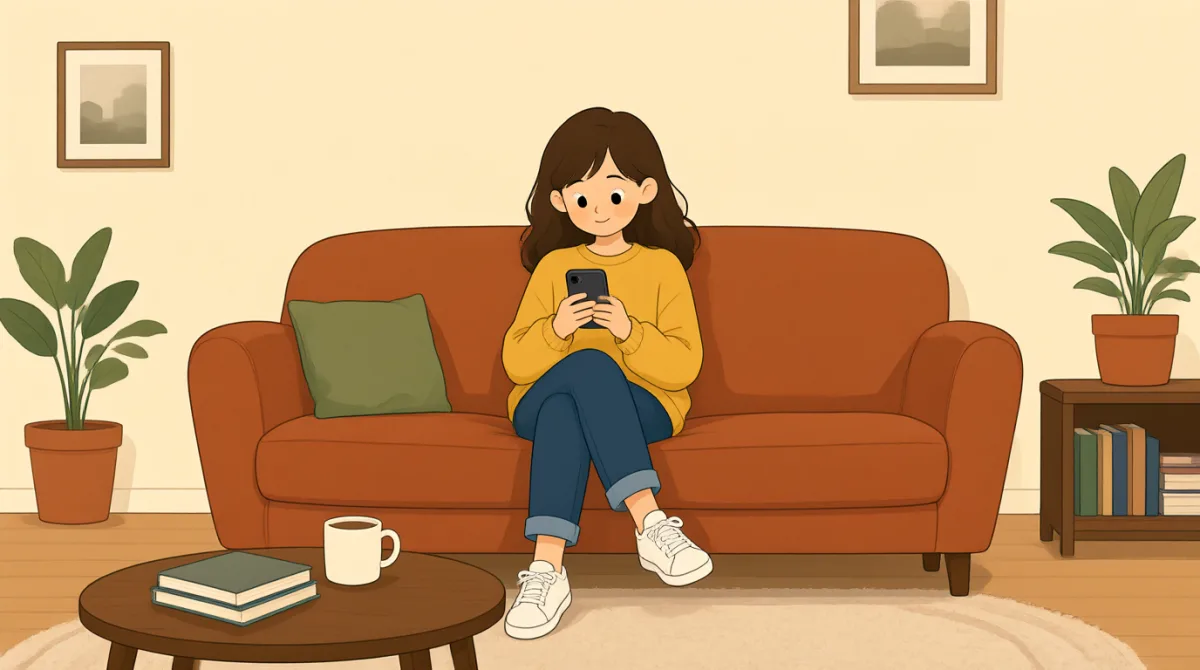

Hi, Grace. I just saw your message. I'm home now after my appointment.
嗨,格蕾絲。我剛看到你的訊息。我看完預約回家了。

Thanks for letting me know, Emma. Did you finish the task before you left?
謝謝你告訴我,艾瑪。你離開前把任務做完了嗎?
Yes, I finished the report and sent it to you before I left.
做完了。我離開前完成了報告,也發給你了。
Great. I got it. Thanks for taking care of that before your appointment.
太好了,我收到了。謝謝你在赴約前把這件事處理好。
You're welcome. I also left the notes on your desk for tomorrow.
不客氣。我還把明天要用的筆記放在你桌上了。
I saw them. Everything looks clear, so you can relax tonight.
我看到了。內容都很清楚,今晚你可以放鬆一下。
Thanks! I'll check my messages again in the morning.
謝謝!我明早會再檢視訊息。
Sounds good. Have a nice evening, Emma.
好的。晚上愉快,艾瑪。
詞彙7
- just saw your message剛看到你的訊息
This means you noticed and read someone's message a short time ago. Use it when replying after a delay.
意思是你剛剛注意到並讀了某人的訊息。回覆得比較晚時,可以這樣說。
- finish the task完成任務
This means to complete a piece of work. You can use it to ask if someone completed an assignment.
意思是完成一項工作。你可以用它來詢問某人是否完成了任務。
- sent it to you發給你了
This means you sent something to the person you are speaking to. Use it when telling someone you shared a file or message.
意思是你把某樣東西發給了正在交談的人。告訴別人你分享了檔案或訊息時,可以這樣說。
- taking care of that處理好這件事
This means handling or completing something that needs to be done. Use it to thank someone for doing a task.
意思是處理或完成一件需要做的事。感謝別人完成某項任務時,可以這樣說。
- left the notes把筆記放在了
This means you put the notes somewhere before going away. Use it to tell someone where you placed something.
意思是你離開前把筆記放在了某個地方。告訴別人你把東西放在哪裡時,可以這樣說。
- check my messages檢視我的訊息
This means to look at your messages and read them. You can use it to talk about checking messages later.
意思是檢視並閱讀你的訊息。談到稍後檢視訊息時,可以這樣說。
- Have a nice evening晚上愉快
This is a friendly way to wish someone a pleasant evening. Use it when ending a conversation at the end of the day.
這是祝別人晚上愉快的一種友好說法。一天結束時結束談話,可以這樣說。
關鍵句8
- 1
I just saw your message.
我剛看到你的訊息。
This is a simple way to explain that you are replying after noticing a message. You can replace “your message” with “your email” or “your text.”
這是一種簡單的說法,用來解釋你看到訊息後才回復。你可以把“your message”換成“your email”或“your text”。
- 2
I'm home now after my appointment.
我赴約後現在到家了。
This sentence tells someone where you are and what you did before getting there. You can use the same pattern to say, “I'm home now after work.”
這句話告訴別人你現在在哪裡,以及到那裡之前做了什麼。你也可以用同樣的句型說:“I'm home now after work.”
- 3
Did you finish the task before you left?
你離開前完成任務了嗎?
This is a useful question for checking whether someone completed work before going somewhere. Replace “the task” with a specific job or assignment.
這是一個實用的問法,可以確認某人離開去別處之前是否完成了工作。你可以把“the task”換成具體的工作或任務。
- 4
Yes, I finished the report and sent it to you before I left.
完成了,我寫完報告後在離開前發給你了。
This sentence confirms that work is complete and says what you did with it. You can change “the report” to another item, such as “the form.”
這句話確認工作已經完成,並說明你對完成的內容做了什麼。你可以把“the report”換成其他東西,比如“the form”。
- 5
I also left the notes on your desk for tomorrow.
我也把明天要用的筆記放在你桌上了。
This tells someone where you put something and when it is needed. You can use “left” with other items and places, such as “I left the keys by the door.”
這句話告訴別人你把東西放在哪裡,以及什麼時候會用到。你也可以用“left”搭配其他物品和地點,比如“I left the keys by the door.”
- 6
I'll check my messages again in the morning.
我明早會再檢視訊息。
This is a clear way to say when you plan to look at your messages. Use “I'll” plus an action to talk about a future plan.
這是一種清楚的說法,用來說明你計劃什麼時候檢視訊息。用“I'll”加上一個動作,可以談論將來的計劃。
- 7
Everything looks clear, so you can relax tonight.
一切看起來都很清楚,所以你今晚可以放鬆一下。
This sentence reassures someone that there are no problems and encourages them to rest. You can use “Everything looks clear” after reviewing notes or instructions.
這句話讓對方放心,表示沒有問題,並鼓勵對方休息。看過筆記或說明後,可以用“Everything looks clear”。
- 8
Have a nice evening, Emma.
晚上愉快,艾瑪。
This is a polite, friendly way to end a conversation. You can replace “evening” with “day” or “weekend.”
這是一種禮貌又友好的結束談話的說法。你可以把“evening”換成“day”或“weekend”。