Checking Messages Later
Revisar los mensajes más tarde
After her appointment, Emma checks her phone and replies to Grace's message. She lets Grace know that the task is finished.
Después de su cita, Emma revisa el teléfono y responde al mensaje de Grace. Le avisa que la tarea está terminada.
Diálogo8
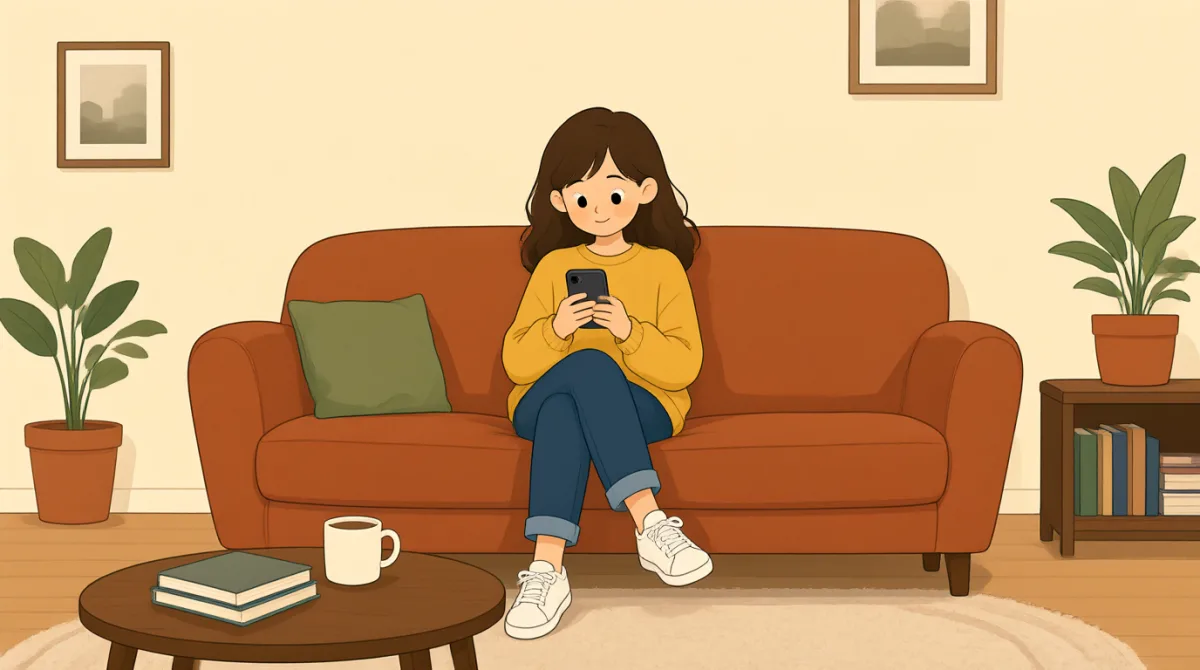

Hi, Grace. I just saw your message. I'm home now after my appointment.
Hola, Grace. Acabo de ver tu mensaje. Ya estoy en casa después de mi cita.

Thanks for letting me know, Emma. Did you finish the task before you left?
Gracias por avisarme, Emma. ¿Terminaste la tarea antes de irte?
Yes, I finished the report and sent it to you before I left.
Sí, terminé el informe y te lo envié antes de irme.
Great. I got it. Thanks for taking care of that before your appointment.
Genial. Ya lo recibí. Gracias por encargarte de eso antes de tu cita.
You're welcome. I also left the notes on your desk for tomorrow.
De nada. También dejé las notas en tu escritorio para mañana.
I saw them. Everything looks clear, so you can relax tonight.
Ya las vi. Todo está claro, así que puedes relajarte esta noche.
Thanks! I'll check my messages again in the morning.
¡Gracias! Volveré a revisar mis mensajes por la mañana.
Sounds good. Have a nice evening, Emma.
Perfecto. Que pases una linda noche, Emma.
Vocabulario7
- just saw your messageacabo de ver tu mensaje
This means you noticed and read someone's message a short time ago. Use it when replying after a delay.
Significa que viste y leíste el mensaje de alguien hace poco. Úsalo cuando respondas después de un rato.
- finish the taskterminar la tarea
This means to complete a piece of work. You can use it to ask if someone completed an assignment.
Significa completar un trabajo. Puedes usarlo para preguntar si alguien terminó una tarea o un encargo.
- sent it to youte lo envié
This means you sent something to the person you are speaking to. Use it when telling someone you shared a file or message.
Significa que le enviaste algo a la persona con la que estás hablando. Úsalo para decirle a alguien que compartiste un archivo o un mensaje.
- taking care of thatencargarte de eso
This means handling or completing something that needs to be done. Use it to thank someone for doing a task.
Significa ocuparse de algo que hay que hacer o terminarlo. Úsalo para agradecerle a alguien por hacer una tarea.
- left the notesdejé las notas
This means you put the notes somewhere before going away. Use it to tell someone where you placed something.
Significa que pusiste las notas en algún lugar antes de irte. Úsalo para decirle a alguien dónde dejaste algo.
- check my messagesrevisar mis mensajes
This means to look at your messages and read them. You can use it to talk about checking messages later.
Significa mirar tus mensajes y leerlos. Puedes usarlo para hablar de revisar los mensajes más tarde.
- Have a nice eveningQue pases una linda noche
This is a friendly way to wish someone a pleasant evening. Use it when ending a conversation at the end of the day.
Es una forma cordial de desearle a alguien que pase una noche agradable. Úsala para terminar una conversación al final del día.
Frases clave8
- 1
I just saw your message.
Acabo de ver tu mensaje.
This is a simple way to explain that you are replying after noticing a message. You can replace “your message” with “your email” or “your text.”
Esta es una forma sencilla de explicar que respondes después de haber visto un mensaje. Puedes cambiar “your message” por “your email” o “your text.”
- 2
I'm home now after my appointment.
Ya estoy en casa después de mi cita.
This sentence tells someone where you are and what you did before getting there. You can use the same pattern to say, “I'm home now after work.”
Esta oración le dice a alguien dónde estás y qué hiciste antes de llegar. Puedes usar la misma estructura para decir “I'm home now after work.”
- 3
Did you finish the task before you left?
¿Terminaste la tarea antes de irte?
This is a useful question for checking whether someone completed work before going somewhere. Replace “the task” with a specific job or assignment.
Esta pregunta sirve para comprobar si alguien terminó un trabajo antes de ir a algún sitio. Cambia “the task” por un trabajo o encargo específico.
- 4
Yes, I finished the report and sent it to you before I left.
Sí, terminé el informe y te lo envié antes de irme.
This sentence confirms that work is complete and says what you did with it. You can change “the report” to another item, such as “the form.”
Esta oración confirma que el trabajo está terminado y dice qué hiciste con él. Puedes cambiar “the report” por otro elemento, como “the form.”
- 5
I also left the notes on your desk for tomorrow.
También dejé las notas en tu escritorio para mañana.
This tells someone where you put something and when it is needed. You can use “left” with other items and places, such as “I left the keys by the door.”
Esto le indica a alguien dónde dejaste algo y cuándo lo necesitará. Puedes usar “left” con otros objetos y lugares, como en “I left the keys by the door.”
- 6
I'll check my messages again in the morning.
Volveré a revisar mis mensajes por la mañana.
This is a clear way to say when you plan to look at your messages. Use “I'll” plus an action to talk about a future plan.
Esta es una forma clara de decir cuándo piensas revisar tus mensajes. Usa “I'll” más una acción para hablar de un plan futuro.
- 7
Everything looks clear, so you can relax tonight.
Todo está claro, así que puedes relajarte esta noche.
This sentence reassures someone that there are no problems and encourages them to rest. You can use “Everything looks clear” after reviewing notes or instructions.
Esta oración tranquiliza a alguien: le dice que no hay ningún problema y lo anima a descansar. Puedes usar “Everything looks clear” después de revisar notas o instrucciones.
- 8
Have a nice evening, Emma.
Que pases una linda noche, Emma.
This is a polite, friendly way to end a conversation. You can replace “evening” with “day” or “weekend.”
Esta es una forma educada y cordial de terminar una conversación. Puedes cambiar “evening” por “day” o “weekend.”