Offering to Help in the Kitchen
キッチンでお手伝い
Grace starts preparing dinner, and Emma offers to help in the kitchen. Grace gives her a simple task.
グレースが夕食の準備を始めると、エマがキッチンで手伝おうと声をかける。グレースは簡単な仕事を頼む。
会話8
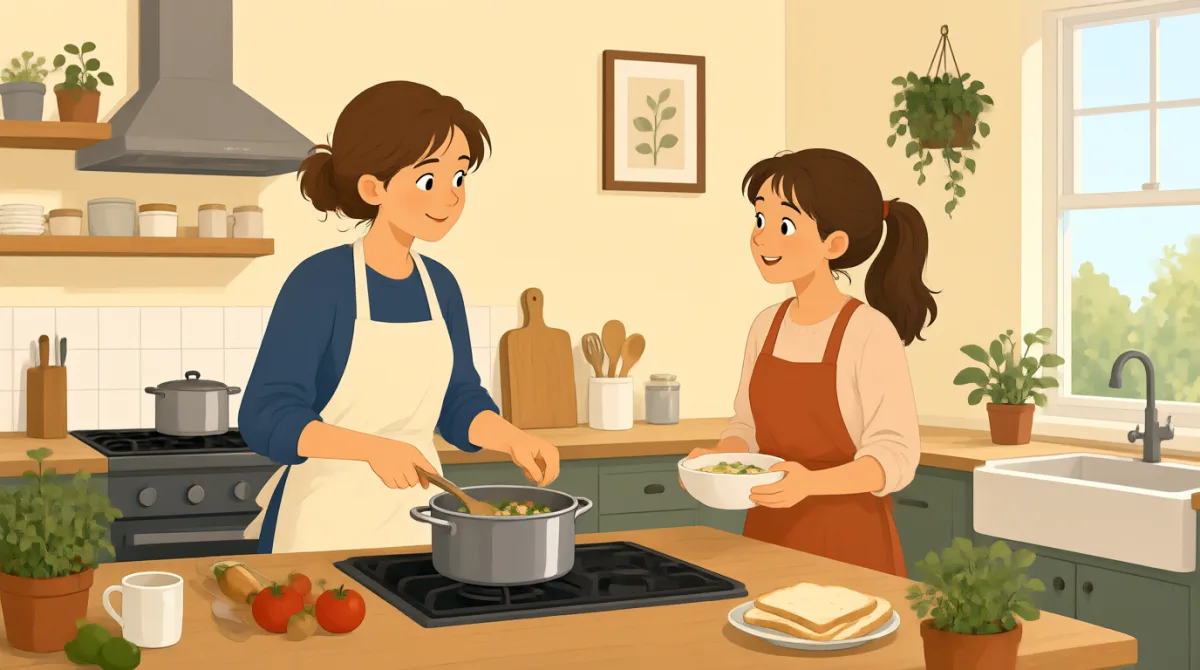

I’m going to get dinner started. Would you like to help me in the kitchen?
夕食の準備を始めるね。キッチンで手伝ってくれる?

Of course! What can I do?
もちろん!何をすればいい?
Could you wash these tomatoes and put them on the counter?
このトマトを洗って、カウンターに置いてくれる?
Sure. Where should I wash them?
いいよ。どこで洗えばいい?
Use the sink over there. The colander is next to it.
あっちのシンクを使って。ザルはその隣にあるよ。
Got it. Do you need help with anything else?
わかった。他に何か手伝おうか?
That’s all for now, thanks. You can slice the bread, if you like.
今のところはこれで全部だよ、ありがとう。よかったらパンを切ってくれる?
I’d be happy to. I’ll get a knife from the drawer.
喜んで。引き出しから包丁を取ってくるね。
語彙8
- get dinner started夕食の準備を始める
To get dinner started means to begin preparing the meal. You can use this phrase when you start making dinner.
“get dinner started” は、食事の準備を始めるという意味です。夕食作りに取りかかるときに使える表現です。
- Would you like to help me手伝ってくれる?
This is a polite way to offer someone a chance to help. You can say, “Would you like to help me with this?”
“Would you like to help me” は、相手に手伝ってもらえるか尋ねる丁寧な言い方です。“Would you like to help me with this?”(これを手伝ってくれる?)のように言えます。
- What can I do?何をすればいい?
Use this question to ask what task you can do to help. It is useful at home or at work.
“What can I do?” は、手伝うために何をすればいいか尋ねる表現です。家でも職場でも役立ちます。
- put them on the counterそれらをカウンターに置く
This means to place the tomatoes on the kitchen counter. You can use “put it on the counter” for one thing.
“put them on the counter” は、トマトをキッチンのカウンターに置くという意味です。物が一つなら “put it on the counter” と言えます。
- the sink over thereあそこのシンク
This refers to the sink in a place nearby. You can use “over there” to point out where something is.
“the sink over there” は、少し離れたところにあるシンクを指します。“over there” は、物の場所を示すときに使えます。
- That’s all for now今のところはこれで全部
This means there is nothing else to do at the moment. You can use it when someone asks if you need more help.
“That’s all for now” は、今の時点では他にすることがないという意味です。相手から、他に手伝うことがあるか聞かれたときに使えます。
- I’d be happy to喜んで
This is a friendly way to say you are willing to do something. You can use it when someone asks you to help.
“I’d be happy to” は、何かを進んで引き受けるときの親しみやすい表現です。手伝いを頼まれたときに使えます。
- get a knife from the drawer引き出しから包丁を取ってくる
This means to take a knife out of the drawer. You can use “get a [thing] from the [place]” to say where you will take something from.
“get a knife from the drawer” は、引き出しから包丁を取り出すという意味です。“get a [thing] from the [place]” を使うと、物をどこから持ってくるか伝えられます。
重要な文8
- 1
Would you like to help me in the kitchen?
キッチンで手伝ってくれる?
This is a polite way to invite someone to help. You can change the place or task, as in “Would you like to help me set the table?”
“Would you like to help me in the kitchen?” は、相手に手伝ってもらえないか丁寧に誘う表現です。場所や作業を変えて、“Would you like to help me set the table?”(テーブルの準備を手伝ってくれる?)のようにも言えます。
- 2
Of course!
もちろん!
Use this friendly phrase to agree readily. It works well when someone asks if you can help.
“Of course!” は、快く引き受けるときに使う親しみやすい表現です。手伝えるか聞かれたときにもぴったりです。
- 3
What can I do?
何をすればいい?
This is a simple way to ask what task is needed. You can use it when you want to be helpful but do not know what to do.
“What can I do?” は、どんな作業が必要か簡単に尋ねる表現です。手伝いたいけれど、何をすればいいかわからないときに使えます。
- 4
Could you wash these tomatoes and put them on the counter?
このトマトを洗って、カウンターに置いてくれる?
This is a polite request that gives two clear instructions. You can use “Could you [action] and [action]?” to ask someone to do two things.
“Could you wash these tomatoes and put them on the counter?” は、二つの作業をわかりやすく頼む丁寧な表現です。“Could you [action] and [action]?” の形で、二つのことをお願いできます。
- 5
Where should I wash them?
どこで洗えばいい?
Use this question to ask where you should do a task. You can replace “wash them” with another action, such as “put these plates.”
“Where should I wash them?” は、作業をどこですればよいか尋ねる表現です。“wash them” を “put these plates”(このお皿を置く)など別の作業に置き換えられます。
- 6
Do you need help with anything else?
他に何か手伝おうか?
This is a useful way to offer more help after finishing a task. You can use it at home, at work, or while helping a friend.
“Do you need help with anything else?” は、一つの作業が終わったあとに、さらに手伝いを申し出る便利な表現です。家でも職場でも、友達を手伝うときにも使えます。
- 7
That’s all for now, thanks.
今のところはこれで全部だよ、ありがとう。
This is a polite way to say no more help is needed at the moment. You can use “for now” when that might change later.
“That’s all for now, thanks.” は、今はもう手伝いが必要ないと伝える丁寧な表現です。“for now” は、あとで状況が変わる可能性があるときに使います。
- 8
I’d be happy to.
喜んで。
This is a warm way to accept a request or offer. You can use it before doing a helpful task.
“I’d be happy to.” は、頼みや申し出を温かく引き受ける表現です。誰かの役に立つ作業を始める前に使えます。