Offering to Help in the Kitchen
Oferowanie pomocy w kuchni
Grace starts preparing dinner, and Emma offers to help in the kitchen. Grace gives her a simple task.
Grace zaczyna przygotowywać kolację, a Emma oferuje pomoc w kuchni. Grace przydziela jej proste zadanie.
Dialog8
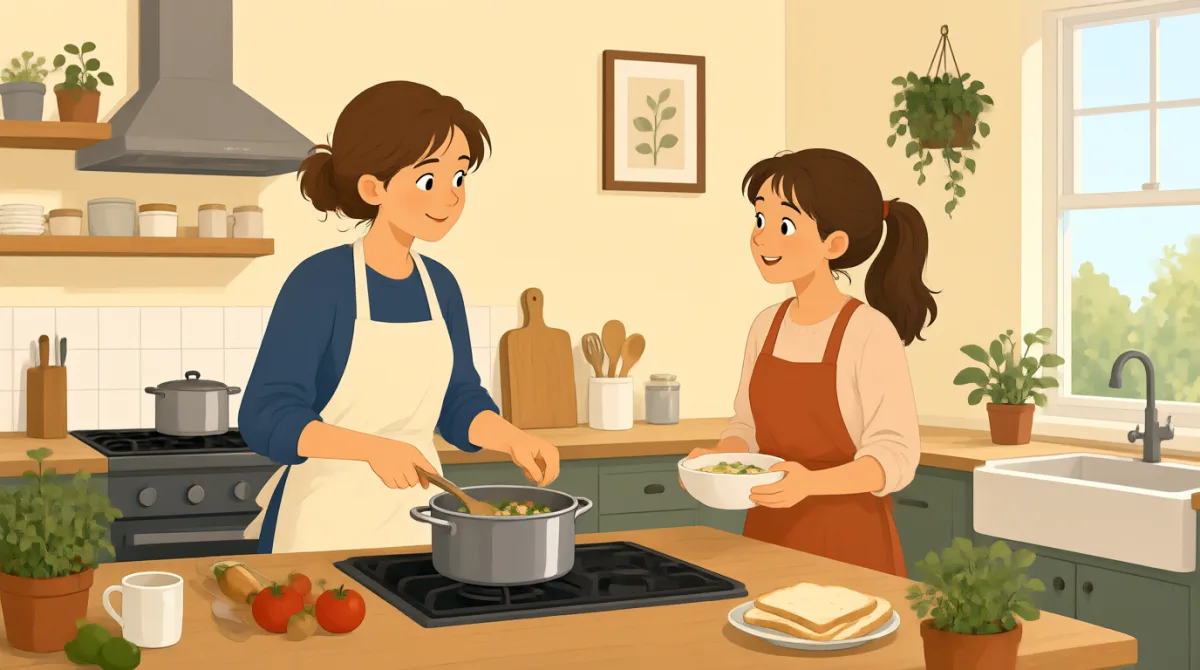

I’m going to get dinner started. Would you like to help me in the kitchen?
Zabieram się za przygotowywanie kolacji. Chcesz mi pomóc w kuchni?

Of course! What can I do?
Jasne! Co mogę zrobić?
Could you wash these tomatoes and put them on the counter?
Możesz umyć te pomidory i położyć je na blacie?
Sure. Where should I wash them?
Pewnie. Gdzie mam je umyć?
Use the sink over there. The colander is next to it.
Użyj zlewu tam. Durszlak jest obok.
Got it. Do you need help with anything else?
Jasne. Potrzebujesz pomocy z czymś jeszcze?
That’s all for now, thanks. You can slice the bread, if you like.
Na razie to wszystko, dzięki. Możesz pokroić chleb, jeśli masz ochotę.
I’d be happy to. I’ll get a knife from the drawer.
Chętnie. Wyjmę nóż z szuflady.
Słownictwo8
- get dinner startedzabrać się za przygotowywanie kolacji
To get dinner started means to begin preparing the meal. You can use this phrase when you start making dinner.
„get dinner started” oznacza rozpocząć przygotowywanie posiłku. Możesz użyć tego zwrotu, gdy zaczynasz robić kolację.
- Would you like to help meChcesz mi pomóc
This is a polite way to offer someone a chance to help. You can say, “Would you like to help me with this?”
To uprzejmy sposób, by zaproponować komuś pomoc. Możesz powiedzieć: „Would you like to help me with this?” (Czy chcesz mi w tym pomóc?).
- What can I do?Co mogę zrobić?
Use this question to ask what task you can do to help. It is useful at home or at work.
Użyj tego pytania, by dowiedzieć się, jakie zadanie możesz wykonać, żeby pomóc. Przydaje się w domu i w pracy.
- put them on the counterpołożyć je na blacie
This means to place the tomatoes on the kitchen counter. You can use “put it on the counter” for one thing.
To znaczy położyć pomidory na kuchennym blacie. Gdy mówisz o jednej rzeczy, możesz użyć zwrotu „put it on the counter”.
- the sink over therezlew tam
This refers to the sink in a place nearby. You can use “over there” to point out where something is.
To określenie zlewu znajdującego się w pobliżu. Możesz użyć „over there”, by wskazać, gdzie coś się znajduje.
- That’s all for nowNa razie to wszystko
This means there is nothing else to do at the moment. You can use it when someone asks if you need more help.
To znaczy, że w tej chwili nie ma już nic do zrobienia. Możesz tak powiedzieć, gdy ktoś pyta, czy potrzebujesz jeszcze pomocy.
- I’d be happy toChętnie
This is a friendly way to say you are willing to do something. You can use it when someone asks you to help.
To przyjazny sposób, by powiedzieć, że z przyjemnością coś zrobisz. Możesz użyć tego zwrotu, gdy ktoś prosi cię o pomoc.
- get a knife from the drawerwyjąć nóż z szuflady
This means to take a knife out of the drawer. You can use “get a [thing] from the [place]” to say where you will take something from.
To znaczy wyjąć nóż z szuflady. Użyj „get a [thing] from the [place]”, by powiedzieć, skąd coś wyjmiesz.
Kluczowe zdania8
- 1
Would you like to help me in the kitchen?
Chcesz mi pomóc w kuchni?
This is a polite way to invite someone to help. You can change the place or task, as in “Would you like to help me set the table?”
To uprzejmy sposób, by zaprosić kogoś do pomocy. Możesz zmienić miejsce lub zadanie, na przykład: „Would you like to help me set the table?” (Czy chcesz mi pomóc nakryć do stołu?).
- 2
Of course!
Jasne!
Use this friendly phrase to agree readily. It works well when someone asks if you can help.
Użyj tego przyjaznego zwrotu, by od razu się zgodzić. Dobrze pasuje, gdy ktoś pyta, czy możesz pomóc.
- 3
What can I do?
Co mogę zrobić?
This is a simple way to ask what task is needed. You can use it when you want to be helpful but do not know what to do.
To prosty sposób, by zapytać, jakie zadanie trzeba wykonać. Możesz tak powiedzieć, gdy chcesz pomóc, ale nie wiesz, co zrobić.
- 4
Could you wash these tomatoes and put them on the counter?
Możesz umyć te pomidory i położyć je na blacie?
This is a polite request that gives two clear instructions. You can use “Could you [action] and [action]?” to ask someone to do two things.
To uprzejma prośba zawierająca dwie jasne instrukcje. Możesz użyć „Could you [action] and [action]?”, by poprosić kogoś o zrobienie dwóch rzeczy.
- 5
Where should I wash them?
Gdzie mam je umyć?
Use this question to ask where you should do a task. You can replace “wash them” with another action, such as “put these plates.”
Użyj tego pytania, by dowiedzieć się, gdzie wykonać dane zadanie. Możesz zastąpić „wash them” inną czynnością, na przykład „put these plates”.
- 6
Do you need help with anything else?
Potrzebujesz pomocy z czymś jeszcze?
This is a useful way to offer more help after finishing a task. You can use it at home, at work, or while helping a friend.
To przydatny sposób, by zaoferować dalszą pomoc po skończeniu zadania. Możesz użyć tego pytania w domu, w pracy lub pomagając znajomemu.
- 7
That’s all for now, thanks.
Na razie to wszystko, dzięki.
This is a polite way to say no more help is needed at the moment. You can use “for now” when that might change later.
To uprzejmy sposób, by powiedzieć, że w tej chwili nie potrzeba już pomocy. Możesz użyć „for now”, gdy sytuacja może się później zmienić.
- 8
I’d be happy to.
Chętnie.
This is a warm way to accept a request or offer. You can use it before doing a helpful task.
To serdeczny sposób, by przyjąć prośbę lub ofertę. Możesz powiedzieć tak, zanim zabierzesz się za pomocne zadanie.