Offering to Help in the Kitchen
อาสาช่วยในครัว
Grace starts preparing dinner, and Emma offers to help in the kitchen. Grace gives her a simple task.
เกรซเริ่มเตรียมอาหารเย็น ส่วนเอมมาอาสาช่วยในครัว เกรซมอบหมายงานง่าย ๆ ให้เธอ
บทสนทนา8
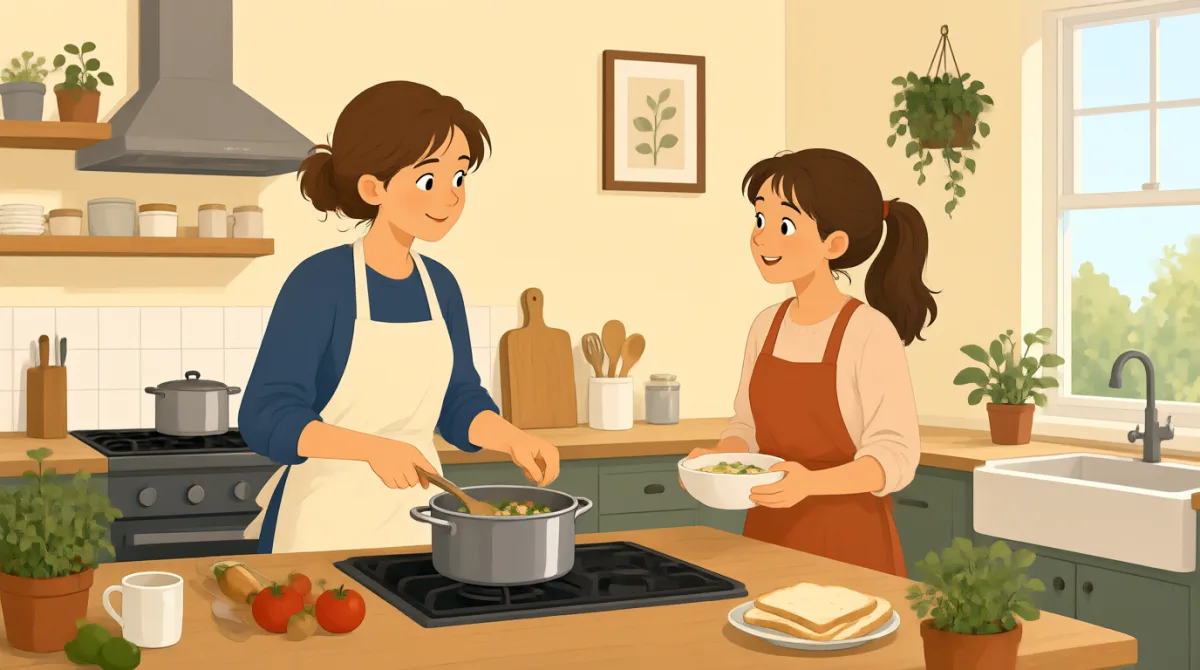

I’m going to get dinner started. Would you like to help me in the kitchen?
ฉันจะเริ่มทำอาหารเย็นแล้วนะ อยากช่วยฉันในครัวไหม?

Of course! What can I do?
แน่นอน! มีอะไรให้ฉันทำบ้าง?
Could you wash these tomatoes and put them on the counter?
ช่วยล้างมะเขือเทศพวกนี้แล้วเอาไปวางบนเคาน์เตอร์ได้ไหม?
Sure. Where should I wash them?
ได้สิ ฉันควรล้างตรงไหน?
Use the sink over there. The colander is next to it.
ใช้ซิงก์ตรงโน้นสิ กระชอนอยู่ข้าง ๆ นั่นแหละ
Got it. Do you need help with anything else?
เข้าใจแล้ว มีอะไรให้ช่วยอีกไหม?
That’s all for now, thanks. You can slice the bread, if you like.
ตอนนี้แค่นี้ก็พอแล้ว ขอบใจนะ ถ้าอยากช่วยก็หั่นขนมปังได้เลย
I’d be happy to. I’ll get a knife from the drawer.
ยินดีเลย ฉันจะหยิบมีดจากลิ้นชักนะ
คำศัพท์8
- get dinner startedเริ่มทำอาหารเย็น
To get dinner started means to begin preparing the meal. You can use this phrase when you start making dinner.
“get dinner started” หมายถึงเริ่มเตรียมอาหารเย็น ใช้วลีนี้เมื่อเริ่มทำอาหารเย็นได้เลย
- Would you like to help meอยากช่วยฉันไหม
This is a polite way to offer someone a chance to help. You can say, “Would you like to help me with this?”
นี่เป็นวิธีสุภาพในการถามว่าอีกฝ่ายอยากช่วยไหม เช่น “Would you like to help me with this?” (อยากช่วยฉันทำสิ่งนี้ไหม?)
- What can I do?ฉันทำอะไรได้บ้าง?
Use this question to ask what task you can do to help. It is useful at home or at work.
ใช้คำถามนี้เพื่อถามว่ามีงานอะไรที่เราช่วยทำได้บ้าง เหมาะทั้งที่บ้านและที่ทำงาน
- put them on the counterเอาพวกมันไปวางบนเคาน์เตอร์
This means to place the tomatoes on the kitchen counter. You can use “put it on the counter” for one thing.
หมายถึงวางมะเขือเทศไว้บนเคาน์เตอร์ในครัว ถ้ามีของชิ้นเดียว ใช้ “put it on the counter” ได้
- the sink over thereซิงก์ตรงโน้น
This refers to the sink in a place nearby. You can use “over there” to point out where something is.
หมายถึงซิงก์ที่อยู่ตรงบริเวณใกล้ ๆ ใช้ “over there” เพื่อชี้บอกว่าสิ่งของอยู่ตรงไหนได้
- That’s all for nowตอนนี้แค่นี้ก็พอแล้ว
This means there is nothing else to do at the moment. You can use it when someone asks if you need more help.
หมายความว่าตอนนี้ไม่มีอะไรต้องทำเพิ่ม ใช้พูดได้เมื่อมีคนถามว่าต้องการความช่วยเหลือเพิ่มไหม
- I’d be happy toยินดีเลย
This is a friendly way to say you are willing to do something. You can use it when someone asks you to help.
เป็นวิธีพูดอย่างเป็นมิตรว่าเราเต็มใจทำอะไรสักอย่าง ใช้ได้เมื่อมีคนขอให้ช่วย
- get a knife from the drawerหยิบมีดจากลิ้นชัก
This means to take a knife out of the drawer. You can use “get a [thing] from the [place]” to say where you will take something from.
หมายถึงเอามีดออกมาจากลิ้นชัก ใช้ “get a [thing] from the [place]” เพื่อบอกว่าจะหยิบสิ่งของจากที่ไหน
ประโยคสำคัญ8
- 1
Would you like to help me in the kitchen?
อยากช่วยฉันในครัวไหม?
This is a polite way to invite someone to help. You can change the place or task, as in “Would you like to help me set the table?”
นี่เป็นวิธีสุภาพในการชวนใครสักคนมาช่วย เปลี่ยนสถานที่หรืองานที่ขอให้ช่วยได้ เช่น “Would you like to help me set the table?” (อยากช่วยฉันจัดโต๊ะไหม?)
- 2
Of course!
แน่นอน!
Use this friendly phrase to agree readily. It works well when someone asks if you can help.
ใช้วลีที่เป็นมิตรนี้เพื่อตอบตกลงอย่างเต็มใจ เหมาะเมื่อมีคนถามว่าช่วยได้ไหม
- 3
What can I do?
ฉันทำอะไรได้บ้าง?
This is a simple way to ask what task is needed. You can use it when you want to be helpful but do not know what to do.
เป็นวิธีง่าย ๆ ในการถามว่าต้องทำงานอะไร ใช้ได้เมื่ออยากช่วยแต่ยังไม่รู้ว่าควรทำอะไร
- 4
Could you wash these tomatoes and put them on the counter?
ช่วยล้างมะเขือเทศพวกนี้แล้วเอาไปวางบนเคาน์เตอร์ได้ไหม?
This is a polite request that gives two clear instructions. You can use “Could you [action] and [action]?” to ask someone to do two things.
นี่เป็นคำขอร้องสุภาพที่บอกคำสั่งสองอย่างอย่างชัดเจน ใช้ “Could you [action] and [action]?” เพื่อขอให้ใครทำสองอย่างได้
- 5
Where should I wash them?
ฉันควรล้างพวกมันตรงไหน?
Use this question to ask where you should do a task. You can replace “wash them” with another action, such as “put these plates.”
ใช้คำถามนี้เพื่อถามว่าควรทำงานตรงไหน เปลี่ยน “wash them” เป็นการกระทำอื่นได้ เช่น “put these plates”
- 6
Do you need help with anything else?
มีอะไรให้ช่วยอีกไหม?
This is a useful way to offer more help after finishing a task. You can use it at home, at work, or while helping a friend.
เป็นวิธีที่มีประโยชน์ในการเสนอตัวช่วยเพิ่มหลังทำงานเสร็จ ใช้ได้ที่บ้าน ที่ทำงาน หรือเวลาช่วยเพื่อน
- 7
That’s all for now, thanks.
ตอนนี้แค่นี้ก็พอแล้ว ขอบใจนะ
This is a polite way to say no more help is needed at the moment. You can use “for now” when that might change later.
เป็นวิธีสุภาพในการบอกว่าตอนนี้ไม่ต้องการความช่วยเหลือเพิ่ม ใช้ “for now” เมื่อสิ่งนี้อาจเปลี่ยนแปลงได้ในภายหลัง
- 8
I’d be happy to.
ยินดีเลย
This is a warm way to accept a request or offer. You can use it before doing a helpful task.
เป็นคำตอบรับคำขอหรือข้อเสนออย่างอบอุ่น ใช้พูดก่อนลงมือช่วยทำงานได้