Offering to Help in the Kitchen
रसोई में मदद की पेशकश करना
Grace starts preparing dinner, and Emma offers to help in the kitchen. Grace gives her a simple task.
ग्रेस रात का खाना बनाने की तैयारी शुरू करती है और एमा रसोई में मदद करने की पेशकश करती है। ग्रेस उसे एक आसान काम देती है।
संवाद8
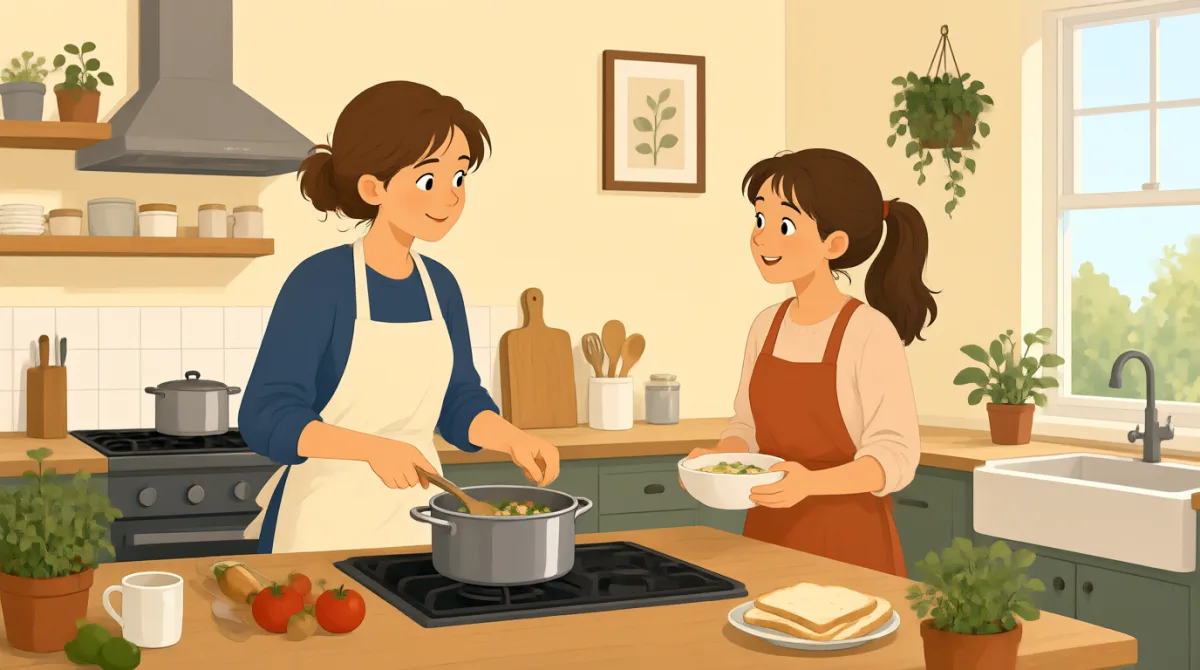

I’m going to get dinner started. Would you like to help me in the kitchen?
मैं रात का खाना बनाना शुरू करने वाली हूँ। क्या तुम रसोई में मेरी मदद करना चाहोगी?

Of course! What can I do?
बिलकुल! मैं क्या कर सकती हूँ?
Could you wash these tomatoes and put them on the counter?
क्या तुम ये टमाटर धोकर काउंटर पर रख दोगी?
Sure. Where should I wash them?
ज़रूर। मैं इन्हें कहाँ धोऊँ?
Use the sink over there. The colander is next to it.
वहाँ जो सिंक है, उसमें धो लो। छलनी उसके पास ही है।
Got it. Do you need help with anything else?
समझ गई। क्या तुम्हें किसी और चीज़ में मदद चाहिए?
That’s all for now, thanks. You can slice the bread, if you like.
अभी के लिए इतना ही, शुक्रिया। अगर तुम्हारा मन हो तो ब्रेड काट सकती हो।
I’d be happy to. I’ll get a knife from the drawer.
मुझे खुशी होगी। मैं दराज़ से चाकू ले आती हूँ।
शब्दावली8
- get dinner startedरात का खाना बनाना शुरू करना
To get dinner started means to begin preparing the meal. You can use this phrase when you start making dinner.
“get dinner started” का मतलब है खाना बनाने की तैयारी शुरू करना। रात का खाना बनाना शुरू करते समय तुम इस वाक्यांश का इस्तेमाल कर सकती हो।
- Would you like to help meक्या तुम मेरी मदद करना चाहोगी
This is a polite way to offer someone a chance to help. You can say, “Would you like to help me with this?”
किसी को मदद करने का मौका देने का यह एक विनम्र तरीका है। तुम कह सकती हो, “Would you like to help me with this?” (क्या तुम इसमें मेरी मदद करना चाहोगी?)
- What can I do?मैं क्या कर सकती हूँ?
Use this question to ask what task you can do to help. It is useful at home or at work.
मदद करने के लिए कौन-सा काम कर सकती हो, यह पूछने के लिए इस सवाल का इस्तेमाल करो। घर या काम की जगह पर यह बहुत उपयोगी है।
- put them on the counterउन्हें काउंटर पर रखना
This means to place the tomatoes on the kitchen counter. You can use “put it on the counter” for one thing.
इसका मतलब है टमाटरों को रसोई के काउंटर पर रखना। एक चीज़ के लिए तुम “put it on the counter” कह सकती हो।
- the sink over thereवहाँ का सिंक
This refers to the sink in a place nearby. You can use “over there” to point out where something is.
यह पास में मौजूद सिंक की ओर इशारा करता है। किसी चीज़ की जगह बताने के लिए तुम “over there” का इस्तेमाल कर सकती हो।
- That’s all for nowअभी के लिए इतना ही
This means there is nothing else to do at the moment. You can use it when someone asks if you need more help.
इसका मतलब है कि इस समय करने के लिए और कुछ नहीं है। जब कोई पूछे कि तुम्हें और मदद चाहिए या नहीं, तब तुम इसका इस्तेमाल कर सकती हो।
- I’d be happy toमुझे खुशी होगी
This is a friendly way to say you are willing to do something. You can use it when someone asks you to help.
कुछ करने की इच्छा जताने का यह एक दोस्ताना तरीका है। जब कोई तुमसे मदद करने को कहे, तब तुम इसका इस्तेमाल कर सकती हो।
- get a knife from the drawerदराज़ से चाकू लेना
This means to take a knife out of the drawer. You can use “get a [thing] from the [place]” to say where you will take something from.
इसका मतलब है दराज़ में से चाकू निकालना। कोई चीज़ कहाँ से लोगी, यह बताने के लिए तुम “get a [thing] from the [place]” का इस्तेमाल कर सकती हो।
मुख्य वाक्य8
- 1
Would you like to help me in the kitchen?
क्या तुम रसोई में मेरी मदद करना चाहोगी?
This is a polite way to invite someone to help. You can change the place or task, as in “Would you like to help me set the table?”
किसी को मदद करने के लिए बुलाने का यह एक विनम्र तरीका है। तुम जगह या काम बदलकर भी कह सकती हो, जैसे “Would you like to help me set the table?” (क्या तुम मेज़ लगाने में मेरी मदद करना चाहोगी?)
- 2
Of course!
बिलकुल!
Use this friendly phrase to agree readily. It works well when someone asks if you can help.
तुरंत सहमति जताने के लिए इस दोस्ताना वाक्यांश का इस्तेमाल करो। जब कोई पूछे कि क्या तुम मदद कर सकती हो, तब यह अच्छा लगता है।
- 3
What can I do?
मैं क्या कर सकती हूँ?
This is a simple way to ask what task is needed. You can use it when you want to be helpful but do not know what to do.
कौन-सा काम करना है, यह पूछने का यह एक आसान तरीका है। जब तुम मदद करना चाहती हो लेकिन समझ नहीं पा रही कि क्या करना है, तब इसका इस्तेमाल कर सकती हो।
- 4
Could you wash these tomatoes and put them on the counter?
क्या तुम ये टमाटर धोकर काउंटर पर रख दोगी?
This is a polite request that gives two clear instructions. You can use “Could you [action] and [action]?” to ask someone to do two things.
यह एक विनम्र अनुरोध है जिसमें दो साफ़ निर्देश दिए गए हैं। किसी से दो काम करवाने के लिए तुम “Could you [action] and [action]?” का इस्तेमाल कर सकती हो।
- 5
Where should I wash them?
मैं इन्हें कहाँ धोऊँ?
Use this question to ask where you should do a task. You can replace “wash them” with another action, such as “put these plates.”
किसी काम को कहाँ करना है, यह पूछने के लिए इस सवाल का इस्तेमाल करो। तुम “wash them” की जगह कोई दूसरा काम रख सकती हो, जैसे “put these plates.”
- 6
Do you need help with anything else?
क्या तुम्हें किसी और चीज़ में मदद चाहिए?
This is a useful way to offer more help after finishing a task. You can use it at home, at work, or while helping a friend.
कोई काम पूरा करने के बाद और मदद की पेशकश करने का यह एक उपयोगी तरीका है। तुम इसका इस्तेमाल घर पर, काम की जगह पर या किसी दोस्त की मदद करते समय कर सकती हो।
- 7
That’s all for now, thanks.
अभी के लिए इतना ही, शुक्रिया।
This is a polite way to say no more help is needed at the moment. You can use “for now” when that might change later.
इस समय और मदद की ज़रूरत नहीं है, यह कहने का यह एक विनम्र तरीका है। अगर बाद में स्थिति बदल सकती है, तो तुम “for now” का इस्तेमाल कर सकती हो।
- 8
I’d be happy to.
मुझे खुशी होगी।
This is a warm way to accept a request or offer. You can use it before doing a helpful task.
किसी अनुरोध या पेशकश को अपनापन दिखाते हुए स्वीकार करने का यह एक अच्छा तरीका है। कोई मदद का काम करने से पहले तुम इसका इस्तेमाल कर सकती हो।