Offering to Help in the Kitchen
Mutfakta Yardım Teklif Etmek
Grace starts preparing dinner, and Emma offers to help in the kitchen. Grace gives her a simple task.
Grace akşam yemeğini hazırlamaya başlar, Emma da mutfakta yardım etmeyi teklif eder. Grace ona basit bir iş verir.
Diyalog8
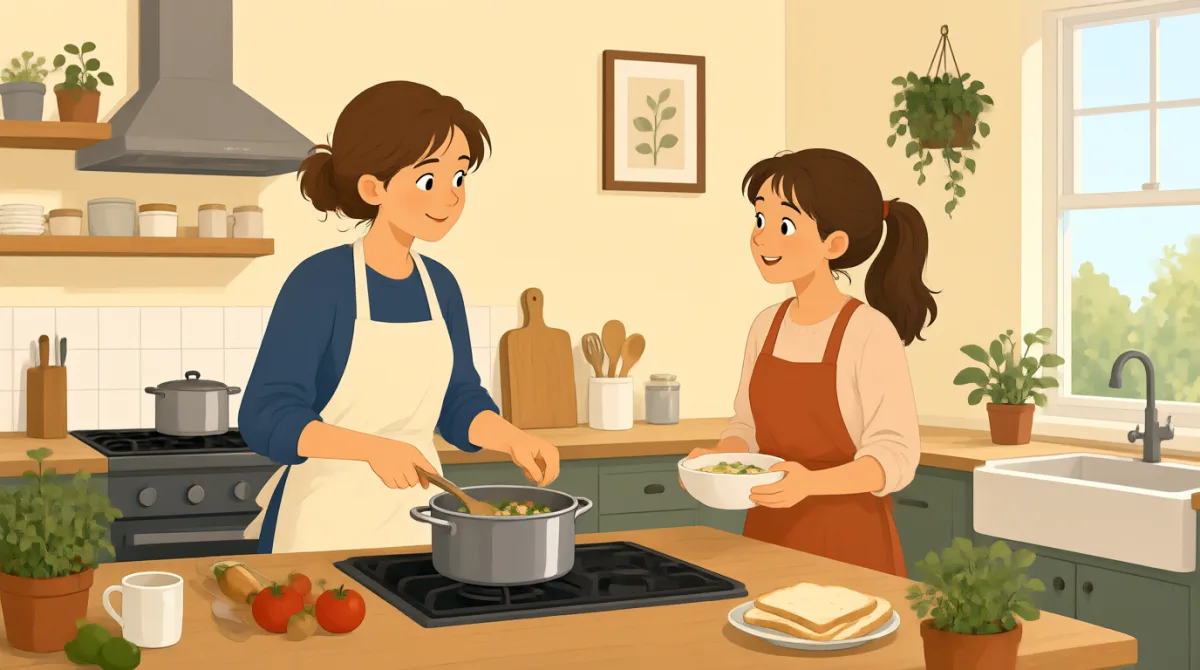

I’m going to get dinner started. Would you like to help me in the kitchen?
Akşam yemeğini hazırlamaya başlayacağım. Mutfakta bana yardım etmek ister misin?

Of course! What can I do?
Tabii! Ne yapabilirim?
Could you wash these tomatoes and put them on the counter?
Şu domatesleri yıkayıp tezgâha koyar mısın?
Sure. Where should I wash them?
Olur. Onları nerede yıkayayım?
Use the sink over there. The colander is next to it.
Şuradaki lavaboyu kullan. Süzgeç yanında.
Got it. Do you need help with anything else?
Anladım. Başka bir konuda yardıma ihtiyacın var mı?
That’s all for now, thanks. You can slice the bread, if you like.
Şimdilik bu kadar, teşekkürler. İstersen ekmeği dilimleyebilirsin.
I’d be happy to. I’ll get a knife from the drawer.
Seve seve. Çekmeceden bir bıçak alayım.
Kelime Bilgisi8
- get dinner startedakşam yemeğini hazırlamaya başlamak
To get dinner started means to begin preparing the meal. You can use this phrase when you start making dinner.
“get dinner started”, yemeği hazırlamaya başlamak demektir. Akşam yemeğini yapmaya koyulduğunda bu ifadeyi kullanabilirsin.
- Would you like to help meBana yardım etmek ister misin?
This is a polite way to offer someone a chance to help. You can say, “Would you like to help me with this?”
“Would you like to help me”, birine yardım etme fırsatı sunmanın kibar bir yoludur. “Would you like to help me with this?” diyebilirsin.
- What can I do?Ne yapabilirim?
Use this question to ask what task you can do to help. It is useful at home or at work.
Yardım etmek için hangi işi yapabileceğini sormak için bu soruyu kullan. Evde veya işte işe yarar.
- put them on the counteronları tezgâha koymak
This means to place the tomatoes on the kitchen counter. You can use “put it on the counter” for one thing.
“put them on the counter”, domatesleri mutfak tezgâhına koymak demektir. Tek bir şey için “put it on the counter” diyebilirsin.
- the sink over thereşuradaki lavabo
This refers to the sink in a place nearby. You can use “over there” to point out where something is.
“the sink over there”, yakındaki bir yerde bulunan lavaboyu ifade eder. Bir şeyin nerede olduğunu göstermek için “over there” diyebilirsin.
- That’s all for nowŞimdilik bu kadar
This means there is nothing else to do at the moment. You can use it when someone asks if you need more help.
“That’s all for now”, şu an yapılacak başka bir şey olmadığı anlamına gelir. Birisi daha fazla yardıma ihtiyacın olup olmadığını sorduğunda kullanabilirsin.
- I’d be happy toSeve seve
This is a friendly way to say you are willing to do something. You can use it when someone asks you to help.
“I’d be happy to”, bir şeyi yapmaya gönüllü olduğunu söylemenin samimi bir yoludur. Birisi senden yardım istediğinde kullanabilirsin.
- get a knife from the drawerçekmeceden bir bıçak almak
This means to take a knife out of the drawer. You can use “get a [thing] from the [place]” to say where you will take something from.
“get a knife from the drawer”, çekmeceden bir bıçak çıkarmak demektir. Bir şeyi nereden alacağını belirtmek için “get a [thing] from the [place]” kalıbını kullanabilirsin.
Önemli Cümleler8
- 1
Would you like to help me in the kitchen?
Mutfakta bana yardım etmek ister misin?
This is a polite way to invite someone to help. You can change the place or task, as in “Would you like to help me set the table?”
Bu, birini yardım etmeye davet etmenin kibar bir yoludur. “Would you like to help me set the table?” örneğindeki gibi yeri veya işi değiştirebilirsin.
- 2
Of course!
Tabii!
Use this friendly phrase to agree readily. It works well when someone asks if you can help.
Bu samimi ifadeyi, bir teklifi hemen kabul etmek için kullan. Birisi yardım edip edemeyeceğini sorduğunda çok uygundur.
- 3
What can I do?
Ne yapabilirim?
This is a simple way to ask what task is needed. You can use it when you want to be helpful but do not know what to do.
Bu, hangi işin yapılması gerektiğini sormanın basit bir yoludur. Yardım etmek isteyip ne yapacağını bilmediğinde kullanabilirsin.
- 4
Could you wash these tomatoes and put them on the counter?
Şu domatesleri yıkayıp tezgâha koyar mısın?
This is a polite request that gives two clear instructions. You can use “Could you [action] and [action]?” to ask someone to do two things.
Bu, iki açık yönerge veren kibar bir istektir. Birinden iki şey yapmasını istemek için “Could you [action] and [action]?” kalıbını kullanabilirsin.
- 5
Where should I wash them?
Onları nerede yıkayayım?
Use this question to ask where you should do a task. You can replace “wash them” with another action, such as “put these plates.”
Bir işi nerede yapman gerektiğini sormak için bu soruyu kullan. “wash them” yerine “put these plates” gibi başka bir eylem koyabilirsin.
- 6
Do you need help with anything else?
Başka bir konuda yardıma ihtiyacın var mı?
This is a useful way to offer more help after finishing a task. You can use it at home, at work, or while helping a friend.
Bir işi bitirdikten sonra daha fazla yardım teklif etmenin kullanışlı bir yoludur. Evde, işte veya bir arkadaşına yardım ederken kullanabilirsin.
- 7
That’s all for now, thanks.
Şimdilik bu kadar, teşekkürler.
This is a polite way to say no more help is needed at the moment. You can use “for now” when that might change later.
Bu, şu an için başka yardıma gerek olmadığını kibarca söylemenin bir yoludur. Daha sonra durum değişebilecekse “for now” kullanabilirsin.
- 8
I’d be happy to.
Seve seve.
This is a warm way to accept a request or offer. You can use it before doing a helpful task.
Bu, bir isteği veya teklifi içtenlikle kabul etmenin bir yoludur. Yardım gerektiren bir işe başlamadan önce kullanabilirsin.