Offering to Help in the Kitchen
主动在厨房帮忙
Grace starts preparing dinner, and Emma offers to help in the kitchen. Grace gives her a simple task.
Grace 开始准备晚餐,Emma 主动提出在厨房帮忙。Grace 给她安排了一项简单的任务。
对话8
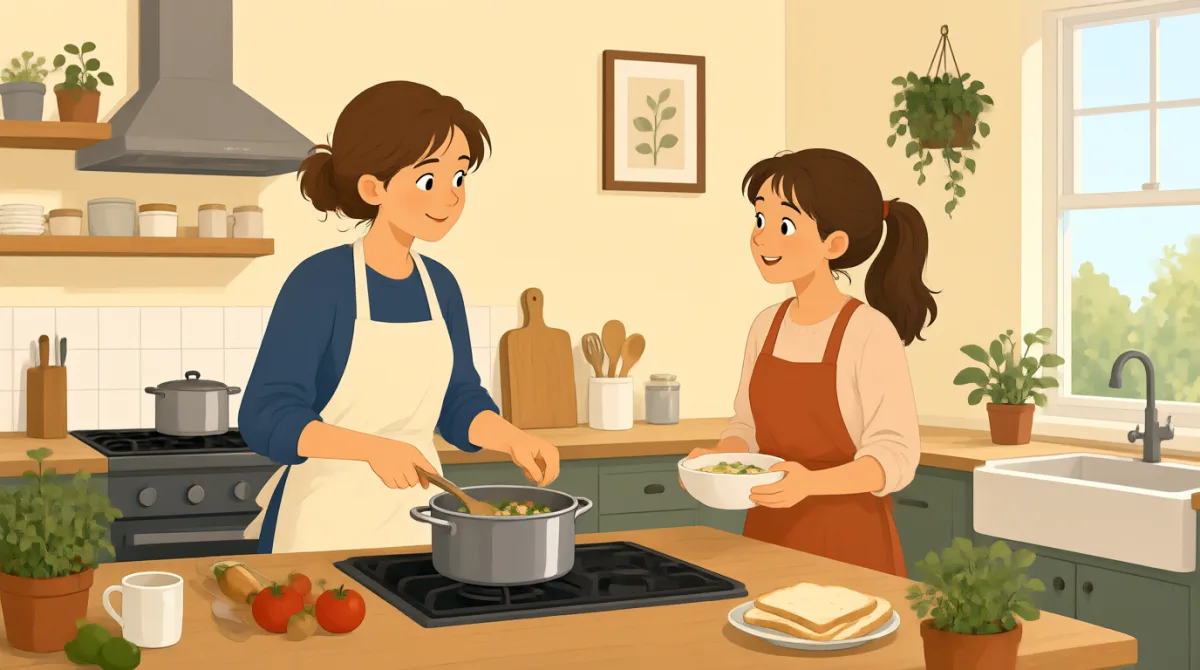

I’m going to get dinner started. Would you like to help me in the kitchen?
我准备开始做晚饭了。你愿意来厨房帮我吗?

Of course! What can I do?
当然可以!我能做些什么?
Could you wash these tomatoes and put them on the counter?
你能把这些西红柿洗一下,再放到台面上吗?
Sure. Where should I wash them?
好啊。我在哪儿洗?
Use the sink over there. The colander is next to it.
用那边的水槽洗。滤盆就在旁边。
Got it. Do you need help with anything else?
知道了。你还需要我帮忙做别的吗?
That’s all for now, thanks. You can slice the bread, if you like.
暂时就这些,谢谢。如果你愿意,可以把面包切片。
I’d be happy to. I’ll get a knife from the drawer.
我很乐意。我去抽屉里拿把刀。
词汇8
- get dinner started开始准备晚餐
To get dinner started means to begin preparing the meal. You can use this phrase when you start making dinner.
“get dinner started”是指开始准备晚餐。你可以在开始做晚饭时使用这个表达。
- Would you like to help me你愿意帮我……吗?
This is a polite way to offer someone a chance to help. You can say, “Would you like to help me with this?”
这是邀请别人帮忙的一种礼貌说法。你可以说:“Would you like to help me with this?”(你愿意帮我做这件事吗?)
- What can I do?我能做些什么?
Use this question to ask what task you can do to help. It is useful at home or at work.
用这个问题询问自己能做什么来帮忙。在家里或工作中都很实用。
- put them on the counter把它们放在台面上
This means to place the tomatoes on the kitchen counter. You can use “put it on the counter” for one thing.
这是指把西红柿放在厨房台面上。只有一样东西时,可以说“put it on the counter”。
- the sink over there那边的水槽
This refers to the sink in a place nearby. You can use “over there” to point out where something is.
这是指附近某处的水槽。你可以用“over there”来指出东西在哪里。
- That’s all for now暂时就这些
This means there is nothing else to do at the moment. You can use it when someone asks if you need more help.
这表示目前没有别的事要做。有人问你还需不需要帮忙时,可以这样说。
- I’d be happy to我很乐意
This is a friendly way to say you are willing to do something. You can use it when someone asks you to help.
这是表示自己愿意做某事的一种友好说法。别人请你帮忙时可以这样说。
- get a knife from the drawer从抽屉里拿把刀
This means to take a knife out of the drawer. You can use “get a [thing] from the [place]” to say where you will take something from.
这是指从抽屉里拿出一把刀。你可以用“get a [thing] from the [place]”来说明要从哪里拿东西。
重点句子8
- 1
Would you like to help me in the kitchen?
你愿意来厨房帮我吗?
This is a polite way to invite someone to help. You can change the place or task, as in “Would you like to help me set the table?”
这是邀请别人帮忙的一种礼貌说法。你可以换成其他地点或任务,比如:“Would you like to help me set the table?”(你愿意帮我摆餐桌吗?)
- 2
Of course!
当然可以!
Use this friendly phrase to agree readily. It works well when someone asks if you can help.
用这个友好的表达爽快地答应别人。别人问你能不能帮忙时,这样回答很合适。
- 3
What can I do?
我能做些什么?
This is a simple way to ask what task is needed. You can use it when you want to be helpful but do not know what to do.
这是询问需要做什么的一种简单说法。你想帮忙却不知道该做什么时,可以这样问。
- 4
Could you wash these tomatoes and put them on the counter?
你能把这些西红柿洗一下,再放到台面上吗?
This is a polite request that gives two clear instructions. You can use “Could you [action] and [action]?” to ask someone to do two things.
这是一个礼貌的请求,清楚地说明了两件事。你可以用“Could you [action] and [action]?”来请别人做两件事。
- 5
Where should I wash them?
我在哪儿洗?
Use this question to ask where you should do a task. You can replace “wash them” with another action, such as “put these plates.”
用这个问题询问应该在哪里做某件事。你可以把“wash them”换成另一个动作,比如“put these plates”。
- 6
Do you need help with anything else?
你还需要我帮忙做别的吗?
This is a useful way to offer more help after finishing a task. You can use it at home, at work, or while helping a friend.
做完一件事后,可以用这句话主动提出继续帮忙。在家里、工作中或帮朋友时都能用。
- 7
That’s all for now, thanks.
暂时就这些,谢谢。
This is a polite way to say no more help is needed at the moment. You can use “for now” when that might change later.
这是一种礼貌的说法,表示目前不需要更多帮忙。如果之后可能还需要帮助,可以用“for now”。
- 8
I’d be happy to.
我很乐意。
This is a warm way to accept a request or offer. You can use it before doing a helpful task.
这是欣然接受请求或提议的一种亲切说法。接下来要帮忙做事时,可以先这样回答。